Sepsis and Septic Shock: Recognition, Screening, Treatment and Nursing Priorities
Learn sepsis nursing priorities with 2026 guidance, screening limits, antibiotic timing, fluid reassessment, shock monitoring and recovery cases.
1. Quick Answer and Essential Facts
Sepsis is life-threatening organ dysfunction caused by a dysregulated response to infection. Septic shock is a particularly severe subset involving circulatory and metabolic abnormalities. Nursing priorities are early recognition, immediate escalation, coordinated treatment, repeated assessment and safe recovery planning. A patient does not need to have every familiar symptom before the nurse raises concern.
The Sepsis-3 clinical framework links sepsis with an acute increase in SOFA score of at least two points in the context of infection. Its septic-shock construct includes vasopressors needed to maintain a mean arterial pressure of at least 65 mm Hg and lactate above 2 mmol/L despite adequate volume resuscitation. These are clinical classification criteria, not instructions to wait for a complete score or laboratory result before responding to deterioration. Sepsis-3 consensus.
| Essential question | Practical answer |
|---|---|
| Is sepsis the same as a positive blood culture? | No. Blood cultures can be negative, and bacteremia alone does not establish sepsis. |
| Does the patient need fever? | No. Absence of fever does not exclude a dangerous infection-related presentation. |
| Can one biomarker rule sepsis in or out? | No. The diagnosis requires clinical evaluation. |
| Should a nurse wait for every test before escalating? | No. Concerning deterioration requires prompt action. |
| Does a fluid bolus end resuscitation? | No. Reassessment and further individualized decisions remain essential. |
| Does survival end the care plan? | No. New physical, cognitive and emotional needs may require follow-up. |
This guide uses the adult Surviving Sepsis Campaign 2026 guidance, published in March 2026, alongside primary definitions, research and public-health resources. Pediatric and obstetric sepsis require population-specific pathways. Original cases and diagrams are educational examples, not actual patient records or independent treatment protocols.
Go deeper: Build the foundation with infection prevention isolation ppe, iv therapy for nurses, prioritization delegation assignment nursing.
2. Infection, Sepsis and Septic Shock
An infection can remain localized or produce systemic consequences. Sepsis occurs when the response is associated with life-threatening organ dysfunction. The distinction is important: not every fever is sepsis, but a serious infection with a changing mental state, circulation or organ function may require urgent evaluation even before the source is confirmed.
Septic shock is not simply another word for low blood pressure. It describes a severe clinical state in the context of sepsis, and the formal construct includes additional criteria. At the bedside, however, concerning hypotension or poor perfusion should trigger immediate assessment rather than a debate about whether the final label has been established.
The CDC describes sepsis as a medical emergency that can follow infections in several parts of the body. Possible signs include confusion, breathing difficulty, marked discomfort, abnormal temperature and circulatory changes. These signs are not specific enough to diagnose the condition alone, but they should not be ignored when the patient is acutely unwell. CDC: about sepsis.
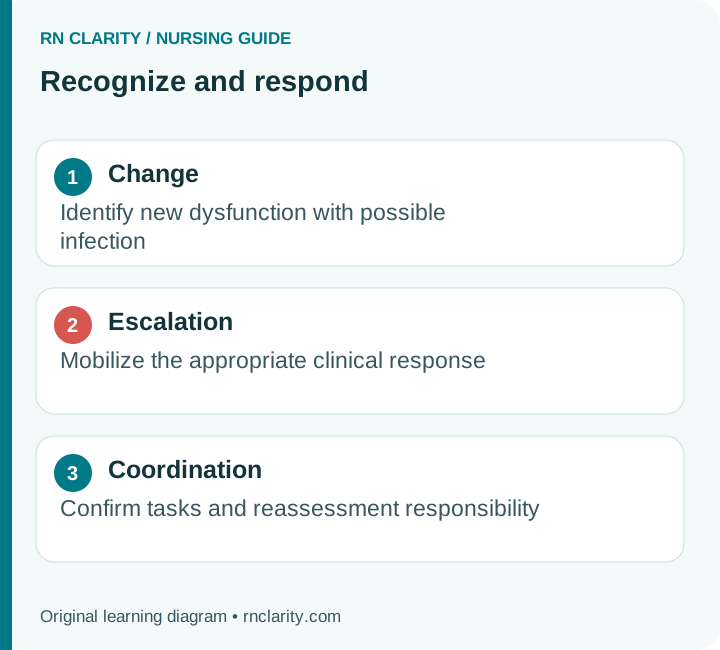
For teaching, separate three questions: Is infection possible? Is there new organ dysfunction or deterioration? What needs to happen now? This structure helps learners avoid treating the name of a syndrome as more important than the patient's immediate condition.
3. Why the Host Response Can Injure Organs
The response to infection involves immune, endothelial, coagulation and circulatory processes. In sepsis, these responses can become dysregulated, contributing to altered vascular tone, capillary leak, microcirculatory problems and cellular dysfunction. Organ injury is not explained by one simple mechanism in every patient.
Vasodilation can reduce effective arterial pressure, while fluid shifts can affect circulating volume. Cardiac function may also be impaired. At the same time, a normal-looking global measurement does not guarantee that tissue-level perfusion is adequate. This helps explain why the team follows several indicators rather than a single number.
- Infection: A suspected or confirmed infectious process is present.
- Dysregulated response: Immune, vascular and metabolic processes become harmful.
- Organ effect: Breathing, circulation, kidney, brain or other function may deteriorate.
- Recognition: The team identifies the pattern and responds urgently.
- Reassessment: Treatment is adjusted to the evolving condition.
Avoid saying that sepsis is merely “infection in the blood” or that all organs fail in a fixed order. Those descriptions can mislead patients and students. The clinically useful explanation is that the body's response to infection is causing dangerous dysfunction, and the team must treat both the infection and its consequences.
4. Risk Factors and Atypical Presentations
Risk can be influenced by age, immune status, chronic illness, recent procedures, devices and prior infection history. A person receiving immunosuppressive treatment may not show the same inflammatory pattern as another patient. Older adults may present with a new functional or cognitive change rather than a dramatic fever complaint.
Risk factors guide vigilance but do not establish the diagnosis. A young person without chronic illness can still develop sepsis, while a high-risk patient with fever may have another explanation. The nurse should use risk information to interpret the presentation, not to exclude people who do not fit a stereotype.
Ask about baseline function and recent change. A caregiver's statement that the patient is “not acting like themselves” may be an important cue. Assess the person directly, verify relevant observations and obtain appropriate help. Do not dismiss the change because dementia or another chronic condition is already documented.
Document what makes the presentation concerning. “High risk” is less useful than identifying recent chemotherapy, a new device, worsening symptoms or a change in mentation. Specific information helps the receiving clinician decide what evaluation and treatment are needed.
5. First Recognition at the Bedside
Start with the patient's current stability. Assess responsiveness, airway, breathing, circulation and immediate safety while obtaining the level of assistance required. Concerning deterioration should interrupt routine tasks. A full admission interview or complete documentation form can wait while urgent care is mobilized.
Look for a pattern rather than a single mandatory symptom. New confusion, increased respiratory effort, hypotension, reduced urine output in context, skin changes or a rapidly worsening general appearance may be significant. Compare with baseline and recent trends whenever available.
| Cue | Question to ask | Why it matters |
|---|---|---|
| New confusion | How does this compare with baseline, and when did it begin? | May indicate acute dysfunction requiring evaluation. |
| Faster or harder breathing | Is oxygenation or ventilation deteriorating? | Respiratory failure may be developing. |
| Falling pressure or altered circulation | Are there symptoms or other perfusion concerns? | A number needs clinical context and timely response. |
| Reduced output | Is collection accurate, and what is the trend? | Can support concern about organ perfusion or kidney function. |
| New infection symptoms | What source or exposure is possible? | Helps direct assessment and treatment. |
Do not delay escalation because a complete score is unavailable. The clinical concern itself can justify review. Record the observations and response accurately so the team can reconstruct what changed and when, without inventing a precise onset time the patient cannot provide.
6. Screening Tools, SOFA and qSOFA
Screening tools help organize recognition but are not the same as diagnostic criteria. The 2026 Surviving Sepsis Campaign recommends tools such as NEWS/NEWS2, MEWS or SIRS over qSOFA as a single hospital screening tool. A low score must not override a concerning clinical change. SCCM: adult guidelines, 2026.
SOFA summarizes dysfunction across several organ systems and is used in the Sepsis-3 framework. It requires information that may not be immediately available. The nurse should not fabricate missing values or assume that a normal score component rules out deterioration elsewhere.
qSOFA was designed around a small set of bedside findings associated with poor outcomes in the relevant context. It should not be taught as a stand-alone test that excludes sepsis when negative. Similarly, meeting SIRS criteria does not prove infection or sepsis; several noninfectious conditions can produce those findings.
Use the institution's approved tool correctly and know its response requirements. If clinical concern exceeds the score's apparent urgency, escalate through the available pathway. Good screening supports judgment and communication rather than replacing them with a threshold that must be crossed before anyone can act.
7. The Sepsis Huddle and Team Coordination
Sepsis care often requires several tasks at once: assessment, access, specimens, treatment, monitoring and communication. A brief team huddle can clarify roles and reduce duplication. The nurse should know who is obtaining cultures, who is administering treatment and who is reassessing the response.
Use closed-loop communication for urgent tasks. State the task, identify the responsible person and confirm completion or the reason it is delayed. “Someone is getting the antibiotic” is less reliable than a clear assignment with follow-up. A delay caused by access, availability or an unclear order needs active resolution.
- Lead concern: What has changed, and how unstable is the patient?
- Assign: Who is handling assessment, access, specimens and treatment?
- Clarify: What orders, targets or resources are missing?
- Confirm: What has actually been completed?
- Reassess: Who will review the next response and when?
The huddle should expedite care rather than become a meeting that delays it. In a rapidly deteriorating patient, emergency actions proceed while information is shared. After stabilization, a short review can identify unresolved tasks and ensure that the next care location understands the current plan.
8. Finding the Possible Source
Potential sources include respiratory, urinary, abdominal, skin, soft tissue and device-related infections, among others. The patient's history, examination and diagnostic evaluation guide the search. Do not assume that a positive urine test explains every acute illness or that a visible wound is necessarily the only source.
Ask about symptoms, recent procedures, devices, prior organisms, antimicrobial exposure and travel or exposure history when relevant. The timing of symptoms can help the team prioritize testing. A patient who is too unwell to give a history may need collateral information, but this should not delay urgent treatment.
Device assessment includes the indication, site findings and relevant history. A line may be a possible source without obvious external changes, and redness at a site may have more than one explanation. The treating team decides removal, replacement and culture strategies.
Document uncertainty honestly. “Possible respiratory source under evaluation” is different from “pneumonia confirmed.” The record should not harden an early suspicion into a fact merely because it was copied through several notes. Ongoing reassessment includes revisiting the source when results or the course suggest another explanation.
9. Cultures and Specimen Quality
Blood cultures and other specimens can help identify an organism and guide later treatment. Obtain them promptly using the institution's collection procedure and ideally before antimicrobials when feasible without harmful delay. Proper identification, volume, asepsis and transport matter; a poorly collected specimen can produce misleading results.
The nurse should understand what has been ordered and where the sample should come from. Do not collect from a convenient site without regard to the requested method. If obtaining a sample is difficult, communicate the problem and coordinate the next step rather than allowing treatment to stall silently.
Record collection and administration times accurately. The sequence can affect interpretation and later review. A specimen obtained after therapy may still be useful, but the team should know the context. Never alter times to make the record appear to meet a target.
Culture results require clinical interpretation. A negative result does not automatically exclude sepsis, while a positive result may need assessment for contamination or clinical relevance. The nurse communicates results and changes promptly and supports the revised antimicrobial plan rather than independently deciding that the diagnosis is settled.
10. Lactate: A Marker That Needs Context
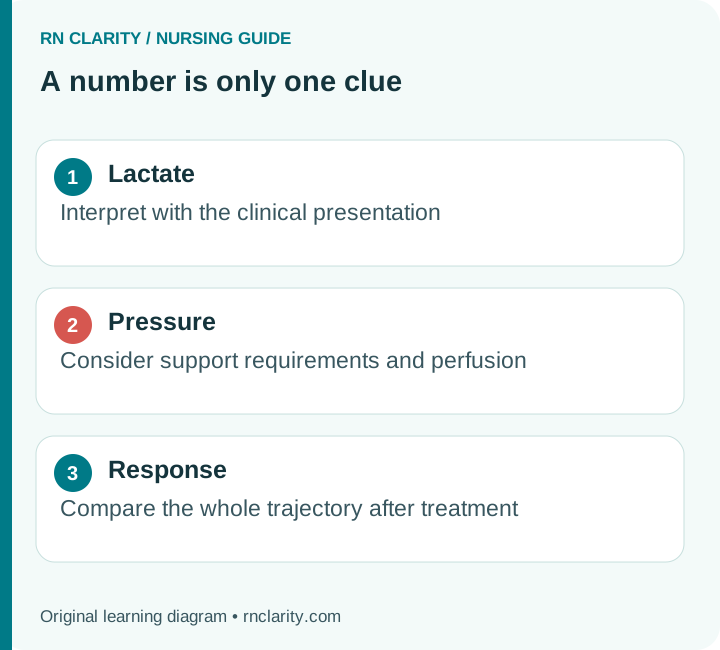
Lactate can provide information about illness severity and response, but it is not specific to sepsis and does not directly measure every aspect of tissue perfusion. Production, clearance, medications and other physiologic factors can affect the value. A normal lactate does not make an unstable patient safe, and an elevated value does not prove infection.
Follow the ordered collection and repeat-measurement process. Record timing relative to treatment and interpret the trend with the patient's condition. A falling value may be encouraging, but persistent respiratory or circulatory deterioration still requires attention.
Do not continue fluid automatically until lactate becomes normal. The team must reassess the likely cause of persistence, fluid responsiveness and the risk of overload. The 2026 guidance explicitly emphasizes individualization after initial resuscitation rather than using lactate normalization as an unlimited fluid endpoint.
For a learning exercise, compare two fictional patients with the same lactate but different presentations. One is alert with improving circulation after treatment; the other has worsening consciousness and pressure. The number contributes information in both cases, but the clinical trajectory changes the urgency and next step.
11. Antibiotic Timing in the 2026 Framework
The current adult guideline distinguishes likelihood and shock. For possible, probable or definite septic shock, and for probable or definite sepsis without shock, antimicrobials should be given immediately, ideally within one hour of recognition. For possible sepsis without shock, it supports rapid time-limited investigation and treatment within three hours if concern persists. Low infection likelihood without shock can justify deferral with close monitoring. These distinctions require clinical assessment; they are not permission to delay care in an unstable patient. IDSA-endorsed 2026 guideline.
Nursing work makes timely treatment possible. Confirm the order, allergy information, access, compatibility and availability. If a barrier appears, escalate it immediately. A medication ordered in the record but not actually administered has not provided treatment.
Avoid teaching that every person with a positive screening score must receive the same antibiotic at the same dose. The regimen depends on likely source, resistance risk, prior organisms, allergy, organ function and local guidance. Rapid treatment and appropriate selection are both important.
Documentation should reflect the real recognition and administration timeline. The purpose of timing standards is better care, not making the chart look compliant. Honest information helps the team identify delays and improve the process.
12. Antimicrobial Selection, Infusion and Reassessment
Empirical therapy is chosen before the full microbiology is available, using the likely source and patient context. Later results and clinical response can support narrowing, changing or stopping treatment. Broad coverage is not inherently better forever; unnecessary exposure can create harm and resistance pressure.
Infusion instructions matter. Some regimens use an initial dose followed by prolonged maintenance infusions to optimize exposure. The nurse must follow the actual preparation, compatibility and administration plan rather than convert every antibiotic into the same short infusion. Pharmacy involvement helps coordinate multiple infusions and monitoring.
Assess for immediate reactions and other adverse effects. A new rash, respiratory change or circulatory deterioration during administration needs appropriate evaluation. Do not assume that every deterioration is progression of sepsis when treatment itself may be relevant.
At reassessment, communicate culture information, organ-function changes and clinical response. The prescribing team determines de-escalation and duration. A negative final culture does not automatically mean that all treatment stops, but it should contribute to a thoughtful review rather than an indefinite unchanged regimen.
13. Source Control
Some infections require an anatomic intervention, such as drainage, removal of infected material or management of an obstructed system. Antibiotics alone may not resolve the problem. The team should rapidly evaluate whether a source-control procedure is needed and arrange it according to urgency and clinical circumstances.
Nursing responsibilities include preparation, communication, monitoring and coordination with the procedural team. Confirm consent processes, relevant orders, access, transport safety and what treatment must continue during transfer. Do not let a procedure plan create an unrecognized interruption in resuscitation or monitoring.
After the intervention, reassess the patient and understand what remains in place, such as drains or new devices. Document output and site findings according to the plan. A completed procedure does not prove that the infection or organ dysfunction has resolved.
For a case discussion, ask why a patient might remain unwell despite antimicrobial treatment. An unresolved source is one possibility among several. The nurse's accurate observations and communication can prompt the team to reconsider the diagnosis and treatment strategy.
14. Initial Fluid Resuscitation and Its Limits
The 2026 adult guideline conditionally suggests at least 30 mL/kg of intravenous crystalloid during the first three hours for sepsis-induced hypoperfusion or septic shock. It also requires attention to individual characteristics and frequent reassessment to avoid under- and over-resuscitation. This is not an automatic volume for every patient with suspected infection or an independent nursing order.
Confirm the prescribed fluid, volume, rate and monitoring. Weight-based calculations require an identified weight basis; the guideline allows adjusted or ideal weight in the specified obesity context. The prescriber determines the plan. If the order is unclear, clarify rather than selecting a weight method silently.
Assess response and tolerance during administration. Respiratory status, circulation, urine trend and other findings matter. A patient with heart failure or kidney disease still needs individualized resuscitation, not an automatic refusal of all fluid or an unexamined standard volume.
The CLOVERS trial compared different strategies after initial fluid treatment in sepsis-induced hypotension and did not show a significant difference in its primary mortality outcome. It does not prove that fluids are unnecessary or that more fluid is always better. The population, prior treatment and strategy details matter. CLOVERS trial.
15. Fluid Responsiveness and Repeated Assessment
Fluid responsiveness asks whether a fluid-related intervention is likely to increase a relevant flow measure. It is not the same as asking whether the patient has edema or whether a blood pressure is low. Dynamic assessment can help guide decisions when performed with appropriate methods and expertise.
A passive leg raise can be used as a reversible maneuver in selected circumstances when its effect is measured appropriately. Simply seeing a blood pressure change or lifting the legs without the required assessment does not reproduce every validated method. The clinical team determines suitability and interpretation.
- Before: Establish the reason for the intervention and baseline findings.
- During: Monitor the prescribed response and signs of intolerance.
- After: Compare circulation, breathing and other relevant measures.
- Decide: Communicate whether the expected benefit occurred.
- Revise: Obtain the next individualized treatment decision.
The nurse should avoid documenting “responded to fluids” without describing the response. Was pressure improved, was the patient more alert, did a measured flow parameter change, or was breathing worse? Specific observations help the team decide whether further fluid, vasoactive support or another intervention is appropriate.
16. Mean Arterial Pressure and Perfusion Targets
Mean arterial pressure is a useful hemodynamic measure but not a complete description of perfusion. The 2026 guideline generally recommends an initial target of 65 mm Hg and conditionally suggests an initial 60–65 mm Hg range for adults aged 65 or older. The clinical team sets the patient's actual target and acceptable range, considering response and circumstances.
A target is not a command to ignore symptoms when the number is reached. Persistent confusion, poor circulation or other dysfunction may require further assessment. Likewise, a brief value outside range needs interpretation of the measurement quality and trend, with prompt action according to the protocol.
Noninvasive and invasive measurements have different limitations. Cuff size, position, movement and perfusion can affect readings. Arterial monitoring requires correct setup and interpretation. If values conflict with the patient's appearance or repeated measurements, investigate and communicate the discrepancy.
For handoff, include the ordered target, current support and trajectory. “Pressure is acceptable” is incomplete if the patient requires rapidly increasing vasoactive support to maintain it. The amount and trend of support help describe the severity of the ongoing problem.
17. Vasopressors and Safe Delivery
Vasopressors support vascular tone and pressure in the appropriate shock context. Norepinephrine is generally the first-line agent in septic shock; additional agents depend on response and the clinical plan. Selection, dose and titration require explicit orders, trained staff and suitable monitoring.
Treatment should not be delayed solely while waiting for central access when an approved peripheral-vasopressor pathway is appropriate. The 2026 guideline supports peripheral initiation rather than such delay, but does not establish one universal duration, dose or catheter-location rule. Follow local safeguards and assess the site closely.
Verify concentration, pump programming, line identification and compatibility. A change in concentration or transfer between pumps can create a dosing error if the units and settings are not checked. Use required independent checks and a clear handoff when responsibility changes.
Monitor the patient and the infusion site. Suspected extravasation requires the institution's immediate response process and appropriate treatment; do not simply move the tubing and ignore the affected tissue. Document findings and actions, and maintain hemodynamic support through the authorized plan while the access problem is addressed.
18. Cardiac Dysfunction and Other Causes of Persistent Shock
Persistent hypoperfusion can reflect several interacting problems, including cardiac dysfunction, inadequate vascular tone, unresolved infection or another diagnosis. A patient who needs increasing support requires reassessment, not automatic repetition of the first intervention.
The team may use echocardiography, other monitoring and laboratory information to clarify the physiology. Inotropes can be considered in selected patients with cardiac dysfunction and persistent hypoperfusion despite adequate volume and pressure, but this is a specialized prescribing decision. A general nursing guide should not offer a universal infusion recipe.
Communicate the current trend: support requirements, rhythm, perfusion observations, urine response and respiratory status. A normal-looking pressure maintained by escalating treatment is not equivalent to stable recovery. The trajectory helps the team recognize that the underlying problem remains active.
For learning, avoid assuming that all shock is purely distributive because sepsis is present. Mixed physiology can occur. The nurse does not need to solve the entire hemodynamic diagnosis independently to recognize worsening and provide useful information for urgent review.
19. Respiratory Failure and Oxygen Support
Sepsis can be associated with hypoxemic respiratory failure and acute respiratory distress syndrome. Assess effort, oxygenation, consciousness and the support required. Escalating oxygen needs or exhaustion should prompt timely review. A saturation result alone does not describe the full respiratory burden.
The treating team selects oxygen or ventilatory support according to the presentation. High-flow nasal oxygen, noninvasive support and invasive ventilation have different roles and limitations. The nurse monitors tolerance, skin and device issues, secretions and response while ensuring that deterioration is recognized.
For ventilated patients, lung-protective strategies use patient-specific measurements and protocol-based settings. Tidal volume is not simply based on actual body weight in every patient. The respiratory and medical team determine the appropriate calculation and settings, while nursing care supports safe positioning, sedation assessment and prevention of device-related harm.
Do not let a device alarm become the only trigger for assessment. A patient may show distress before an alarm, and an alarm may reflect a technical issue or a genuine clinical problem. Assess the patient first, obtain help when needed and address the equipment within training and the unit's procedure.
20. Kidney Function and Urine Output
Reduced urine output can be a sign of acute kidney dysfunction or impaired perfusion, but interpretation requires the collection interval, measurement accuracy and clinical context. A drainage problem can affect recorded output, yet should not be assumed to explain a persistent decline without assessment.
Follow the ordered monitoring plan and record the amount with timing. Compare with baseline and relevant laboratory trends. If a catheter is present, assess the system for obstruction or other problems without unnecessary manipulation. The need for the device should continue to be reviewed as the patient stabilizes.
Renal replacement therapy is based on clinical indications, not the mere presence of sepsis and an abnormal creatinine. The team considers electrolyte, acid-base, fluid and other issues. The nurse prepares and monitors according to the selected treatment and communicates complications promptly.
During recovery, kidney function may remain different from baseline and affect medication dosing or follow-up. The discharge plan should identify required laboratory review and medicines that changed. Do not assume that resolution of shock automatically restores every organ to its previous state.
21. Brain Function, Delirium and Sedation Assessment
New confusion or altered consciousness can be an important sign of acute dysfunction. Compare with baseline and assess immediate physiologic concerns. A chronic diagnosis of dementia does not explain a sudden change in attention or arousal. Family or caregivers may provide useful baseline information when the patient cannot.
In critical care, sedation, analgesia, sleep disruption and the illness itself can influence assessment. Use the unit's validated tools and document the conditions under which the assessment occurred. A deeply sedated patient cannot be described as having a normal cognitive assessment simply because agitation is absent.
Nonpharmacologic support can include orientation, appropriate sensory aids, sleep-supportive care and mobility when safe. These measures should be integrated with treatment rather than treated as optional decoration. The SCCM PADIS and ICU Liberation resources provide the relevant framework for pain, sedation, delirium, mobility and family engagement. SCCM: ICU Liberation bundle.
Communicate changes promptly and avoid labeling the patient as difficult. Behavior may reflect distress, delirium, pain or a physiologic problem. The nursing assessment should describe what is observed and what evaluation followed. During recovery, persistent cognitive concerns need a follow-up plan rather than a promise that they will disappear immediately after discharge.
22. Coagulation, Platelets and Bleeding Concerns
Sepsis can affect coagulation and platelet patterns. Thrombocytopenia or abnormal clotting results may reflect several processes, including disseminated intravascular coagulation in the appropriate context. A laboratory change alone does not establish the diagnosis, but it can identify a need for prompt review.
Assess for bleeding, bruising, line-site oozing and other relevant findings while following laboratory trends. Also recognize that coagulation abnormalities can involve thrombosis as well as bleeding. Do not assume that a patient with a low platelet count is protected from clotting complications.
Medication decisions, transfusion and procedures require individualized assessment. The nurse confirms orders, monitoring and precautions and communicates critical findings. A general study guide should not prescribe a universal transfusion threshold for every patient with sepsis, active bleeding or a planned procedure.
Document the actual finding and its context. “Bleeding from the line site increased after…” provides more useful information than a vague statement that coagulation is abnormal. Include the response and the plan for reassessment. If a sample may be compromised, follow the repeat process without dismissing a clinically concerning presentation.
23. Glucose, Electrolytes and Metabolic Monitoring
Acute illness and treatment can alter glucose and electrolyte balance. Monitor according to the prescribed plan and respond to abnormal results through the appropriate protocol. The aim is safe control, not an attempt to force every critically ill patient into a normal outpatient glucose range.
Insulin therapy requires coordination with nutrition, current measurements and the infusion or subcutaneous protocol. Interrupted feeding can change risk quickly. Communicate the interruption and follow the prevention or treatment plan rather than waiting for a routine check when insulin remains active.
Potassium, magnesium, sodium and acid-base information need context. Changes may result from kidney dysfunction, losses, replacement, medications or fluid therapy. Replacement orders must specify the product, route and rate, and high-alert safeguards apply. Never administer concentrated potassium by intravenous push.
For learning, distinguish treating a cause from treating a number. An abnormal acid-base result may prompt evaluation of perfusion, ventilation and kidney function, not simply an automatic bicarbonate dose. The clinical team determines whether a targeted intervention is indicated. The nurse contributes accurate monitoring and recognition of changes that require urgent review.
24. Corticosteroids and Adjunctive Treatments
Selected patients with septic shock may receive intravenous corticosteroids under the treating team's plan. This is different from giving steroids routinely to every patient with suspected infection. Monitor relevant effects, including glucose and other patient-specific concerns, and clarify the intended course.
Do not present vitamin C, vitamins generally or other adjuncts as proven cures for sepsis. Some proposed treatments have not demonstrated the expected benefit, and current recommendations may advise against routine use. A biologically appealing explanation is not the same as evidence of improved patient outcomes.
The nurse should know why an adjunct is prescribed and what monitoring it requires. If a therapy is unfamiliar, consult the approved reference, pharmacy and prescriber rather than relying on a social-media summary. The same principle applies to rescue vasoactive or extracorporeal therapies in highly selected situations.
When explaining treatment to a family, distinguish established care from uncertainty. “The team is using this for a specific problem and monitoring the response” is more accurate than promising that one drug will reverse the entire syndrome. Questions about expected benefit and alternatives should reach the treating clinician.
25. Nutrition, Gastrointestinal Function and Aspiration Safety
Nutrition planning in critical illness considers hemodynamic status, gastrointestinal function and the available route. The team determines when and how to begin feeding. The nurse assesses tolerance, positioning, device safety and interruptions according to the plan.
Do not assume that the presence of bowel sounds alone proves that feeding is safe or that absence of a meal means nutrition is unimportant. The clinical situation determines the approach. A patient on escalating support may need a different plan from one who is stabilizing and beginning recovery.
Monitor nausea, vomiting, abdominal findings and other signs of intolerance. Follow the institution's enteral-feeding and aspiration-prevention procedures. If feeding stops, communicate the change to those managing insulin and other related treatment. A nutrition interruption can have consequences beyond the gastrointestinal system.
During recovery, assess swallowing and the ability to eat after prolonged illness or airway support. A patient may need specialist evaluation and an adapted plan. Avoid rushing oral intake simply because the person is eager to leave intensive care. Safe nutrition supports recovery, but the route and timing must fit the patient's abilities.
26. Skin, Mobility and Device-Related Harm Prevention
Critical illness, immobility, impaired perfusion and multiple devices can increase skin and functional risks. Assessment includes pressure areas, device contact points and the patient's ability to change position. Skin findings should be evaluated across skin tones, using more than redness alone.
Positioning and mobility require an individualized safety assessment. Coordinate with the team when the patient has vasoactive infusions, respiratory support or other limitations. Early activity does not mean walking every patient regardless of stability; it means considering safe movement and progression rather than accepting unnecessary immobility.
Review device necessity as the condition changes. A catheter or line that was essential during resuscitation may no longer be needed later. Removal decisions follow orders and policy, but the nurse can identify an opportunity to reduce exposure and prompt review.
Document prevention and response, including limitations. If a turn or mobility activity is temporarily unsafe, record why and what alternative protection or reassessment is planned. A blank checklist cannot communicate the clinical reasoning. Conversely, do not record that a task occurred when it was deferred.
27. De-Resuscitation and the Recovery Phase
The fluid plan can change after the acute resuscitation phase. A patient who initially needed volume and pressure support may later have excess fluid that affects breathing, mobility or other function. The team evaluates whether active fluid removal is appropriate based on the current course and organ function.
Do not interpret a change from giving fluid to removing fluid as proof that the earlier treatment was necessarily wrong. Different phases can require different strategies. The important question is whether the current plan matches the current physiology and is being reassessed.
Nursing monitoring includes weight method, intake and output accuracy, respiratory status, circulation and laboratory trends. Communicate symptoms such as dizziness or worsening breathing rather than focusing only on a desired balance number. A negative balance is not automatically a complete measure of recovery.
Explain the phase change to the patient or family in plain language. “Earlier the team was supporting circulation during shock; now it is reassessing extra fluid as the condition changes” can reduce confusion. Avoid claiming that every patient follows the same sequence or that a particular fluid balance proves that all organs have recovered.
28. Antimicrobial Stewardship After the First Dose
Timely initial therapy and later reassessment are complementary. As microbiology and clinical information become available, the team reviews whether the selected coverage, route and duration remain appropriate. Unnecessary treatment can cause adverse effects and contribute to resistance, while insufficient treatment can leave infection uncontrolled.
The nurse helps by ensuring that results reach the responsible clinician, documenting response and identifying adverse effects or administration problems. A planned review should not disappear during transfer between units. The next team needs to know which results are pending and who will act on them.
CDC's hospital stewardship framework emphasizes organized systems for appropriate antibiotic use. This is not a reason to withhold urgent treatment from a patient with shock; it is a reason to make both initial treatment and ongoing review reliable. CDC: hospital antibiotic stewardship.
At discharge, provide a clear regimen when antimicrobials continue. Include the stop or review date, route, access care if relevant and follow-up. A patient receiving outpatient intravenous therapy needs a feasible supply and monitoring arrangement, not merely an order in the hospital record.
29. Patient and Family Communication During Uncertainty
Sepsis can develop quickly, leaving patients and families frightened and unsure what is happening. Explain the immediate concern in plain language and describe what the team is doing now. Avoid overwhelming the family with every laboratory value before they understand the main problem.
Be clear about uncertainty. The infection source or organism may not yet be known, and the response to treatment may take repeated assessment. Do not promise recovery or imply that lack of an immediate answer means the team is doing nothing. State what is known and what the next evaluation will address.
Ask about the patient's preferences, communication needs and support people. Use appropriate interpretation and accessible information. Family observations can help establish baseline and recent changes, but confidentiality and the patient's choices still matter.
Provide opportunities for questions and repeat key information as needed. Stress can make it hard to remember an earlier explanation. Document important discussions and unresolved concerns so communication remains consistent across shifts. The patient should not have to reconcile contradictory explanations from different team members without help.
30. Goals of Care and Shared Decisions
Goals-of-care discussions should reflect the patient's values, clinical situation and available options. They are not reserved for the moment when treatment appears to be failing. A patient may want information about likely burdens, recovery and acceptable levels of support while active treatment continues.
Nurses can identify what the patient understands and which questions need a clinician-led discussion. Do not infer preferences from age, disability or a chronic diagnosis. A documented directive should be reviewed for applicability and clarified through the appropriate process when needed.
Palliative principles can support symptom relief and communication alongside intensive treatment. A specialist consultation may be appropriate in selected circumstances, but not every patient needs the same formal service. The care plan should address suffering and informed decisions regardless of whether a particular consultation occurs.
After a decision, ensure that orders, handoff and the patient's understanding align. A verbal discussion that never reaches the next team can create confusion. Document the agreed plan respectfully and avoid describing a choice for comfort or a choice for further treatment as a moral success or failure.
31. Transfer from Intensive Care
Transfer to a ward is a change in care setting, not proof that all risks have resolved. The receiving team needs the infection history, organ dysfunction, treatments, current support, pending results and reassessment needs. Medication changes and device plans are particularly important.
Clarify what monitoring is required and whether the receiving setting can provide it. A patient who still needs an intensity of assessment unavailable on the ward requires review of the transfer plan. The nurse should raise the mismatch rather than assume that a transfer order makes the resources adequate.
- What happened: Infection concern, organ effects and major treatments.
- What remains: Current support, symptoms and functional limitations.
- What is pending: Results, medication reviews and procedures.
- What to watch: Specific changes requiring escalation.
- Who acts next: Responsible clinicians and follow-up tasks.
Include the patient's communication and support needs. Delirium, weakness or difficulty swallowing can affect safety even when hemodynamic support has ended. The next nurse needs this information to plan mobility, meals and medication administration appropriately.
32. Recovery After Sepsis
Recovery varies. Some people regain function relatively quickly, while others have persistent weakness, fatigue, cognitive difficulty, sleep problems or emotional symptoms. The CDC describes rehabilitation beginning in hospital and emphasizes that survivors may need ongoing support. Avoid promising a fixed recovery date. CDC: managing recovery from sepsis.
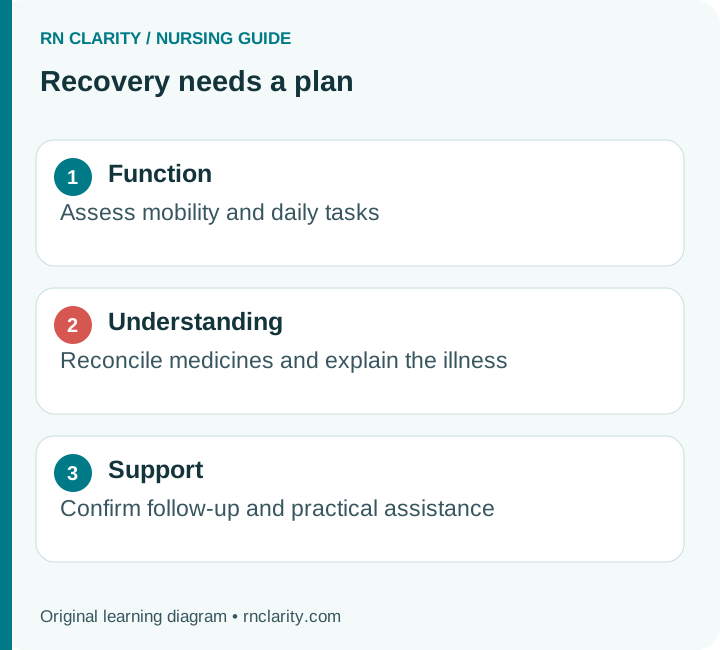
Assess what the patient can do now compared with before illness. Can they transfer, prepare food, manage medicines and attend appointments? A discharge destination should reflect actual function and support, not only a stable set of vital signs.
Explain warning signs and follow-up in understandable terms. Survivors need to know how to respond to new infection symptoms or deterioration without being told that every sensation means recurrent sepsis. The aim is informed vigilance and access to care, not constant fear.
Include caregivers with the patient's consent and assess their ability to help. Caregiver strain can become a practical safety issue if the plan assumes more support than is available. Arrange relevant rehabilitation, primary-care or specialist follow-up and make unresolved needs visible.
33. Medication Reconciliation and Discharge Safety
Critical illness often changes chronic medicines and adds temporary treatments. At discharge, identify what continues, what stops and what needs review. A medication withheld during shock may need a deliberate restart decision rather than remaining absent by accident.
The patient needs one clear list with understandable timing and indications. If treatment depends on follow-up laboratory results, explain who will review them and when. A prescription without a monitoring plan may be incomplete, especially after kidney function or other organ changes.
Confirm access to medicines, equipment and transportation. A patient recovering from prolonged illness may not be able to collect prescriptions or manage an infusion alone. Pharmacy and social support can help create a feasible arrangement.
Use teach-back with the actual discharge plan. Ask the patient to identify a stopped medicine, describe a continuing course and explain which symptom requires urgent help. This checks whether the plan is usable. It is more informative than asking whether the patient has any questions while transportation is waiting.
34. Nursing Care Plans for Sepsis
A care plan should reflect the current phase and supported findings. During instability, priorities center on recognition, monitoring and implementation of urgent treatment. During recovery, mobility, cognition, nutrition, medication use and follow-up may become more prominent. A copied plan that never changes cannot reflect this trajectory.
| Finding | Goal example | Nursing contribution | Evaluation |
|---|---|---|---|
| Acute deterioration with suspected infection | Receives prompt assessment and authorized treatment | Recognize, escalate, coordinate and monitor | Review response and unresolved instability |
| Unclear infusion responsibility during transfer | Maintains uninterrupted prescribed support | Verify line, pump, order and receiving responsibility | Confirm safe handoff and current settings |
| New weakness after critical illness | Performs agreed activity with suitable assistance | Assess, coordinate rehabilitation and protect safety | Compare function and recovery |
| Confusion about changed medicines | Explains the final regimen using teach-back | Reconcile and teach with the team | Demonstrate understanding and supply access |
| Persistent cognitive or emotional concerns | Has an appropriate follow-up plan | Assess, communicate and arrange support | Confirm referral and practical access |
Rationales should connect actions with evidence from the patient. Frequent reassessment is relevant because the condition and treatment response can change rapidly. Medication reconciliation is relevant because several drugs changed during illness. Avoid generic rationales that do not explain why this patient needs the intervention.
When standardized nursing diagnoses are required, use the current licensed terminology and verify that the assessment supports it. Do not invent codes or assume that every person with sepsis has every possible organ-related nursing problem. Evaluation should identify both improvement and needs that remain unresolved.
35. Worked Example: A Weight-Based Fluid Calculation
Fictional arithmetic exercise only. A clinician specifies a 30 mL/kg crystalloid calculation using an identified weight of 70 kg. The arithmetic is 30 multiplied by 70, or 2,100 mL. This demonstrates unit multiplication; it is not an instruction to give that volume to any reader or patient.
Before actual administration, the nurse needs the ordered fluid, rate, weight basis, clinical indication and reassessment plan. The guideline's conditional suggestion applies to sepsis-induced hypoperfusion or septic shock and requires individualization. A patient with suspected infection but no such indication should not receive a volume solely because the multiplication is easy.
The prescribed volume may be delivered within a coordinated resuscitation plan, with response and tolerance assessed repeatedly. Do not interpret a calculated total as permission to ignore worsening respiratory findings or an updated order. Clinical changes can require the team to revise the approach.
For a skills exercise, ask learners to state the missing information before calculating. This separates arithmetic competence from clinical authorization. A correct numerical answer can still be unsafe if the wrong weight, fluid or context is used.
36. Worked Example: Understanding an Estimated MAP
For a conventional bedside approximation under appropriate conditions, MAP is often estimated as diastolic pressure plus one third of the pulse pressure. Pulse pressure is systolic minus diastolic pressure. The approximation has limitations, particularly with unusual rhythms or hemodynamic conditions, and does not replace the monitored value or clinical assessment.
Fictional example: A pressure of 90/60 mm Hg has a pulse pressure of 30. One third of 30 is 10, so the estimated MAP is about 70 mm Hg. This number alone does not establish that the patient is adequately perfused or recovering.
Now add context: the patient is increasingly confused and requires escalating vasopressor support. The estimated MAP does not make those findings reassuring. The nurse should communicate the whole pattern and follow the actual ordered target and monitoring method.
When documenting, distinguish a calculated estimate from a device-reported or invasively measured value. Do not silently substitute one for another. Accurate labeling helps the team interpret discrepancies and avoids false precision.
37. Case Study: New Confusion Without a High Fever
Fictional learning scenario. An older adult becomes inattentive and unusually weak. A caregiver says the change began that morning. The patient has urinary symptoms but no high temperature at the time of assessment.
Assess immediate stability and the change from baseline, obtain relevant observations and activate the appropriate clinical review. Absence of a high fever does not exclude a serious infection-related problem. At the same time, urinary symptoms and confusion do not automatically prove sepsis; the team must evaluate the full presentation and alternative causes.
The nurse should avoid documenting a confirmed source before it is established. Communicate the symptoms, timing, baseline and measured findings. If the patient cannot give a complete history, use collateral information appropriately while preserving uncertainty about details that are not known.
Clinical judgment: A stereotype of sepsis as always involving a very high fever can delay recognition. The meaningful cue is acute deterioration in a potentially infectious context. Screening supports the assessment but does not replace it.
Evaluation: Track the response to the team's assessment and treatment and communicate further change. Document recognition and escalation times accurately. The outcome is not simply that a screening form was completed; it is that the concerning presentation received timely evaluation.
38. Case Study: Fluid Treatment and Worsening Breathing
Fictional learning scenario. A patient receiving prescribed resuscitation fluid develops increasing respiratory effort. Blood pressure remains concerning, and the patient has a history of heart failure. A learner argues that the entire calculated volume must be completed before anyone can reassess.
The nurse reassesses immediately and communicates the change to the resuscitation team. The conditional fluid recommendation includes ongoing evaluation and individualization. It does not require ignoring signs of intolerance until a fixed amount is complete. The team determines the next fluid and vasoactive strategy.
Do not independently conclude that all further fluid is forbidden because heart failure is present. The patient may have complex physiology requiring careful treatment. The nursing role is to make the response visible and obtain an updated decision rather than apply either extreme automatically.
Clinical judgment: A guideline quantity is part of a clinical framework, not a substitute for observation. Treatment can create or reveal a new concern that changes the plan. Reassessment is an active intervention.
Evaluation: Document the amount actually administered, timing, respiratory findings, communication and revised orders. Continue monitoring according to the new plan. Avoid recording the ordered total as if it were the delivered total when administration changed.
39. Case Study: The Antibiotic Is Ordered but Not Available
Fictional learning scenario. A patient with septic shock has an antimicrobial order, but the medicine is not available in the unit's storage area. Several staff members assume someone else has contacted pharmacy. Time passes without administration.
The nurse identifies the gap, assigns or takes responsibility for contacting pharmacy and the prescriber, and confirms the plan for timely delivery or an authorized alternative. The patient continues to receive required assessment and support. An order in the record is not the same as a completed treatment.
Use closed-loop communication: who is obtaining the medicine, when it is expected and what will happen if the delay continues? If access or compatibility is another barrier, address it explicitly rather than discovering it only when the medication arrives.
Clinical judgment: Process failures can delay otherwise appropriate care. The solution is a concrete coordination step, not merely another reminder that sepsis is urgent. Clear ownership prevents the task from being assumed complete by everyone and completed by no one.
Evaluation: Record the actual administration time and the reason for delay according to policy. Review the event through the improvement process without altering the timeline. Accurate information can help prevent the same problem for the next patient.
40. Case Study: A Better Lactate but Persistent Deterioration
Fictional learning scenario. A repeat lactate is lower than the initial value, but the patient is less responsive and requires more circulatory support. A team member describes the patient as improving solely because the laboratory trend is favorable.
The nurse communicates the discordant clinical findings and requests reassessment. A biomarker trend is one piece of information. It cannot override worsening consciousness or escalating support. The team needs to evaluate the full trajectory and possible reasons for the mismatch.
Do not reject the lactate result as useless; it still contributes context. The error is treating it as a complete verdict. A strong handoff states both the favorable laboratory change and the concerning bedside change so the receiving clinician can integrate them.
Clinical judgment: Improvement is multidimensional. Different measures can move in different directions, and the most dangerous current finding may determine urgency. The nurse should resist a simplified narrative when observations do not support it.
Evaluation: Document reassessment, treatment changes and ongoing response. The record should show why concern persisted despite one improving result. This helps later clinicians understand the reasoning and avoids false reassurance during transfer.
41. Case Study: A Peripheral Vasopressor Site Changes
Fictional learning scenario. A patient receives a vasopressor through an approved peripheral pathway. During a site check, the nurse finds new swelling and discomfort near the catheter. The blood pressure still requires support.
Follow the institution's immediate suspected-extravasation process and obtain appropriate assistance. Address the affected site and maintain hemodynamic treatment through the authorized alternative plan. Do not simply continue the infusion because the pressure is dependent on it, and do not abandon circulatory support without coordination.
The response may involve product-specific treatment and specialist review according to policy. The nurse should know where that guidance and required supplies are located. A general guide cannot replace the institution's detailed procedure for the particular vasoactive agent.
Clinical judgment: Peripheral initiation can be appropriate, but it requires active safeguards. The absence of a central line is not the only safety question; site assessment, concentration, monitoring and response capability also matter.
Evaluation: Document the finding, timing, actions and subsequent tissue and hemodynamic response. Communicate the event at handoff so ongoing assessment is not lost after the infusion moves to another site.
42. Case Study: Survival with New Functional Needs
Fictional learning scenario. A patient recovering from septic shock is medically ready for a lower level of care but cannot manage stairs and struggles to remember the changed medication schedule. Before illness, the patient lived independently.
Assess current function and cognition and coordinate the discharge plan with rehabilitation, pharmacy and the relevant support team. A stable blood pressure does not establish readiness for independent living. The plan must match the patient's present abilities and available help.
Explain that recovery after severe illness can involve new needs without promising a fixed timeline. Ask what the patient values and what support feels acceptable. Include caregivers with consent and assess whether the proposed assistance is realistic.
Clinical judgment: Acute survival and safe transition are different outcomes. A discharge plan that assumes the old baseline may expose the patient to medication errors, falls or missed follow-up. The nurse's functional assessment helps identify that mismatch.
Evaluation: Confirm the destination, assistance, medication plan and follow-up. Document unresolved concerns and ensure that the receiving clinicians know the new baseline. Recovery planning should continue beyond the point at which acute resuscitation ends.
43. Quality Improvement Without Changing the Record
Sepsis programs examine recognition, treatment, communication and outcomes to improve care. CDC's Hospital Sepsis Program Core Elements describe organizational support, accountability, multidisciplinary work, action, tracking, reporting and education. These systems help make reliable care possible; they do not replace patient-specific judgment. CDC: hospital sepsis core elements.
When reviewing a case, distinguish a documentation gap from a care delay. Both can matter, but they are not identical. Use the available evidence and avoid assuming that an absent entry proves a task never occurred or that a late entry proves timely care. Follow the formal review process and seek clarification where appropriate.
Never alter times or observations to make a target appear met. Honest records support both patient care and learning. If a delay occurred because of equipment, staffing, access or unclear orders, identify the actionable cause and the system change needed.
A useful improvement question is, “What would make the correct next action easier and more reliable?” Examples include clear task ownership, available supplies, better handoff and prompt escalation of barriers. Blaming an individual without understanding the process may leave the same risk in place.
44. Original Practice Questions with Rationales
These questions are educational examples, not actual NCLEX items. Explain the cue that changes the priority and identify what information is still needed.
Does a negative blood culture exclude sepsis?
No. Sepsis is a clinical diagnosis, and cultures may be negative for several reasons. The team interprets results with the patient's presentation and course. A negative result should contribute to reassessment and antimicrobial review, not automatically erase ongoing organ dysfunction or prove that the original concern was unreasonable.
Should the nurse wait for a complete SOFA score before escalating deterioration?
No. A score can support assessment, but urgent clinical concern does not require every component to be available first. Obtain help, assess and communicate the current findings. Do not invent missing values or delay action while trying to complete a formal classification in an unstable patient.
Is qSOFA a stand-alone rule-out test?
No. A low qSOFA score does not exclude sepsis. The 2026 adult guidance favors other tools over qSOFA as a single hospital screening tool, and clinical judgment remains essential. Use the approved local pathway and escalate concerning changes even when a score appears less alarming.
What should happen when breathing worsens during fluid administration?
Reassess promptly and communicate the change to the treating team. The fluid plan requires ongoing evaluation and may need revision. Do not ignore intolerance until a fixed total is delivered, and do not independently decide that every further intervention is contraindicated. The complete clinical picture guides the next order.
Does an improving lactate prove recovery?
No. It is useful information but must be considered with consciousness, circulation, respiratory status, organ function and support requirements. Discordant deterioration requires review. A single favorable trend should not become a reason to disregard more concerning bedside findings.
Why is an antibiotic order not the same as timely treatment?
The medicine must actually be prepared, available and administered safely. Access, compatibility and supply problems can create delays after ordering. The nurse should identify barriers, coordinate responsibility and confirm completion. Documentation should record the real administration time rather than the intended time.
Can vasopressors ever begin through peripheral access?
Yes, an approved pathway can allow peripheral initiation rather than delaying treatment solely for central access. This requires trained staff, monitoring and site safeguards. The current guideline does not supply one universal duration or catheter-location rule for every setting. Follow the local protocol and respond promptly to site concerns.
What is the main limitation of a MAP target?
It does not describe every aspect of tissue perfusion or recovery. The patient may reach the target while requiring escalating support or developing other dysfunction. Interpret the value with the clinical trend and prescribed plan. Measurement quality also matters when the number conflicts with the patient's condition.
Why should the discharge plan include cognition and function?
Sepsis survivors can have new limitations that affect medication use, mobility and daily tasks. A stable set of vital signs does not prove readiness for independent living. Assess actual abilities, arrange support and communicate new needs to the next team. Safe recovery includes more than ending acute treatment.
Is antimicrobial stewardship a reason to delay therapy in septic shock?
No. Appropriate urgent treatment and later review are complementary. The team selects timely empirical therapy and then reassesses coverage and duration as information develops. Stewardship supports suitable treatment, not indiscriminate delay in a patient who needs immediate care.
45. Frequently Asked Questions
What is sepsis in plain language?
Sepsis occurs when the body's response to an infection causes dangerous organ dysfunction. It is a medical emergency and is not simply a synonym for bacteria in the blood. The team treats the infection and supports affected body systems while reassessing the response. Early recognition and prompt evaluation matter even before every test result is available.
What is the difference between sepsis and septic shock?
Septic shock is a severe subset of sepsis with important circulatory and metabolic abnormalities. The formal Sepsis-3 construct includes vasopressor-dependent pressure support and elevated lactate despite adequate volume resuscitation. At the bedside, however, the nurse should respond to instability promptly rather than wait for all classification criteria to be documented.
Can a patient have sepsis without fever?
Yes. Absence of fever does not exclude a serious infection-related presentation. Older adults and people with altered immune responses may show different patterns, and any patient can have concerning organ dysfunction without a high temperature at one measurement. Assess the full condition, baseline and trend and use the appropriate escalation pathway.
What are the first nursing priorities?
Recognize deterioration, assess immediate stability, obtain the required help and coordinate authorized treatment and monitoring. The exact tasks depend on the setting and patient. Cultures, antimicrobials, fluid and other support may proceed in a coordinated way. Routine documentation or a complete history should not delay emergency response in an unstable person.
Is the 30 mL/kg fluid suggestion mandatory for everyone with infection?
No. The 2026 conditional suggestion concerns sepsis-induced hypoperfusion or septic shock and explicitly requires individualization and frequent reassessment. It is not a universal nursing order for every infection or positive screen. The prescriber determines the actual plan, and new findings during treatment may require revision.
Why are antibiotics not described with one timing rule for every suspected case?
The 2026 framework distinguishes shock and the likelihood of sepsis. Urgent treatment is emphasized for shock and probable or definite sepsis, while possible sepsis without shock allows rapid investigation within a defined approach. The purpose is appropriate timely care while considering noninfectious causes. An unstable patient should not be left waiting under a misapplied low-risk rule.
What does lactate tell the nurse?
It contributes information about illness and response but is neither specific for sepsis nor a complete measure of perfusion. Follow the trend with the clinical presentation. A normal result does not make an unstable patient safe, and an elevated result does not justify unlimited fluid. The team interprets possible causes and the next treatment step.
Can a patient remain unwell after surviving sepsis?
Yes. Recovery can involve weakness, fatigue, cognitive changes, sleep problems or emotional symptoms. The duration and degree vary. Assess practical function and arrange appropriate follow-up rather than promising a uniform timeline. Patients need an explanation of their illness, a usable medication plan and guidance on new symptoms and recovery support.
What should a sepsis care-plan assignment include?
Use supported findings, priorities appropriate to the current phase, measurable goals, interventions with rationales and evaluation. Distinguish acute resuscitation from recovery needs. Do not invent laboratory results or official nursing-diagnosis codes. The plan should show how the nurse recognizes change, acts within the care plan and evaluates the patient's response.
Are these recommendations identical in every country and hospital?
No. International and national guidelines can use different operational pathways, and local resources and protocols affect implementation. This guide identifies the adult Surviving Sepsis Campaign 2026 framework. For example, NICE issued a separate adult suspected-sepsis guideline in November 2025. Use the guideline and policy applicable to the clinical setting and state the framework in academic work.
46. Evidence Appraisal and Assignment Writing
Separate definitions, screening tools, treatment recommendations and research outcomes. A consensus definition explains how a syndrome is described; a screening tool helps identify concern; a guideline recommends care; and a trial answers a specified research question. Treating these as interchangeable can produce inaccurate claims.
The CLOVERS and CLASSIC fluid studies examined particular strategies in defined populations after specified initial treatment. Their results should not be summarized as proof that all fluid is harmful or that restrictive care is always superior. Similarly, a study of capillary-refill-guided care does not validate any improvised bedside maneuver. Describe the intervention, comparator and outcome actually studied.
The original ANDROMEDA-SHOCK trial did not show a statistically significant reduction in its primary mortality outcome with capillary-refill-targeted versus lactate-targeted resuscitation. Later research, including ANDROMEDA-SHOCK-2, examined a more personalized strategy. Do not merge the trials or invent a mortality benefit from a different endpoint. ANDROMEDA-SHOCK; ANDROMEDA-SHOCK-2.
When an assignment needs a current recommendation, identify its strength and context. A conditional suggestion with low-certainty evidence should not be rewritten as an absolute rule that applies to every patient. At the same time, uncertainty does not mean that clinicians should do nothing; it means that individual circumstances and reassessment matter.
Use the fictional cases in this guide to practice reasoning, not as evidence of treatment effectiveness. If you need patient data, use the information supplied by the assignment or appropriately authorized de-identified material. Never invent a citation, result or clinical outcome to fill a gap.
Practice next: Apply these ideas with the clinical judgment learning pathway and the practice-question study guide.
47. References and Source Notes
- Sepsis-3: Third International Consensus Definitions. Definition and clinical constructs; not a stand-alone bedside screening protocol.
- SCCM: Surviving Sepsis Campaign Adult Guidelines, 2026 and IDSA endorsement and publication details. Current adult recommendations and their stated certainty and qualifications.
- CDC: About Sepsis. Public-health explanation and recognition information.
- NICE NG253: Suspected Sepsis in People Aged 16 or Over. Separate UK pathway published November 2025; its scope excludes current or recent pregnancy.
- CLOVERS trial and CLASSIC trial. Primary research on fluid strategies in the specified populations.
- ANDROMEDA-SHOCK trial and ANDROMEDA-SHOCK-2 trial. Primary research on perfusion-oriented resuscitation strategies; the trials should not be treated as identical interventions.
- SCCM: PADIS resources and ICU Liberation bundle. Pain, sedation, delirium, mobility and family-engagement framework, including links to the 2025 focused update.
- CDC: Hospital Antibiotic Stewardship. Systems for appropriate antimicrobial use and review.
- CDC: Hospital Sepsis Program Core Elements. Organizational approaches to reliable recognition and care.
- CDC: Managing Recovery from Sepsis. Recovery, rehabilitation and patient-support information.
This guide is nursing education and original exam-style practice. It is not official NCLEX content, an independent resuscitation order or a substitute for current local protocols and clinical judgment.