NCLEX-RN® Antidotes and Toxicities: High-Yield Reversal Agents and Emergency Priorities
High-yield NCLEX® antidotes, toxicities, reversal agents, and emergency nursing priorities.
postNumber: 77 title: "NCLEX-RN® Antidotes and Toxicities: High-Yield Reversal Agents and Emergency Priorities" h1: "NCLEX-RN® Antidotes and Toxicities: High-Yield Reversal Agents and Emergency Priorities" slug: "nclex-rn-antidotes-toxicities-reversal-agents" canonicalUrl: "https://rnclarity.com/blog/nclex-rn-antidotes-toxicities-reversal-agents" primaryKeyword: "NCLEX® antidotes and toxicities" secondaryKeywords:
- "nursing antidotes list"
- "drug toxicity NCLEX®"
- "naloxone nursing"
- "acetaminophen overdose antidote"
- "high yield medication reversals" metaTitle: "NCLEX® Antidotes and Toxicities: High-Yield Guide" metaDescription: "Study high-yield NCLEX® antidotes, toxic effects, emergency priorities, monitoring, and nursing actions for opioids, anticoagulants, digoxin, and more." excerpt: "A safety-focused guide to recognizing common toxic syndromes, stabilizing the patient, and matching high-yield medications with reversal strategies." suggestedPublishDate: "2026-08-04" status: "draft_nurse_review_required" schemaTypes: ["BlogPosting", "FAQPage", "BreadcrumbList"] diagramCount: 5 clinicalReview: "Required before publication"
NCLEX-RN® Antidotes and Toxicities: High-Yield Reversal Agents and Emergency Priorities
Quick answer: In a toxicity emergency, the first priority is not to recite an antidote list. Stabilize airway, breathing, circulation, stop exposure when safe, call for emergency and poison-control support, identify the substance and time, then give the ordered reversal treatment while monitoring for recurrence and complications.
Editorial status: This is a complete educational draft. A qualified U.S. registered nurse or nurse educator should clinically review it before publication. Drug doses, facility procedures, and emergency algorithms must be checked against the current source and local policy.
Suggested reading time: 18–22 minutes
Designed for: NCLEX-RN® candidates, including internationally educated nurses and repeat test-takers.
Table of contents
- Start with stabilization, not memorization
- Recognize common toxidromes and danger signs
- Opioid and sedative toxicity
- Anticoagulant and antiplatelet bleeding
- Acetaminophen, salicylate, and iron toxicity
- Digoxin, lithium, and electrolyte-related toxicity
- Cardiovascular medication overdose
- Organophosphate and toxic alcohol emergencies
- What the nurse does before and after an antidote
- A simple NCLEX® clinical-judgment workflow
- Original practice scenarios with rationales
- Common NCLEX® traps
- What to memorize and what to understand
- A seven-day review plan
- Frequently asked questions
- Final rapid-review checklist
Why this topic matters for the NCLEX-RN®
Antidote questions are popular because they combine pharmacology, emergency nursing, and prioritization. The exam may present a patient with slow respirations after an opioid, bleeding while receiving an anticoagulant, dysrhythmias with digoxin toxicity, or absent reflexes during magnesium therapy. The correct response depends on recognizing the pattern and acting before the patient deteriorates.
A memorized pairing is useful, but it is incomplete. Naloxone can reverse opioid effects, yet the nurse still protects the airway and monitors because naloxone may wear off before the opioid. Vitamin K can reverse warfarin’s effect, yet severe bleeding may require additional products or factor replacement according to orders. Flumazenil exists for benzodiazepines, but it can provoke seizures in certain patients and is not a casual first response. This guide teaches the pairing, the warning, and the bedside priority.
Start with stabilization, not memorization
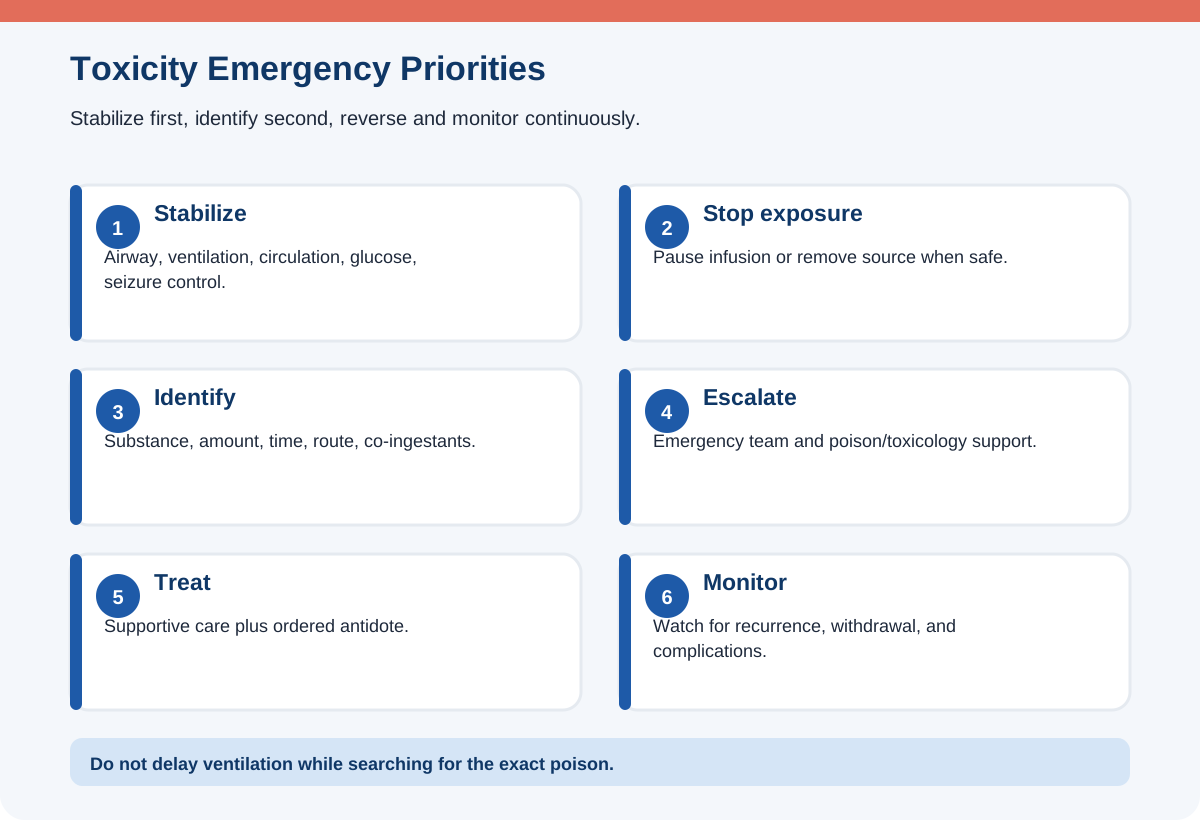
Use the emergency sequence: assess responsiveness, airway, breathing, circulation, oxygenation, blood glucose, and vital signs. Activate emergency resources. Stop an infusion or remove a transdermal source when it can be done safely and according to policy. Preserve medication containers, pump settings, and timing information. Obtain IV access, ECG monitoring, laboratory specimens, and a focused history without delaying life-saving care.
For an unknown exposure, contact the regional poison center or toxicology service. Do not induce vomiting or give a home remedy unless a poison specialist specifically directs it. If the patient has collapsed, is seizing, cannot breathe, or cannot be awakened, emergency resuscitation takes priority.
An antidote is one part of supportive care. Some poisons have no specific antidote. Others require repeated doses, prolonged infusions, activated charcoal in selected circumstances, enhanced elimination, dialysis, or correction of acid-base and electrolyte problems. On the NCLEX®, the safest answer usually combines immediate stabilization with the correct escalation pathway.
Recognize common toxidromes and danger signs
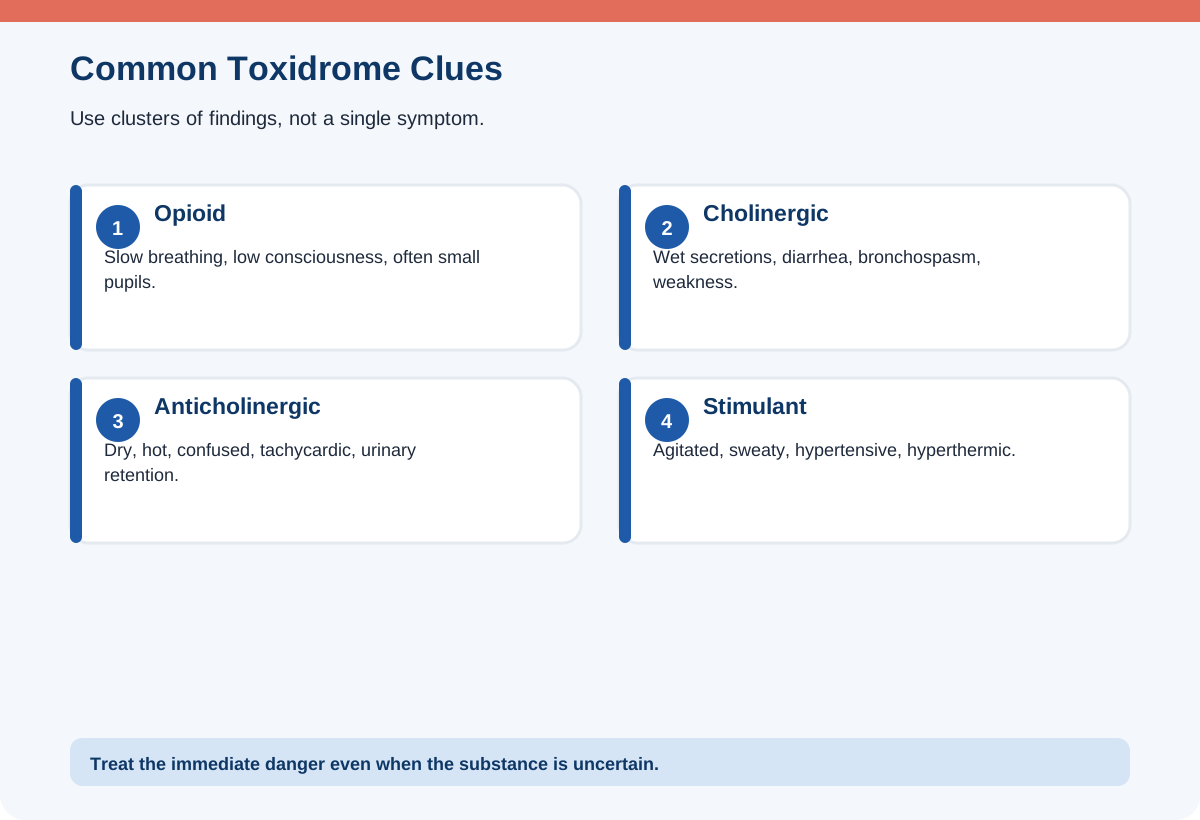
A toxidrome is a group of findings that suggests a class of substances. Opioid toxicity commonly causes depressed mental status, slow or ineffective breathing, and pinpoint pupils, although pupil size is not perfectly reliable. Cholinergic poisoning may cause heavy secretions, sweating, diarrhea, vomiting, bronchospasm, bradycardia, and muscle weakness. Anticholinergic toxicity may cause dry flushed skin, dilated pupils, urinary retention, tachycardia, confusion, and hyperthermia.
Sympathomimetic toxicity can resemble severe agitation with tachycardia, hypertension, sweating, chest pain, and hyperthermia. Sedative-hypnotic toxicity often produces reduced consciousness, ataxia, and respiratory depression. A toxidrome guides the initial response, but the nurse should not guess the exact substance when evidence is limited.
Danger signs include reduced ventilation, oxygen desaturation, hypotension, dysrhythmia, seizure, hyperthermia, severe acidosis, active bleeding, rapidly changing mental status, and a widening QRS complex. Treat the life threat first while the team determines the specific cause.
| Pattern | Common cues | Immediate concern |
|---|---|---|
| Opioid | Slow breathing, reduced consciousness, often pinpoint pupils | Ventilation and recurrent respiratory depression |
| Cholinergic | Secretions, diarrhea, bronchospasm, bradycardia | Airway flooding and weakness |
| Anticholinergic | Dry, hot, confused, tachycardic, urinary retention | Hyperthermia and dysrhythmia |
| Sympathomimetic | Agitated, sweaty, hypertensive, tachycardic | Hyperthermia, ischemia, seizure |
| Sedative | Somnolence, ataxia, slow breathing | Airway protection |
Opioid and sedative toxicity
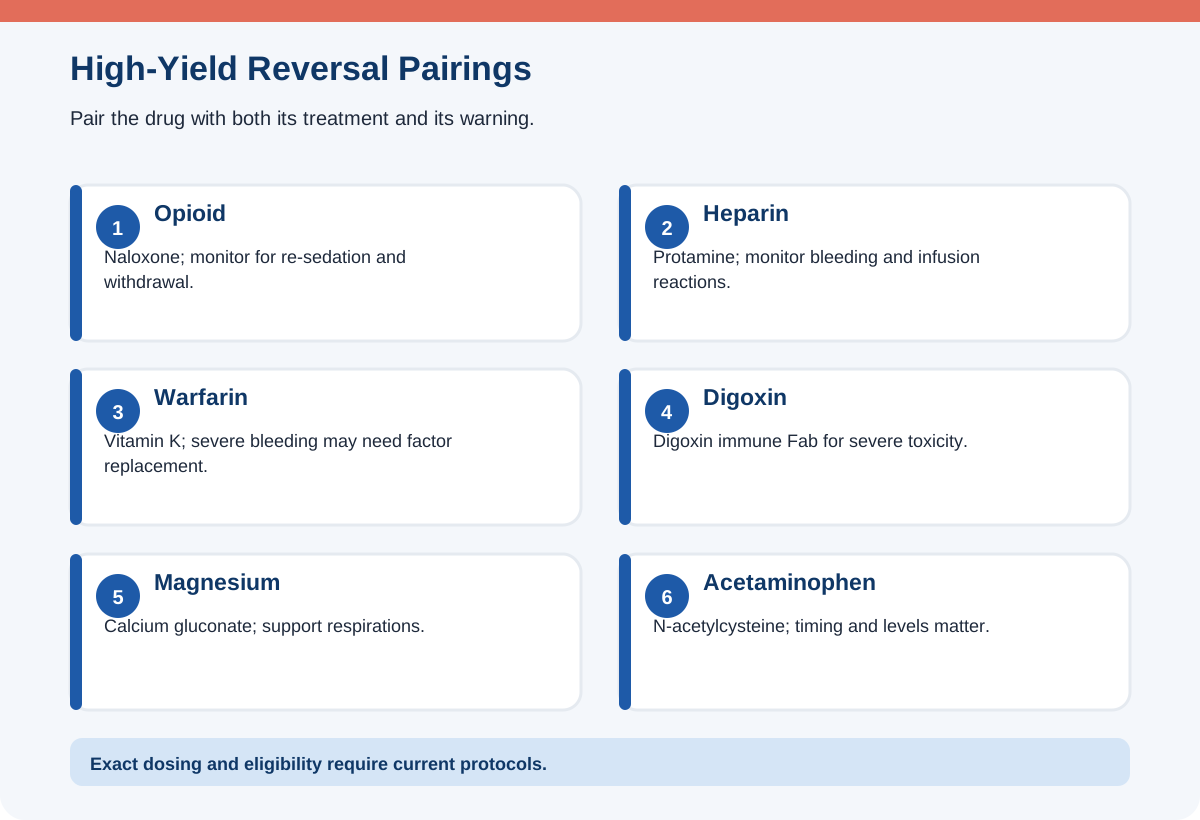
Naloxone is an opioid antagonist used when opioid toxicity causes clinically important respiratory or central nervous system depression. The goal is adequate ventilation and airway protection, not necessarily complete wakefulness or immediate pain elimination. Give the ordered route and dose, support ventilation, and reassess respirations, oxygenation, mental status, blood pressure, and pain. Repeated doses or an infusion may be required because some opioids last longer than naloxone.
Rapid reversal can precipitate acute withdrawal in an opioid-dependent patient, producing agitation, vomiting, diarrhea, pain, tachycardia, and hypertension. That risk does not replace the need to treat life-threatening hypoventilation, but it explains why titration and monitoring matter.
Flumazenil reverses benzodiazepine effects at the receptor, yet its use is limited. It may provoke seizures or withdrawal in people with chronic benzodiazepine exposure, seizure disorders, or mixed overdoses involving proconvulsant drugs. In many sedative overdoses, airway support and careful monitoring are central. The NCLEX®-safe principle is never to administer an antidote mechanically without considering contraindications and recurrence.
Anticoagulant and antiplatelet bleeding
Protamine sulfate neutralizes unfractionated heparin and can partially reverse low-molecular-weight heparin. The dose depends on the amount and timing of heparin exposure. Administer it at the prescribed rate and monitor for hypotension, bradycardia, hypersensitivity, and continued bleeding.
Vitamin K helps reverse warfarin by supporting production of vitamin K-dependent clotting factors, but the route and urgency depend on the INR, bleeding severity, and clinical situation. Life-threatening warfarin-associated bleeding may require a prothrombin complex concentrate or plasma in addition to vitamin K according to the emergency plan. Direct oral anticoagulants have agent-specific or pathway-specific reversal options in selected situations, but local availability and protocols vary.
For any anticoagulant, stop the drug when directed, apply pressure to visible bleeding, avoid unnecessary invasive procedures, assess neurologic status and hemodynamic stability, obtain ordered coagulation studies and blood counts, and prepare for blood products or imaging. The most dangerous error is focusing on a laboratory number while missing active intracranial, gastrointestinal, retroperitoneal, or postoperative bleeding.
Acetaminophen, salicylate, and iron toxicity
N-acetylcysteine is used for acetaminophen poisoning. It is most effective when given early, but it can still be beneficial later depending on the clinical situation. Obtain the exact product, amount, time of ingestion, whether it was immediate- or extended-release, co-ingestants, and risk factors. A serum acetaminophen level is interpreted in relation to time after a single acute ingestion; treatment should not be delayed when risk is high and timing is uncertain.
Salicylate toxicity may produce tinnitus, nausea, sweating, tachypnea, fever, altered mental status, and a mixed acid-base disturbance. Management may include alkalinization and, in severe cases, hemodialysis. Do not assume a normal pH means mild poisoning; competing respiratory alkalosis and metabolic acidosis can mask severity.
Iron poisoning can cause gastrointestinal injury, shock, metabolic acidosis, hepatic injury, and later complications. Deferoxamine binds free iron in significant poisoning. The nurse supports circulation, monitors laboratory trends, and prepares for toxicology-guided treatment rather than waiting for a classic sign.
Digoxin, lithium, and electrolyte-related toxicity
Digoxin toxicity may cause anorexia, nausea, vomiting, confusion, visual changes, bradycardia, heart block, or other dysrhythmias. Risk increases with impaired renal function and certain electrolyte disturbances, especially low potassium, although severe acute toxicity can present with high potassium. Hold the medication, obtain an ECG and ordered levels, review renal function and interacting medications, and prepare for digoxin immune Fab when severe toxicity is present.
Lithium toxicity can progress from gastrointestinal symptoms and coarse tremor to ataxia, confusion, seizures, and coma. Dehydration, sodium loss, renal impairment, and interacting medications can raise lithium levels. Stop lithium, assess neurologic and renal status, replace fluids as ordered, and prepare for hemodialysis in severe cases. There is no single bedside “antidote” that replaces supportive care and elimination.
Magnesium sulfate toxicity is suggested by absent or markedly reduced deep tendon reflexes, respiratory depression, low urine output, hypotension, and cardiac conduction problems. Stop the infusion, support breathing, notify the provider or emergency team, and prepare to administer calcium gluconate as ordered. Monitoring reflexes, respirations, urine output, and serum magnesium helps prevent progression.
Cardiovascular medication overdose
Beta-blocker overdose may cause bradycardia, hypotension, conduction delay, hypoglycemia, and cardiogenic shock. Glucagon is a commonly tested treatment, but real management may also include vasopressors, high-dose insulin therapy, calcium, pacing, and advanced support depending on the agent and response.
Calcium-channel blocker overdose often causes hypotension, bradycardia or conduction disturbance, and hyperglycemia. Treatment may include calcium, vasopressors, high-dose insulin with dextrose and potassium monitoring, and critical-care support. Tricyclic antidepressant toxicity can cause anticholinergic findings, seizures, hypotension, and QRS widening; sodium bicarbonate is a high-yield treatment for cardiotoxicity.
The NCLEX® lesson is to connect the ECG and hemodynamics to the medication history. A “normal” blood pressure can change quickly. Continuous ECG monitoring, frequent glucose and electrolyte checks, and readiness for advanced resuscitation are essential. Do not give a routine medication that could worsen the existing bradycardia or hypotension.
Organophosphate and toxic alcohol emergencies
Organophosphate poisoning causes excess acetylcholine. The patient may have salivation, lacrimation, urination, diarrhea, vomiting, bronchorrhea, bronchospasm, bradycardia, pinpoint pupils, weakness, and seizures. Protect staff from contamination, remove contaminated clothing using appropriate protective measures, and decontaminate according to the emergency plan. Atropine treats muscarinic effects such as dangerous secretions and bronchospasm; pralidoxime helps reactivate acetylcholinesterase when given appropriately.
Methanol and ethylene glycol are toxic alcohols. They may initially resemble ordinary intoxication and later cause severe metabolic acidosis, visual injury with methanol, or renal injury and hypocalcemia with ethylene glycol. Fomepizole blocks toxic metabolite formation, and severe cases may require hemodialysis.
These emergencies are managed with poison-center or toxicology guidance. The nurse should avoid exposing self or others, collect accurate timing and product information, monitor for delayed deterioration, and understand that a patient who initially looks stable may still have a dangerous latent period.
What the nurse does before and after an antidote
Before administration, verify the suspected toxin, indication, dose, route, allergies, contraindications, time of exposure, patient weight when relevant, and whether laboratory samples should be drawn without delaying treatment. Ensure resuscitation equipment is available. For certain antidotes, infusion speed matters because rapid administration can cause hypotension or other reactions.
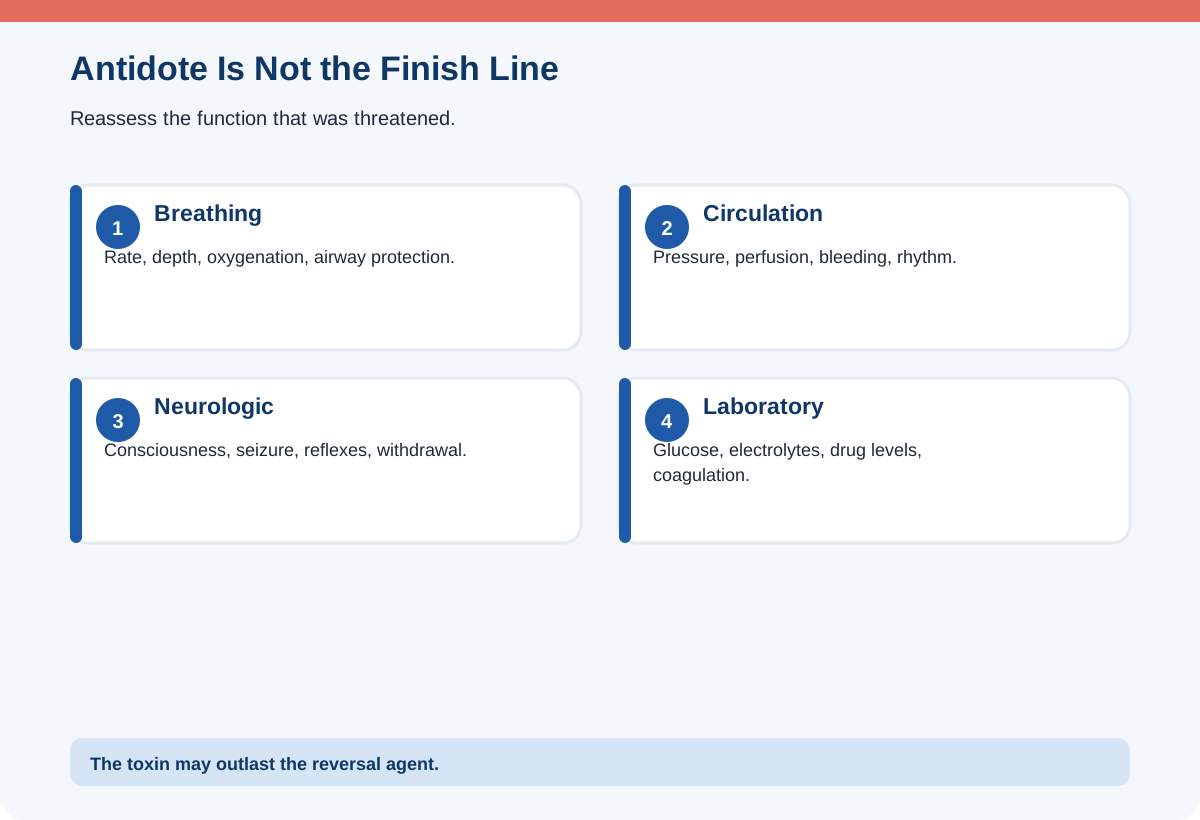
After administration, reassess the exact function the antidote is intended to improve: ventilation after naloxone, bleeding and coagulation after reversal of anticoagulation, rhythm and potassium after digoxin immune Fab, secretions and oxygenation after atropine, or neurologic findings after treatment. Watch for re-sedation, rebound toxicity, withdrawal, hypersensitivity, fluid shifts, and complications of the original poison.
Document the exposure history, assessment, interventions, response, poison-center recommendations, and transfer of information. Toxicology care is dynamic. One improved vital sign does not prove the danger is over.
A simple NCLEX® clinical-judgment workflow
Recognize the medication or substance, dose, timing, formulation, route, co-ingestants, and current life threats. Analyze the pattern rather than relying on one sign. Prioritize airway failure, shock, dysrhythmia, seizure, severe bleeding, hyperthermia, and rapid neurologic decline. Generate both supportive and substance-specific actions. Take action with emergency escalation, decontamination when appropriate, antidote or reversal therapy as ordered, and continuous monitoring. Evaluate for recurrence because the antidote and toxin may have different durations.
When two answers both name the correct antidote, choose the one that also protects the patient. For example, “administer naloxone and reassess respirations” is safer than “administer naloxone and leave to obtain paperwork.”
Original practice scenarios with rationales
These are original educational examples written for RN Clarity. They are not copied, recalled, or represented as actual NCLEX® questions.
Scenario 1: Opioid-induced hypoventilation
A postoperative patient who received an opioid is difficult to awaken, has a respiratory rate of 6/min, and has shallow respirations.
Best response: Support ventilation, activate urgent help, and prepare/administer naloxone according to protocol while continuously reassessing.
Rationale: Breathing is the immediate life threat. Naloxone is appropriate, but airway and ventilation support cannot wait for the medication to work.
Why the alternatives are weaker: Offering oral fluids risks aspiration. Documenting before intervening delays treatment. Pain assessment alone does not address hypoventilation.
Scenario 2: Magnesium toxicity
A patient receiving magnesium sulfate has absent patellar reflexes, respirations of 9/min, and falling urine output.
Best response: Stop the infusion, support breathing, notify the emergency team, and prepare calcium gluconate.
Rationale: The findings indicate magnesium accumulation and neuromuscular/respiratory depression.
Why the alternatives are weaker: Increasing the infusion worsens toxicity. Ambulation is unsafe. Waiting for the next scheduled level delays treatment.
Scenario 3: Warfarin with neurologic change
A patient taking warfarin develops a sudden severe headache and confusion after a fall.
Best response: Treat this as possible intracranial bleeding, activate urgent evaluation, hold anticoagulation as directed, and prepare for imaging and reversal.
Rationale: Neurologic change after trauma while anticoagulated is a time-critical bleeding emergency.
Why the alternatives are weaker: Checking only the INR misses the need for immediate assessment. Giving aspirin increases bleeding risk.
Scenario 4: Digoxin pattern
A patient with renal impairment taking digoxin reports nausea and yellow-green visual changes and has a new bradyarrhythmia.
Best response: Hold digoxin, obtain urgent ECG and ordered studies, notify the provider, and prepare for digoxin immune Fab if severe toxicity is confirmed.
Rationale: The clustered gastrointestinal, visual, renal, and cardiac cues are highly concerning for toxicity.
Why the alternatives are weaker: Giving the next dose worsens exposure. Treating only nausea ignores the dysrhythmia.
Scenario 5: Possible organophosphate exposure
After pesticide exposure, a farm worker has copious secretions, wheezing, diarrhea, bradycardia, and muscle weakness.
Best response: Use appropriate protective measures, decontaminate, support the airway, and prepare atropine and pralidoxime under emergency guidance.
Rationale: The cholinergic pattern and exposure history indicate a contamination risk and airway emergency.
Why the alternatives are weaker: Entering without protection may expose staff. An antidiarrheal does not treat the life-threatening secretions and weakness.
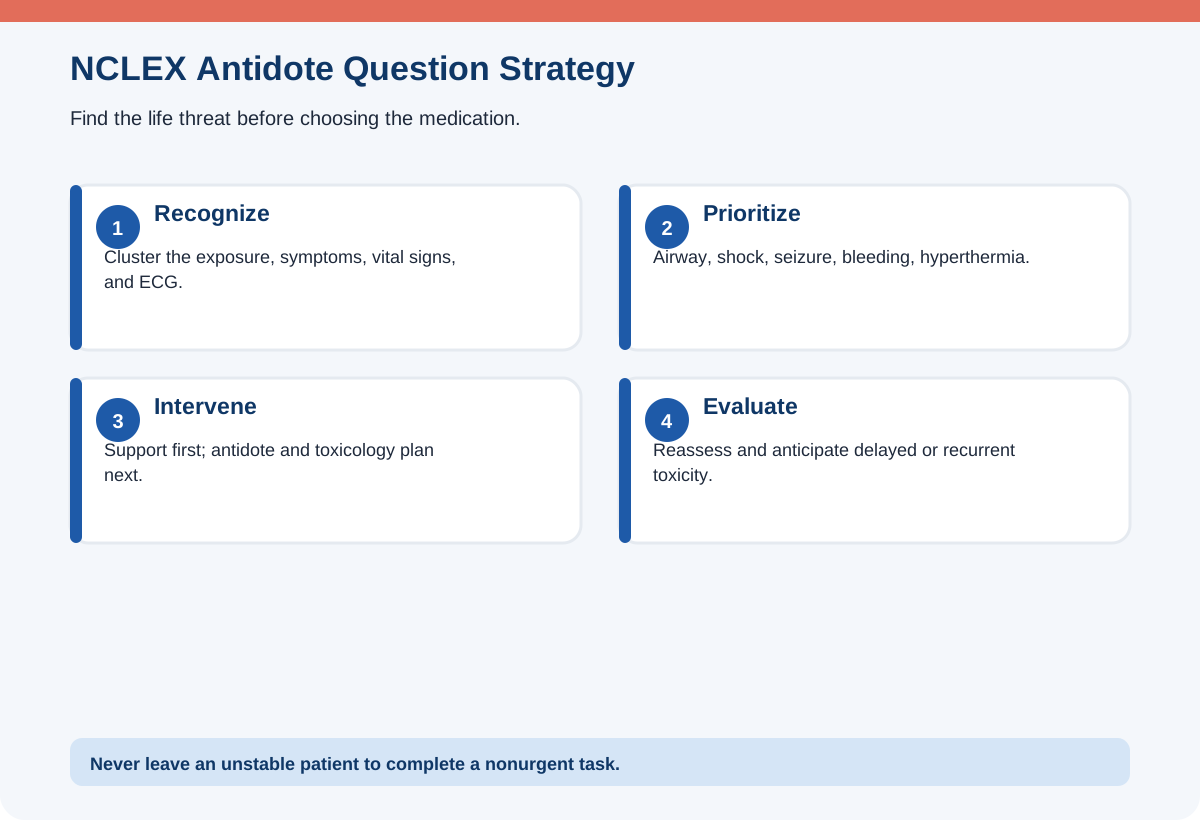
Common NCLEX® traps
- Antidote before ABCs. A named reversal agent never replaces ventilation, circulation, and emergency escalation.
- One sign equals one poison. Pupil size or nausea alone is not diagnostic; use the full pattern and history.
- Flumazenil is always safe. It can precipitate seizures or withdrawal in high-risk patients.
- Naloxone ends monitoring. Re-sedation can occur when the opioid lasts longer.
- A laboratory number is the whole patient. Active bleeding, dysrhythmia, or mental-status change can be more urgent than a result.
- All anticoagulants reverse the same way. Reversal depends on the specific drug, timing, renal function, and bleeding severity.
- Induce vomiting. Do not use home remedies or induce emesis unless specifically directed by toxicology professionals.
- Improvement means discharge. Delayed toxicity and rebound effects may require prolonged observation.
What to memorize and what to understand
Memorize the most frequently tested associations: opioids–naloxone; acetaminophen–N-acetylcysteine; heparin–protamine; warfarin–vitamin K; severe digoxin toxicity–digoxin immune Fab; magnesium toxicity–calcium gluconate; significant iron toxicity–deferoxamine; organophosphates–atropine plus pralidoxime; toxic alcohols–fomepizole; tricyclic cardiotoxicity–sodium bicarbonate. Understand that each association has conditions, monitoring needs, and limitations.
Also understand the patterns that make the antidote urgent. An exam question is more likely to ask what the nurse does for slow breathing, bleeding, dysrhythmia, absent reflexes, or excessive secretions than to ask for a disconnected vocabulary match.
A seven-day review plan
Day 1: Learn the emergency stabilization sequence and five toxidromes. Day 2: Review opioids, benzodiazepines, and recurrence after reversal. Day 3: Study anticoagulant bleeding and the difference among heparin, warfarin, and direct agents. Day 4: Study acetaminophen, salicylate, iron, and toxic alcohols. Day 5: Review digoxin, lithium, magnesium, beta-blockers, calcium-channel blockers, and tricyclics. Day 6: Practice ten mixed scenarios by identifying the life threat before naming the antidote. Day 7: Build a one-page table with toxin, key cues, first nursing priority, reversal strategy, and monitoring after treatment.
Frequently asked questions
Do I need to memorize every antidote for the NCLEX®?
Focus on common, high-risk pairings and the emergency nursing priorities. The exam is more likely to reward recognition and safe action than an obscure list.
Is naloxone enough for opioid overdose?
No. Support ventilation and monitor closely. Naloxone may require repeat dosing, and respiratory depression can recur.
Why is flumazenil not always used?
It can precipitate seizures or acute withdrawal, especially with chronic benzodiazepine use, seizure risk, or mixed overdose.
What should the nurse do for an unknown poisoning?
Stabilize the patient, activate emergency help, gather product and timing information, and contact the regional poison center or toxicology service.
Should a nurse make a patient vomit after poisoning?
No. Do not induce vomiting or give a home remedy unless a poison specialist specifically directs it.
Does a normal initial assessment rule out danger?
No. Some toxins have delayed effects, long half-lives, active metabolites, or rebound toxicity after an antidote wears off.
Final rapid-review checklist
- I prioritize airway, breathing, circulation, glucose, temperature, rhythm, and mental status.
- I know the common opioid, anticoagulant, acetaminophen, digoxin, magnesium, and organophosphate reversals.
- I understand why naloxone may need repeat dosing.
- I know flumazenil has important seizure and withdrawal risks.
- I do not induce vomiting without poison-specialist direction.
- I monitor for recurrence and complications after an antidote.
- I preserve product, timing, dose, and co-ingestant information.
- I use poison-control/toxicology guidance for uncertain exposures.
Sources and further reading
- NCSBN, NCLEX® test plans and candidate resources: https://www.nclex.com/test-plans.page
- America’s Poison Centers, Poison Help and first-aid guidance: https://poisonhelp.org/
- SAMHSA, opioid overdose prevention and treatment resources: https://www.samhsa.gov/substance-use/treatment
- U.S. Food and Drug Administration, drug safety communications and prescribing information: https://www.fda.gov/drugs
Educational disclaimer
RN Clarity provides educational study support only. This article is not medical advice, does not replace a nursing program, clinical instructor, employer policy, or current provider order, and is not affiliated with or endorsed by NCSBN, Pearson VUE, or the NCLEX-RN® program. In an actual clinical setting, follow current laws, facility policies, approved references, and the directions of the responsible licensed clinician.
Structured data
{
  "@context": "https://schema.org",
  "@graph": [
    {
      "@type": "BlogPosting",
      "headline": "NCLEX-RN® Antidotes and Toxicities: High-Yield Reversal Agents and Emergency Priorities",
      "description": "Study high-yield NCLEX® antidotes, toxic effects, emergency priorities, monitoring, and nursing actions for opioids, anticoagulants, digoxin, and more.",
      "mainEntityOfPage": {
        "@type": "WebPage",
        "@id": "https://rnclarity.com/blog/nclex-rn-antidotes-toxicities-reversal-agents"
      },
      "url": "https://rnclarity.com/blog/nclex-rn-antidotes-toxicities-reversal-agents",
      "datePublished": "ACTUAL_FIRST_LIVE_DATE",
      "dateModified": "ACTUAL_FIRST_LIVE_DATE",
      "author": {
        "@type": "Organization",
        "name": "RN Clarity"
      },
      "publisher": {
        "@type": "Organization",
        "name": "RN Clarity"
      },
      "inLanguage": "en-US",
      "isAccessibleForFree": true,
      "about": [
        "NCLEX-RN® examination",
        "Nursing education",
        "NCLEX® antidotes and toxicities"
      ]
    },
    {
      "@type": "BreadcrumbList",
      "itemListElement": [
        {
          "@type": "ListItem",
          "position": 1,
          "name": "Home",
          "item": "https://rnclarity.com/"
        },
        {
          "@type": "ListItem",
          "position": 2,
          "name": "Blog",
          "item": "https://rnclarity.com/blog"
        },
        {
          "@type": "ListItem",
          "position": 3,
          "name": "NCLEX-RN® Antidotes and Toxicities: High-Yield Reversal Agents and Emergency Priorities",
          "item": "https://rnclarity.com/blog/nclex-rn-antidotes-toxicities-reversal-agents"
        }
      ]
    },
    {
      "@type": "FAQPage",
      "mainEntity": [
        {
          "@type": "Question",
          "name": "Do I need to memorize every antidote for the NCLEX®?",
          "acceptedAnswer": {
            "@type": "Answer",
            "text": "Focus on common, high-risk pairings and the emergency nursing priorities. The exam is more likely to reward recognition and safe action than an obscure list."
          }
        },
        {
          "@type": "Question",
          "name": "Is naloxone enough for opioid overdose?",
          "acceptedAnswer": {
            "@type": "Answer",
            "text": "No. Support ventilation and monitor closely. Naloxone may require repeat dosing, and respiratory depression can recur."
          }
        },
        {
          "@type": "Question",
          "name": "Why is flumazenil not always used?",
          "acceptedAnswer": {
            "@type": "Answer",
            "text": "It can precipitate seizures or acute withdrawal, especially with chronic benzodiazepine use, seizure risk, or mixed overdose."
          }
        },
        {
          "@type": "Question",
          "name": "What should the nurse do for an unknown poisoning?",
          "acceptedAnswer": {
            "@type": "Answer",
            "text": "Stabilize the patient, activate emergency help, gather product and timing information, and contact the regional poison center or toxicology service."
          }
        },
        {
          "@type": "Question",
          "name": "Should a nurse make a patient vomit after poisoning?",
          "acceptedAnswer": {
            "@type": "Answer",
            "text": "No. Do not induce vomiting or give a home remedy unless a poison specialist specifically directs it."
          }
        },
        {
          "@type": "Question",
          "name": "Does a normal initial assessment rule out danger?",
          "acceptedAnswer": {
            "@type": "Answer",
            "text": "No. Some toxins have delayed effects, long half-lives, active metabolites, or rebound toxicity after an antidote wears off."
          }
        }
      ]
    }
  ]
}