NCLEX-RN® Blood Transfusions: Products, Verification, Reactions, and Nursing Actions
Review blood products, transfusion verification, reactions, and safe nursing actions for NCLEX-RN® preparation.
postNumber: 78 title: "NCLEX-RN® Blood Transfusions: Products, Verification, Reactions, and Nursing Actions" h1: "NCLEX-RN® Blood Transfusions: Products, Verification, Reactions, and Nursing Actions" slug: "nclex-rn-blood-transfusions-products-reactions-nursing-actions" canonicalUrl: "https://rnclarity.com/blog/nclex-rn-blood-transfusions-products-reactions-nursing-actions" primaryKeyword: "NCLEX® blood transfusion nursing" secondaryKeywords:
- "blood transfusion reaction NCLEX®"
- "packed red blood cells nursing"
- "platelet transfusion nursing"
- "transfusion verification steps"
- "TACO versus TRALI" metaTitle: "NCLEX® Blood Transfusions: Reactions and Nursing Actions" metaDescription: "Learn blood products, pre-transfusion verification, monitoring, reaction recognition, and the first nursing actions for NCLEX® blood transfusion questions." excerpt: "A practical NCLEX® guide to choosing blood products, performing safety checks, recognizing reaction patterns, and responding without delay." suggestedPublishDate: "2026-08-07" status: "draft_nurse_review_required" schemaTypes: ["BlogPosting", "FAQPage", "BreadcrumbList"] diagramCount: 5 clinicalReview: "Required before publication"
NCLEX-RN® Blood Transfusions: Products, Verification, Reactions, and Nursing Actions
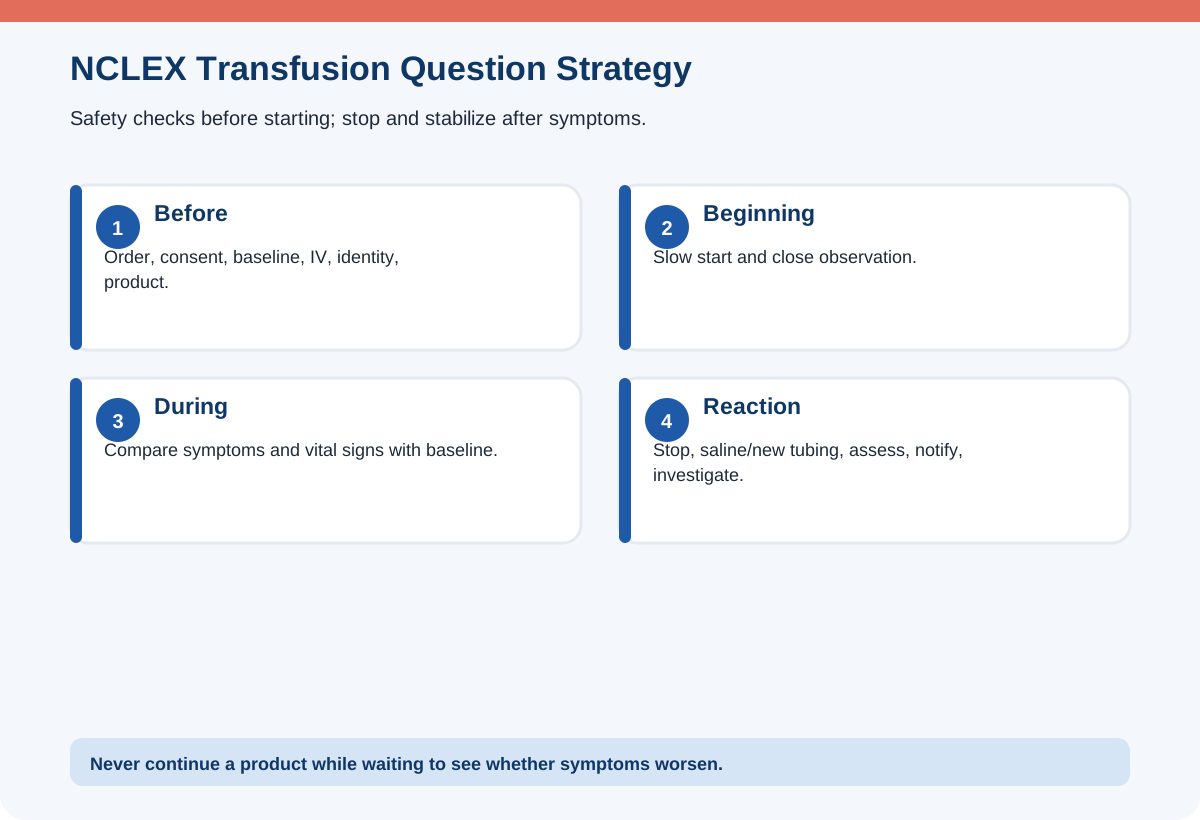
Quick answer: Before a transfusion, verify the prescription, consent, patient identity, compatibility, product, expiration, baseline assessment, IV access, and required double-check. During the transfusion, stay alert for fever, chills, dyspnea, pain, hypotension, rash, or overload. If a reaction is suspected, stop the blood immediately, keep the vein open with compatible normal saline using new tubing, assess and notify, then follow the reaction protocol.
Editorial status: This is a complete educational draft. A qualified U.S. registered nurse or nurse educator should clinically review it before publication. Drug doses, facility procedures, and emergency algorithms must be checked against the current source and local policy.
Suggested reading time: 18–22 minutes
Designed for: NCLEX-RN® candidates, including internationally educated nurses and repeat test-takers.
Table of contents
- Know what each blood product replaces
- Prepare the patient and equipment
- Perform the bedside verification correctly
- Start slowly and monitor intentionally
- Recognize acute hemolytic and febrile reactions
- Recognize allergic and anaphylactic reactions
- Distinguish TACO, TRALI, and septic reactions
- Respond to a suspected transfusion reaction
- A simple NCLEX® clinical-judgment workflow
- Original practice scenarios with rationales
- Common NCLEX® traps
- What to memorize and what to understand
- A seven-day review plan
- Frequently asked questions
- Final rapid-review checklist
Why this topic matters for the NCLEX-RN®
Blood transfusion questions test whether a nurse can prevent a wrong-patient or wrong-product event and recognize deterioration early. The exam may ask which product is appropriate, what must be verified, which finding requires stopping the transfusion, or how to distinguish hemolysis, allergy, overload, lung injury, and contamination.
The central NCLEX® rule is simple: a suspected reaction is treated as real until assessed. Do not slow the blood and “watch.” Stop the transfusion, protect the IV route with compatible saline and new tubing, assess airway and circulation, verify identification, notify the responsible clinician and blood bank according to policy, and send required samples or the product bag. The exact institutional sequence may differ, but patient stabilization and stopping exposure do not wait.
Know what each blood product replaces
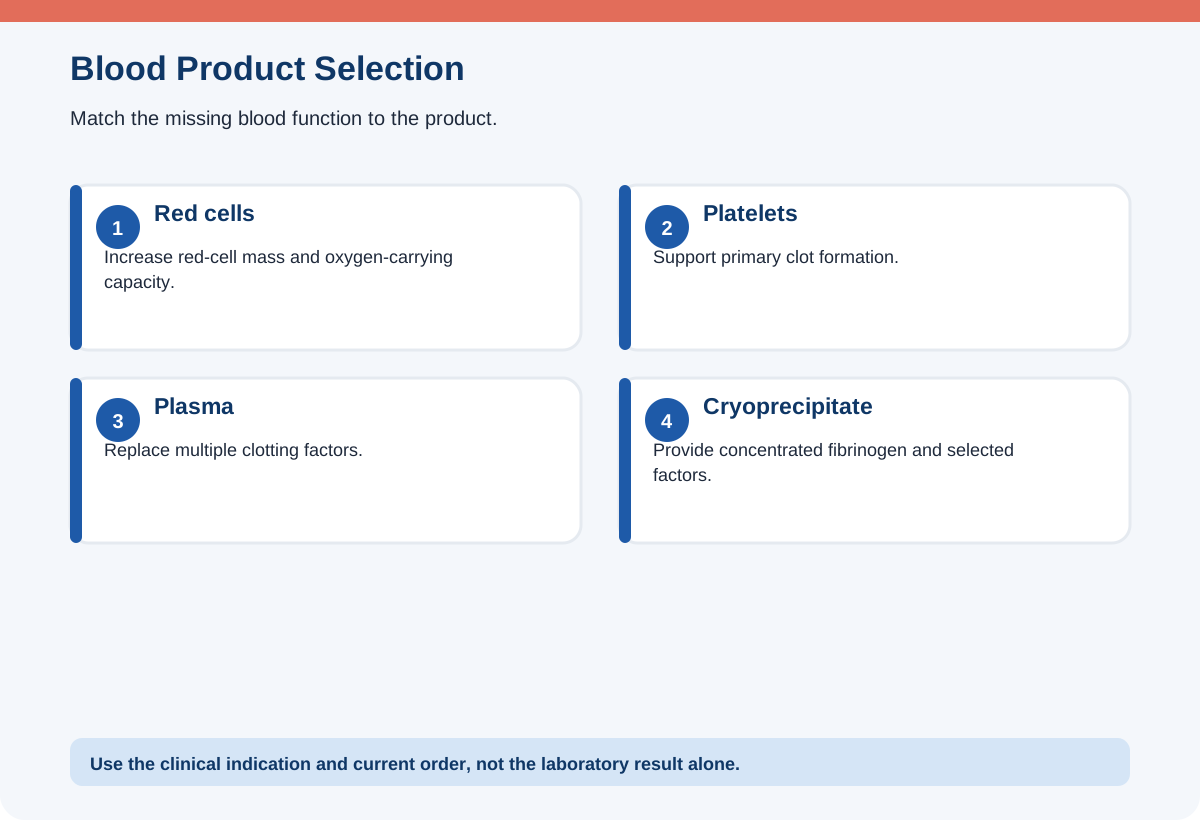
Packed red blood cells increase oxygen-carrying capacity by providing red cells. They are commonly used for clinically significant anemia or blood loss when the patient’s symptoms and condition support transfusion. One unit often raises hemoglobin by roughly 1 g/dL in an average adult, but the actual response varies and should not be used as an automatic promise.
Platelets are used to prevent or treat bleeding related to thrombocytopenia or platelet dysfunction. Plasma provides multiple clotting factors and is used for selected coagulopathies or urgent reversal situations, not simply to expand volume. Cryoprecipitate is rich in fibrinogen and certain clotting proteins and may be used when fibrinogen is critically low.
The exam may tempt you to choose red cells for a low platelet count or platelets for anemia. Match the missing function: red cells carry oxygen, platelets form the initial plug, and plasma/cryoprecipitate replace clotting components. Always integrate active bleeding, symptoms, laboratory trends, and the clinical order.
| Product | Main function | Common NCLEX® cue |
|---|---|---|
| Packed red blood cells | Increase red-cell mass and oxygen delivery | Symptomatic anemia or acute blood loss |
| Platelets | Support primary clot formation | Very low platelets or platelet-related bleeding |
| Plasma | Provide multiple clotting factors | Coagulopathy with bleeding or urgent factor replacement |
| Cryoprecipitate | Provide concentrated fibrinogen and selected factors | Critically low fibrinogen with bleeding |
Prepare the patient and equipment
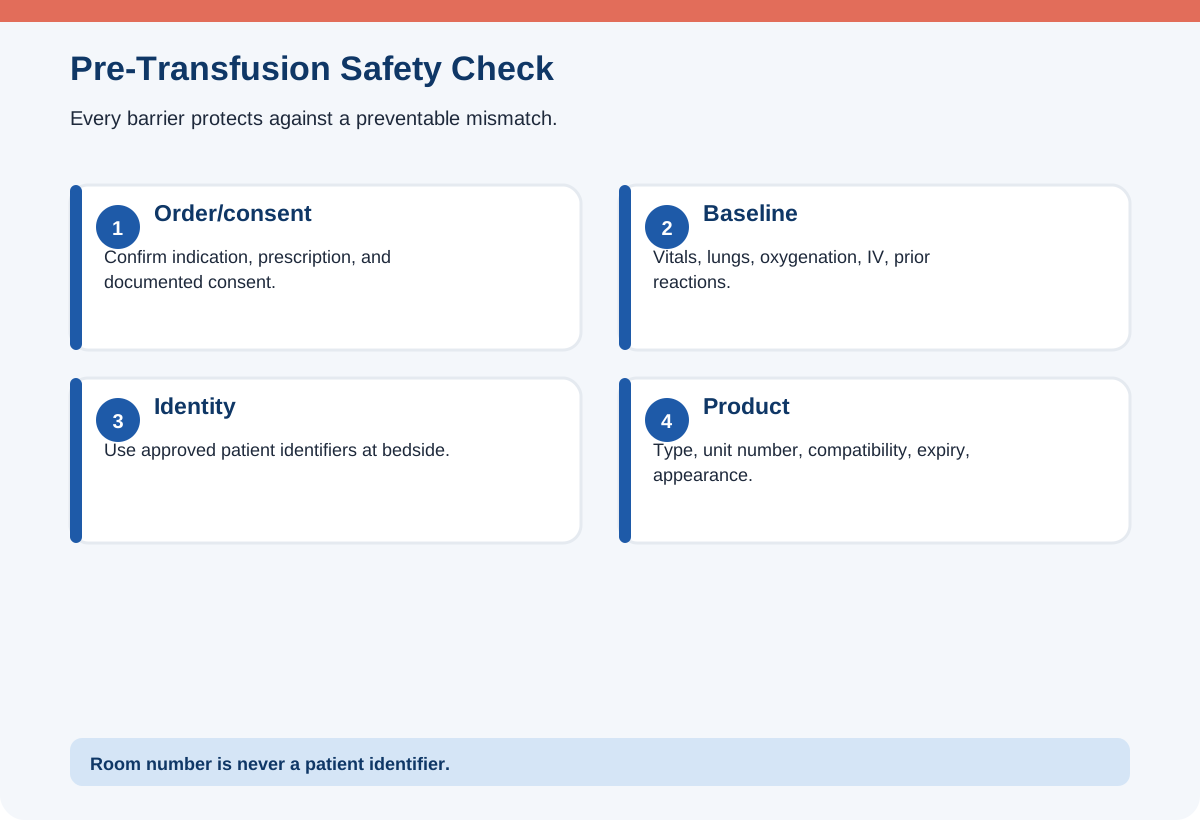
Confirm the prescription and that informed consent is documented according to policy. Explain the purpose, expected duration, and symptoms the patient must report immediately: chills, fever, itching, rash, shortness of breath, chest or back pain, anxiety, nausea, or a feeling that something is wrong. Teaching is part of early detection.
Assess baseline vital signs, lung sounds, oxygenation, fluid status, IV patency, previous reactions, and relevant laboratory results. Identify patients at higher risk for volume overload, such as those with heart failure, renal impairment, older age, or a history of transfusion-associated circulatory overload. Make sure the IV catheter is suitable for the product and rate.
Use blood-administration tubing with the required filter. In general, 0.9% sodium chloride is the standard compatible solution used with blood products unless an approved protocol specifically permits another fluid. Do not add medication directly to blood tubing or the blood product. Obtain the product only when the nurse and patient are ready so it is not left at room temperature unnecessarily.
Perform the bedside verification correctly
The most important safety barrier is the bedside identity and product check performed exactly as policy requires. Compare the patient’s identifiers with the wristband, order, compatibility record, and blood product label. Verify the product type, unit number, ABO/Rh compatibility as applicable, expiration, special processing requirements, and appearance. The required number and qualifications of verifiers depend on the institution and technology used.
Do not perform the check away from the patient and then assume the correct bag reached the correct bedside. Do not use room number as an identifier. If any detail differs, stop and resolve it with the blood bank before connecting the product.
Inspect the bag for leaks, unusual color, clots, gas, or other abnormal appearance. A label that is hard to read or a unit that has expired is not “probably fine.” The correct NCLEX® action is to withhold and clarify rather than improvise.
Start slowly and monitor intentionally
Obtain the required baseline vital signs just before starting. Begin at the prescribed slow rate and remain with or closely observe the patient during the initial period specified by policy because serious acute reactions often appear early. Reassess vital signs and symptoms at the required intervals and whenever the patient reports a change.
The product must be completed within the maximum time allowed by policy and product standards, commonly within four hours for a unit of red cells, to reduce bacterial-growth risk. Do not start a unit that cannot be completed safely within the permitted period. The rate should consider the patient’s clinical urgency and risk for circulatory overload.
Monitor more than temperature. Assess respirations, oxygen saturation, blood pressure, pulse, lung sounds, skin, pain, urine output, mental status, and the IV site. Compare with baseline. A small temperature change with new chills and back pain is more concerning than the number alone suggests.
Recognize acute hemolytic and febrile reactions
An acute hemolytic reaction can occur when incompatible red cells are transfused. Findings may include fever, chills, back or flank pain, chest pain, dyspnea, hypotension, tachycardia, anxiety, nausea, hemoglobinuria, bleeding, and renal injury. In an anesthetized or unconscious patient, unexplained hypotension, bleeding, or dark urine may be the clue. This is a medical emergency.
A febrile nonhemolytic reaction commonly presents with a temperature rise and chills without evidence of hemolysis. It may be related to cytokines or antibodies against donor leukocytes. However, fever during transfusion can also signal hemolysis or bacterial contamination, so the nurse cannot diagnose “just a fever reaction” at the bedside and continue the product. Stop and investigate according to protocol.
For both patterns, prevent further exposure, stabilize the patient, and support the reaction workup. The final classification is made after clinical and blood-bank evaluation.
Recognize allergic and anaphylactic reactions
A mild allergic reaction may cause localized hives, itching, and flushing without respiratory or cardiovascular compromise. The transfusion is stopped and the patient is assessed. An antihistamine may be ordered, and whether the same unit can ever be restarted is determined by the responsible clinician and blood-bank policy—not by the bedside nurse alone.
An anaphylactic reaction can cause wheezing, stridor, angioedema, hypotension, shock, and severe respiratory distress, sometimes with little or no fever. Stop the transfusion, call for emergency assistance, support airway and oxygenation, and prepare epinephrine and other emergency treatments as ordered.
Do not minimize itching that is rapidly spreading or accompanied by throat tightness. Conversely, do not assume every rash is anaphylaxis. The nursing priority is to stop exposure and assess the airway, breathing, and circulation so the severity can be determined safely.
Distinguish TACO, TRALI, and septic reactions
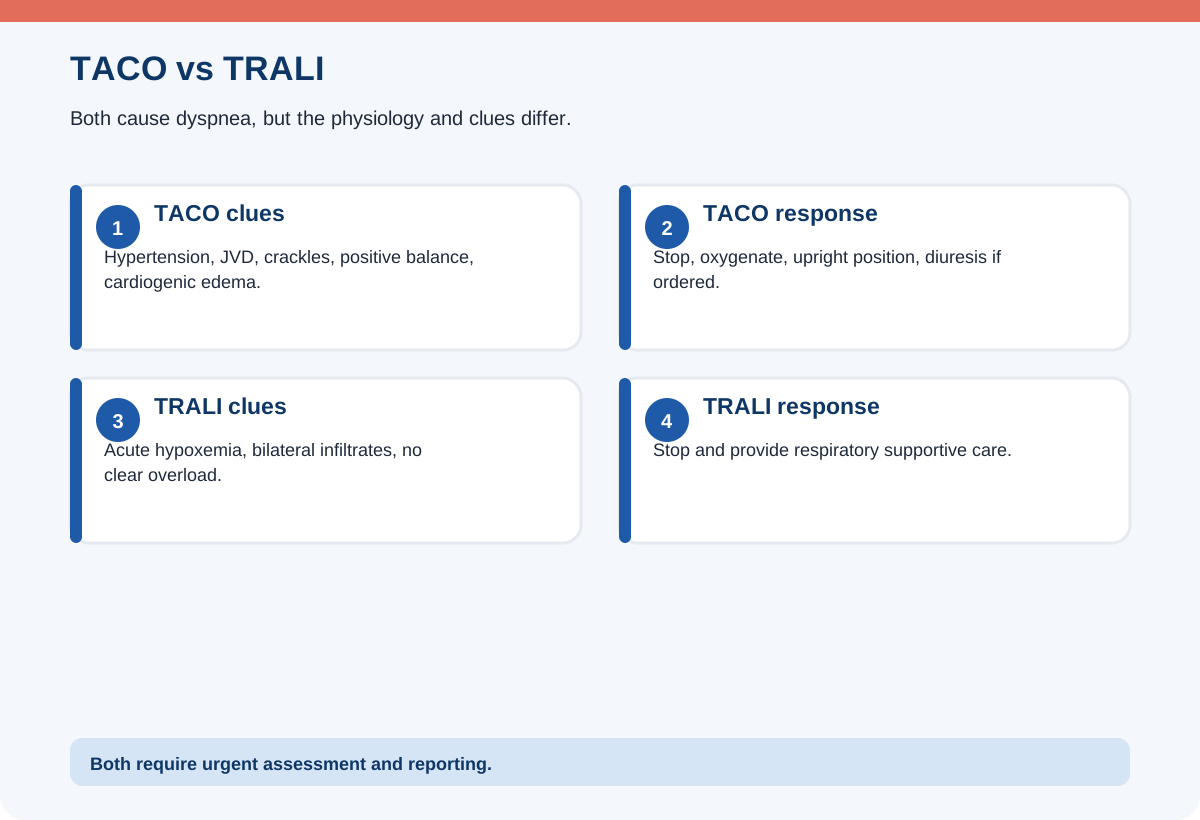
Transfusion-associated circulatory overload (TACO) is volume overload. Findings often include dyspnea, hypertension, tachycardia, crackles, jugular venous distention, positive fluid balance, pulmonary edema, and improvement with diuresis. Risk rises when transfusion is rapid or the patient cannot tolerate the volume. Prevention may include a slower rate, split units, close fluid monitoring, and diuretics when prescribed.
Transfusion-related acute lung injury (TRALI) is acute noncardiogenic pulmonary edema temporally related to transfusion. It can cause severe hypoxemia, dyspnea, fever, hypotension, and bilateral pulmonary infiltrates without clear circulatory overload. Treatment is supportive, often requiring oxygen or ventilation. Diuretics are not automatically helpful because the problem is not simple volume excess.
A septic transfusion reaction from bacterial contamination may cause high fever, rigors, hypotension, nausea, vomiting, shock, and rapid deterioration. Stop the product, obtain cultures as ordered, and prepare broad-spectrum antimicrobials and resuscitation. A dramatic fever with hypotension is especially concerning.
Respond to a suspected transfusion reaction
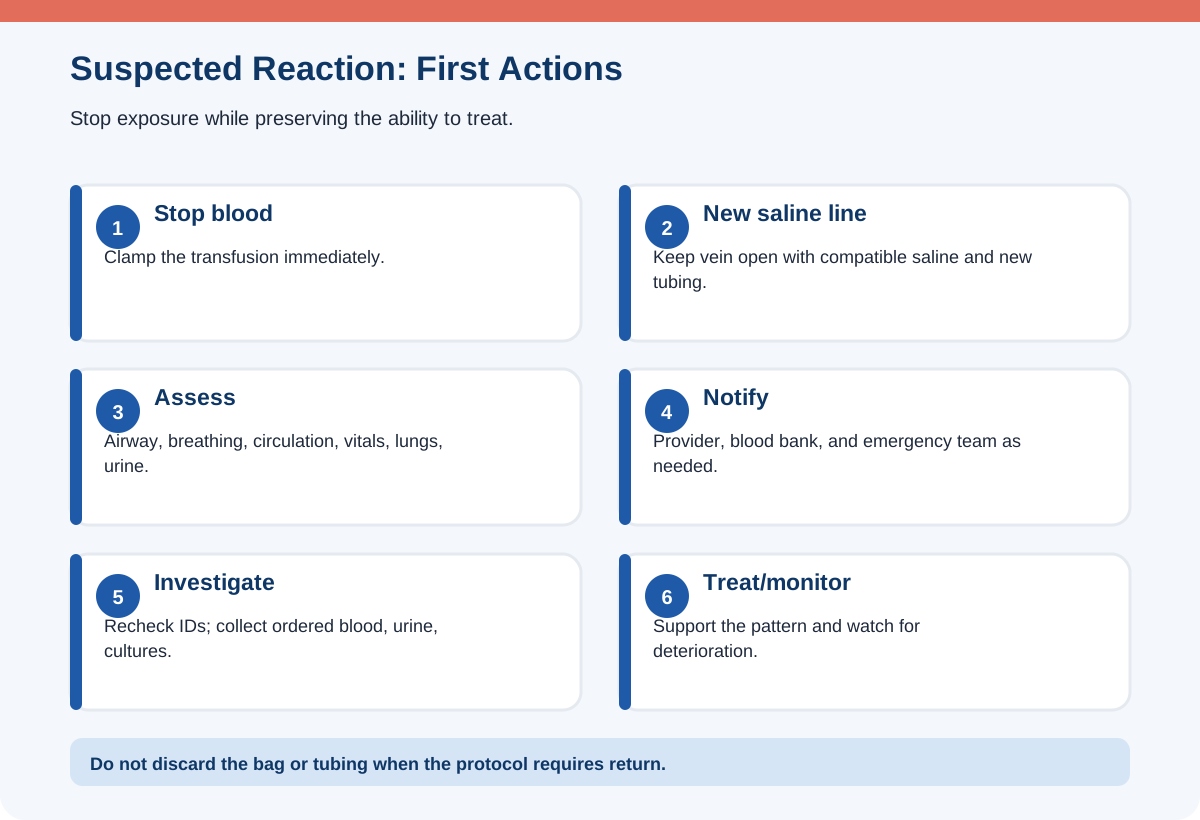
First, stop the transfusion. Second, maintain venous access with compatible normal saline through new tubing according to policy so no additional blood from the old tubing enters the patient. Third, assess airway, breathing, circulation, vital signs, oxygenation, lung sounds, pain, urine, and mental status. Activate urgent help for instability.
Recheck the patient and product identification. Notify the provider and blood bank or transfusion service. Follow orders for blood and urine samples, cultures, direct antiglobulin testing, chest imaging, or other studies. Return the blood bag and tubing when the protocol requires it; do not discard evidence.
Treat the reaction pattern—epinephrine for anaphylaxis, oxygen and ventilatory support for respiratory failure, fluids or vasopressors for shock, diuretics for overload when prescribed, antibiotics for suspected contamination, and renal-protective supportive measures in hemolysis. Document the start time, volume infused, findings, actions, notifications, and response.
A simple NCLEX® clinical-judgment workflow
Recognize the product, indication, baseline status, transfusion start time, rate, and new symptoms. Analyze whether the pattern suggests hemolysis, allergy, overload, lung injury, or contamination while accepting that the bedside nurse may not know the final diagnosis. Prioritize airway compromise, hypoxemia, hypotension, severe pain, rigors, and neurologic change. Generate actions that stop exposure and preserve IV access. Take action by stopping blood, using new saline tubing, assessing, escalating, and following the reaction protocol. Evaluate vital signs, oxygenation, urine output, lung findings, and laboratory response.
When a question asks for the “first” action after new symptoms begin, stopping the transfusion is usually the safest first step. When the patient is already pulseless or unable to breathe, resuscitation occurs simultaneously and takes priority.
Original practice scenarios with rationales
These are original educational examples written for RN Clarity. They are not copied, recalled, or represented as actual NCLEX® questions.
Scenario 1: Chills and back pain
Fifteen minutes after red cells begin, a patient develops chills, low back pain, tachycardia, and hypotension.
Best response: Stop the transfusion immediately, maintain IV access with normal saline using new tubing, assess and activate the reaction protocol.
Rationale: The pattern is concerning for an acute hemolytic reaction and shock. Continuing even slowly adds exposure.
Why the alternatives are weaker: Giving an antipyretic and continuing delays emergency treatment. Removing the IV loses access needed for resuscitation.
Scenario 2: Dyspnea with hypertension
Near the end of a transfusion, an older adult with heart failure develops severe dyspnea, crackles, jugular venous distention, and rising blood pressure.
Best response: Stop the transfusion, position and oxygenate as appropriate, notify urgently, and prepare for treatment of circulatory overload.
Rationale: The pattern favors TACO because pulmonary edema is accompanied by hypertension and volume-overload signs.
Why the alternatives are weaker: Increasing fluids worsens overload. Assuming anxiety ignores objective respiratory findings.
Scenario 3: Hives only
A patient develops scattered hives and itching during a platelet transfusion but has no wheeze, swelling, hypotension, or fever.
Best response: Stop the transfusion and assess; notify and follow the mild allergic-reaction protocol.
Rationale: Even a mild suspected reaction requires stopping and assessment before any decision about treatment or restart.
Why the alternatives are weaker: Continuing without assessment risks progression. Epinephrine may not be required when there is no anaphylaxis, but airway monitoring remains essential.
Scenario 4: Wrong identifier
At the bedside, one digit on the product label does not match the compatibility record.
Best response: Do not start the transfusion; return or hold the unit and resolve the discrepancy with the blood bank.
Rationale: Any identity or product mismatch defeats the safety check and can lead to fatal incompatibility.
Why the alternatives are weaker: Asking the patient whether the bag looks correct is not verification. Correcting the label yourself is unsafe.
Scenario 5: High fever and shock
A patient rapidly develops rigors, high fever, vomiting, and hypotension during a transfusion.
Best response: Stop the product, support circulation and airway, notify the blood bank and provider, and prepare cultures and antimicrobial treatment.
Rationale: The abrupt severe febrile-shock pattern is concerning for bacterial contamination.
Why the alternatives are weaker: A routine antipyretic alone does not treat sepsis. Discarding the bag removes material needed for investigation.
Common NCLEX® traps
- Slow instead of stop. A suspected reaction requires stopping the blood, not merely reducing the rate.
- Remove the IV. Keep access for saline and emergency treatment unless the site itself is unsafe.
- Use the same tubing. New tubing prevents residual blood from continuing to enter the patient.
- Treat all fever as benign. Hemolysis and contamination can begin with fever and chills.
- Confuse TACO and TRALI. Overload signs and hypertension favor TACO; severe noncardiogenic hypoxemia without overload favors TRALI.
- Medication in blood tubing. Do not add medications directly to the blood product or administration line.
- Verification away from bedside. Identity checking must occur at the patient according to policy.
- Restart independently. Only the authorized clinician and protocol determine whether a unit may be resumed.
What to memorize and what to understand
Memorize what the main products replace and the universal suspected-reaction sequence: stop blood; maintain access with compatible saline through new tubing; assess and stabilize; recheck identity; notify the provider and blood bank; collect and return required materials; document and monitor. Understand the differences among hemolysis, allergy, TACO, TRALI, and contamination, but do not delay the universal response while trying to name the reaction.
Understand that trends matter. A patient’s new dyspnea, pressure change, pain, chills, or mental-status change compared with baseline is more useful than memorizing a single cutoff.
A seven-day review plan
Day 1: Match red cells, platelets, plasma, and cryoprecipitate to their functions. Day 2: Review consent, baseline assessment, tubing, saline compatibility, and bedside verification. Day 3: Learn the universal reaction response until it can be recalled without notes. Day 4: Compare hemolytic, febrile, allergic, and anaphylactic patterns. Day 5: Compare TACO, TRALI, and septic reactions using respiratory findings, blood pressure, volume status, and fever. Day 6: Practice prioritization scenarios and identify the first action. Day 7: Create a one-page chart and teach the process aloud as though orienting a new nurse.
Frequently asked questions
What is the first action for a suspected transfusion reaction?
Stop the transfusion. Then maintain IV access with compatible saline using new tubing, assess and stabilize, and follow the reaction protocol.
Can medications be given through blood tubing?
Do not add medications to the blood product or blood-administration tubing. Use a separate compatible route according to policy.
What fluid is commonly compatible with blood products?
0.9% sodium chloride is the standard compatible solution in most settings. Follow the current product and facility policy.
How are TACO and TRALI different?
TACO is circulatory volume overload and often includes hypertension and other overload signs. TRALI is acute noncardiogenic lung injury with hypoxemia and no clear evidence of circulatory overload.
Can a nurse restart blood after mild hives?
The nurse should not independently restart it. The decision follows provider, blood-bank, and facility protocol after assessment.
Why remain with the patient at the beginning?
Serious acute reactions can appear early, and close observation allows the transfusion to be stopped quickly.
Final rapid-review checklist
- I can match each major blood product to its function.
- I know the bedside identity and product check cannot be skipped.
- I obtain baseline assessment and teach symptoms to report.
- I know to stop blood immediately for a suspected reaction.
- I maintain access with normal saline through new tubing.
- I can compare hemolysis, allergy, TACO, TRALI, and septic reaction patterns.
- I notify the provider and blood bank and preserve required samples and the product.
- I document volume infused, timing, findings, actions, and response.
Sources and further reading
- AABB, clinical transfusion resources and standards information: https://www.aabb.org/
- MyHealth Alberta, blood transfusion and reaction patient information: https://myhealth.alberta.ca/Health/pages/conditions.aspx?hwid=tc4118
- U.S. Food and Drug Administration, blood products and transfusion safety: https://www.fda.gov/vaccines-blood-biologics/blood-blood-products
Educational disclaimer
RN Clarity provides educational study support only. This article is not medical advice, does not replace a nursing program, clinical instructor, employer policy, or current provider order, and is not affiliated with or endorsed by NCSBN, Pearson VUE, or the NCLEX-RN® program. In an actual clinical setting, follow current laws, facility policies, approved references, and the directions of the responsible licensed clinician.
Structured data
{
  "@context": "https://schema.org",
  "@graph": [
    {
      "@type": "BlogPosting",
      "headline": "NCLEX-RN® Blood Transfusions: Products, Verification, Reactions, and Nursing Actions",
      "description": "Learn blood products, pre-transfusion verification, monitoring, reaction recognition, and the first nursing actions for NCLEX® blood transfusion questions.",
      "mainEntityOfPage": {
        "@type": "WebPage",
        "@id": "https://rnclarity.com/blog/nclex-rn-blood-transfusions-products-reactions-nursing-actions"
      },
      "url": "https://rnclarity.com/blog/nclex-rn-blood-transfusions-products-reactions-nursing-actions",
      "datePublished": "ACTUAL_FIRST_LIVE_DATE",
      "dateModified": "ACTUAL_FIRST_LIVE_DATE",
      "author": {
        "@type": "Organization",
        "name": "RN Clarity"
      },
      "publisher": {
        "@type": "Organization",
        "name": "RN Clarity"
      },
      "inLanguage": "en-US",
      "isAccessibleForFree": true,
      "about": [
        "NCLEX-RN® examination",
        "Nursing education",
        "NCLEX® blood transfusion nursing"
      ]
    },
    {
      "@type": "BreadcrumbList",
      "itemListElement": [
        {
          "@type": "ListItem",
          "position": 1,
          "name": "Home",
          "item": "https://rnclarity.com/"
        },
        {
          "@type": "ListItem",
          "position": 2,
          "name": "Blog",
          "item": "https://rnclarity.com/blog"
        },
        {
          "@type": "ListItem",
          "position": 3,
          "name": "NCLEX-RN® Blood Transfusions: Products, Verification, Reactions, and Nursing Actions",
          "item": "https://rnclarity.com/blog/nclex-rn-blood-transfusions-products-reactions-nursing-actions"
        }
      ]
    },
    {
      "@type": "FAQPage",
      "mainEntity": [
        {
          "@type": "Question",
          "name": "What is the first action for a suspected transfusion reaction?",
          "acceptedAnswer": {
            "@type": "Answer",
            "text": "Stop the transfusion. Then maintain IV access with compatible saline using new tubing, assess and stabilize, and follow the reaction protocol."
          }
        },
        {
          "@type": "Question",
          "name": "Can medications be given through blood tubing?",
          "acceptedAnswer": {
            "@type": "Answer",
            "text": "Do not add medications to the blood product or blood-administration tubing. Use a separate compatible route according to policy."
          }
        },
        {
          "@type": "Question",
          "name": "What fluid is commonly compatible with blood products?",
          "acceptedAnswer": {
            "@type": "Answer",
            "text": "0.9% sodium chloride is the standard compatible solution in most settings. Follow the current product and facility policy."
          }
        },
        {
          "@type": "Question",
          "name": "How are TACO and TRALI different?",
          "acceptedAnswer": {
            "@type": "Answer",
            "text": "TACO is circulatory volume overload and often includes hypertension and other overload signs. TRALI is acute noncardiogenic lung injury with hypoxemia and no clear evidence of circulatory overload."
          }
        },
        {
          "@type": "Question",
          "name": "Can a nurse restart blood after mild hives?",
          "acceptedAnswer": {
            "@type": "Answer",
            "text": "The nurse should not independently restart it. The decision follows provider, blood-bank, and facility protocol after assessment."
          }
        },
        {
          "@type": "Question",
          "name": "Why remain with the patient at the beginning?",
          "acceptedAnswer": {
            "@type": "Answer",
            "text": "Serious acute reactions can appear early, and close observation allows the transfusion to be stopped quickly."
          }
        }
      ]
    }
  ]
}