NCLEX-RN® Chest Tubes and Pleural Drainage: Tidaling, Bubbling, Air Leaks, and Emergencies
Understand chest-tube systems, tidaling, bubbling, air leaks, and emergency nursing priorities.
postNumber: 81 title: "NCLEX-RN® Chest Tubes and Pleural Drainage: Tidaling, Bubbling, Air Leaks, and Emergencies" h1: "NCLEX-RN® Chest Tubes and Pleural Drainage: Tidaling, Bubbling, Air Leaks, and Emergencies" slug: "nclex-rn-chest-tubes-pleural-drainage-tidaling-bubbling" canonicalUrl: "https://rnclarity.com/blog/nclex-rn-chest-tubes-pleural-drainage-tidaling-bubbling" primaryKeyword: "NCLEX® chest tube nursing" secondaryKeywords:
- "chest tube bubbling and tidaling"
- "pleural drainage system NCLEX®"
- "chest tube air leak nursing"
- "chest tube disconnection emergency"
- "water seal chamber nursing" metaTitle: "NCLEX® Chest Tubes: Tidaling, Bubbling, and Emergencies" metaDescription: "Learn chest tube chambers, tidaling, bubbling, air leaks, drainage, clamping rules, disconnection, accidental removal, and NCLEX® nursing priorities." excerpt: "A visual, safety-first guide to pleural drainage systems and the emergency actions students must know for NCLEX® questions." suggestedPublishDate: "2026-08-16" status: "draft_nurse_review_required" schemaTypes: ["BlogPosting", "FAQPage", "BreadcrumbList"] diagramCount: 5 clinicalReview: "Required before publication"
NCLEX-RN® Chest Tubes and Pleural Drainage: Tidaling, Bubbling, Air Leaks, and Emergencies
Quick answer: Keep the drainage system upright and below chest level, maintain closed connections, assess breathing and the insertion site, and know what bubbling means in each chamber. Continuous bubbling in the water-seal chamber suggests an air leak; gentle bubbling in a wet-suction chamber may be expected. Do not routinely clamp, strip, or milk a chest tube.
Editorial status: This is a complete educational draft. A qualified U.S. registered nurse or nurse educator should clinically review it before publication. Drug doses, facility procedures, and emergency algorithms must be checked against the current source and local policy.
Suggested reading time: 18–22 minutes
Designed for: NCLEX-RN® candidates, including internationally educated nurses and repeat test-takers.
Table of contents
- Understand why chest tubes are used
- Know the three drainage-system functions
- Interpret tidaling and bubbling
- Assess drainage, tubing, and the insertion site
- Avoid unsafe clamping, stripping, and dependent loops
- Respond to disconnection or system breakage
- Respond to accidental tube removal and respiratory deterioration
- Prepare for removal and post-removal care
- A simple NCLEX® clinical-judgment workflow
- Original practice scenarios with rationales
- Common NCLEX® traps
- What to memorize and what to understand
- A seven-day review plan
- Frequently asked questions
- Final rapid-review checklist
Why this topic matters for the NCLEX-RN®
Chest tube questions feel difficult because the equipment appears complicated, but the nursing logic is straightforward: remove air or fluid from the pleural space, restore negative pressure, allow lung expansion, and prevent anything from flowing back into the chest. The exam asks whether the system is functioning, whether an air leak exists, and what the nurse does if the tubing disconnects or the tube comes out.
The patient always comes before the device. New respiratory distress, absent breath sounds, tracheal deviation, cyanosis, hypotension, or rapidly increasing subcutaneous emphysema is more urgent than a chamber observation. At the same time, a disconnected or clamped tube can create a tension pneumothorax, so the nurse must correct unsafe mechanics quickly.
Understand why chest tubes are used
Air, blood, pus, or other fluid in the pleural space can prevent the lung from expanding. Chest tubes drain the unwanted material and help re-establish the pressure relationship needed for ventilation. Common indications include pneumothorax, hemothorax, pleural effusion, empyema, and thoracic surgery.
The location can provide a clue: tubes placed higher in the chest often remove air, while lower tubes often remove fluid, but do not rely on location alone. Verify the prescribed purpose and system. A patient may have more than one tube or a device designed differently from the traditional three-chamber system.
Nursing assessment includes respiratory rate and effort, oxygen saturation, breath sounds, chest symmetry, pain, insertion-site condition, drainage amount and character, tubing patency, chamber findings, and signs of complications. Encourage coughing, deep breathing, incentive spirometry, repositioning, and ambulation as ordered to promote expansion and drainage.
Know the three drainage-system functions
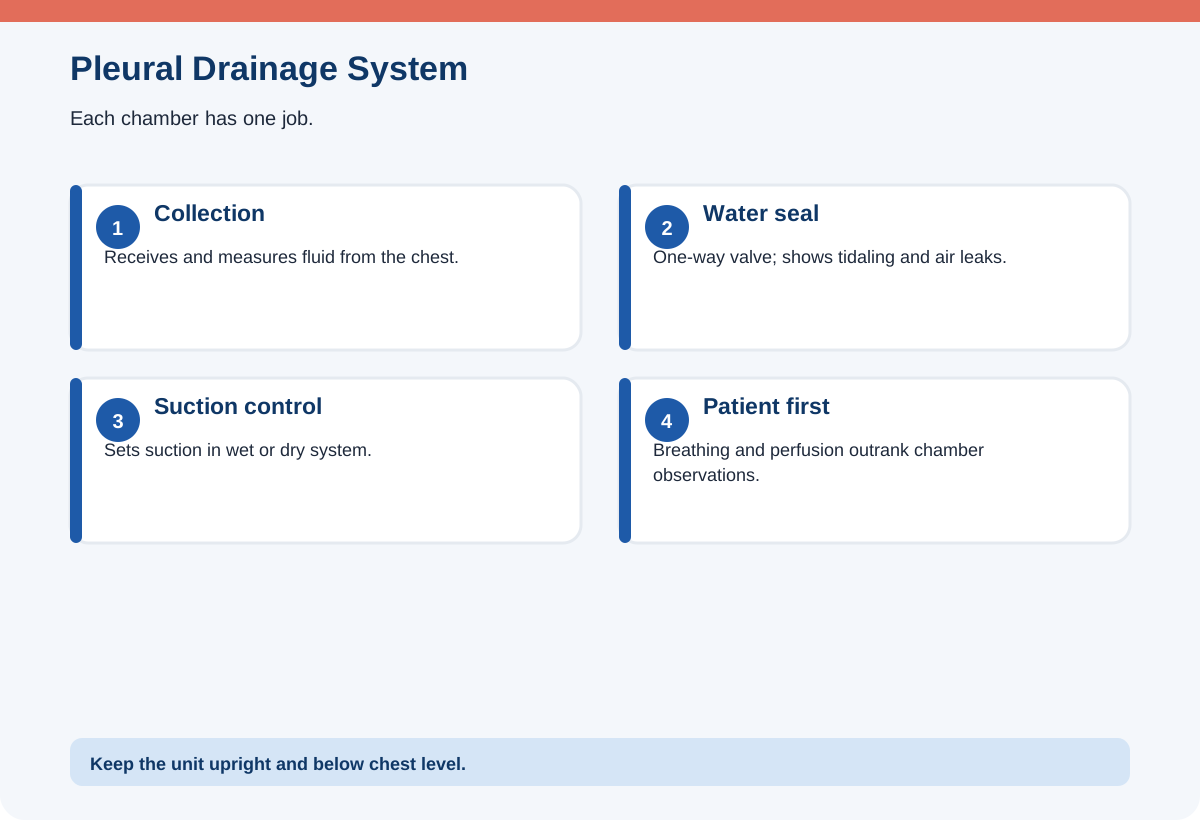
The collection chamber receives fluid from the chest. Mark the level, date, and time according to policy and assess the trend. A sudden large increase in bright-red drainage can indicate hemorrhage; an abrupt stop may mean improvement, obstruction, kinking, dependent loops, or tube displacement. Interpret drainage together with the patient.
The water-seal chamber acts as a one-way valve. Air can leave the pleural space but should not return. The water level may rise and fall with breathing, called tidaling. The suction-control chamber determines the amount of suction when a traditional wet system is used. Gentle bubbling may be expected in a wet-suction chamber; vigorous bubbling does not increase prescribed suction and causes evaporation and noise.
Dry-suction systems use a mechanical regulator and may not bubble. Always identify the system type before deciding whether a finding is normal.
Interpret tidaling and bubbling
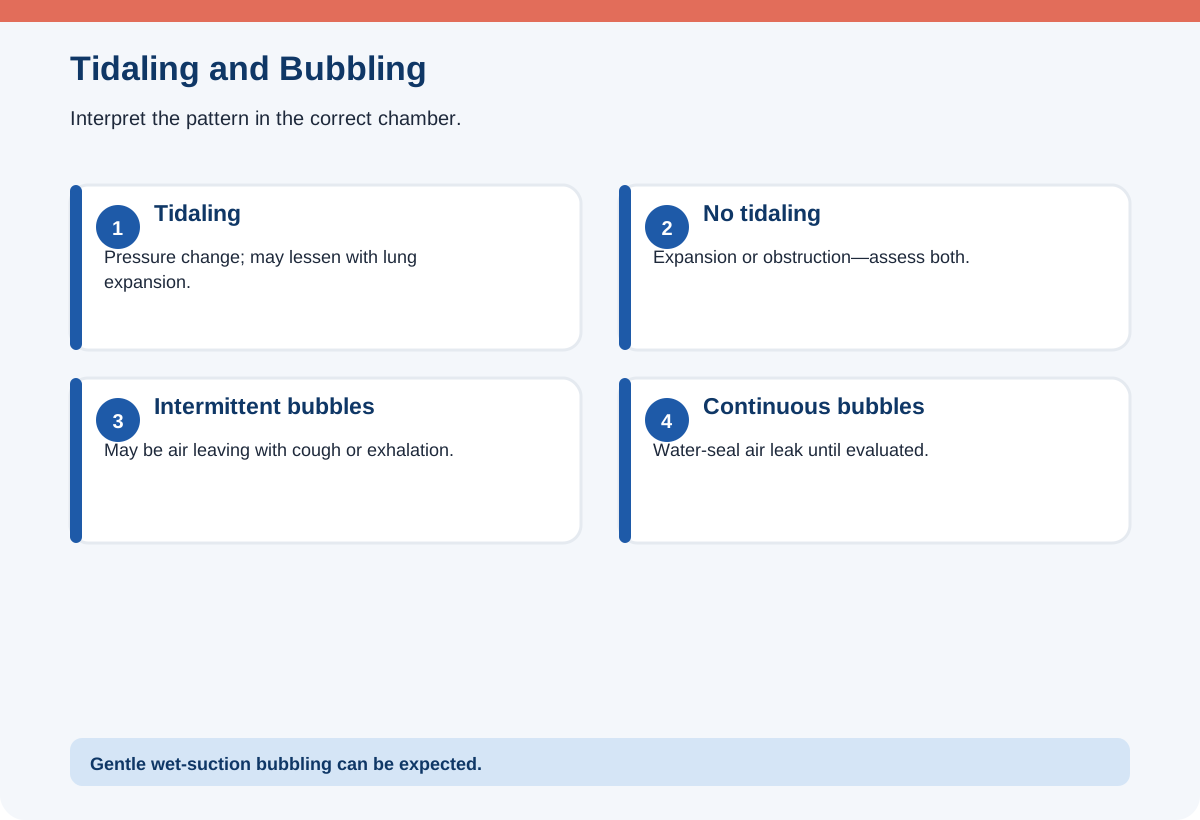
Tidaling in the water-seal chamber generally reflects pressure changes with respiration. In a spontaneously breathing patient, the level often rises with inspiration and falls with expiration; the pattern may reverse with positive-pressure ventilation. Tidaling may decrease as the lung re-expands.
An abrupt absence of tidaling is not automatically good or bad. It may mean the lung has expanded, but it may also mean the tubing is kinked, blocked, clamped, or displaced. Assess the patient first, then inspect the tubing and system.
Intermittent bubbling in the water seal may occur when a patient with a pneumothorax coughs or exhales and air leaves the pleural space. Continuous bubbling usually suggests an air leak. Check connections and the insertion-site dressing. If policy permits troubleshooting by momentary sequential clamping, this should be done only by trained staff and never left clamped. The source may be the patient, tubing, or drainage unit.
| Observation | Possible meaning | Nursing response |
|---|---|---|
| Tidaling present | Pressure changes transmitted to chamber | Expected in many functioning systems |
| Tidaling stops gradually | Lung may be re-expanded | Assess patient and verify system patency |
| Tidaling stops suddenly | Kink, clot, clamp, displacement, or expansion | Assess patient, tubing, and breath sounds |
| Intermittent water-seal bubbling | Air leaving with cough/exhalation | May be expected early in pneumothorax |
| Continuous water-seal bubbling | Air leak | Check patient, site, connections, system |
| Gentle wet-suction bubbling | Suction chamber functioning | Expected; avoid vigorous bubbling |
Assess drainage, tubing, and the insertion site
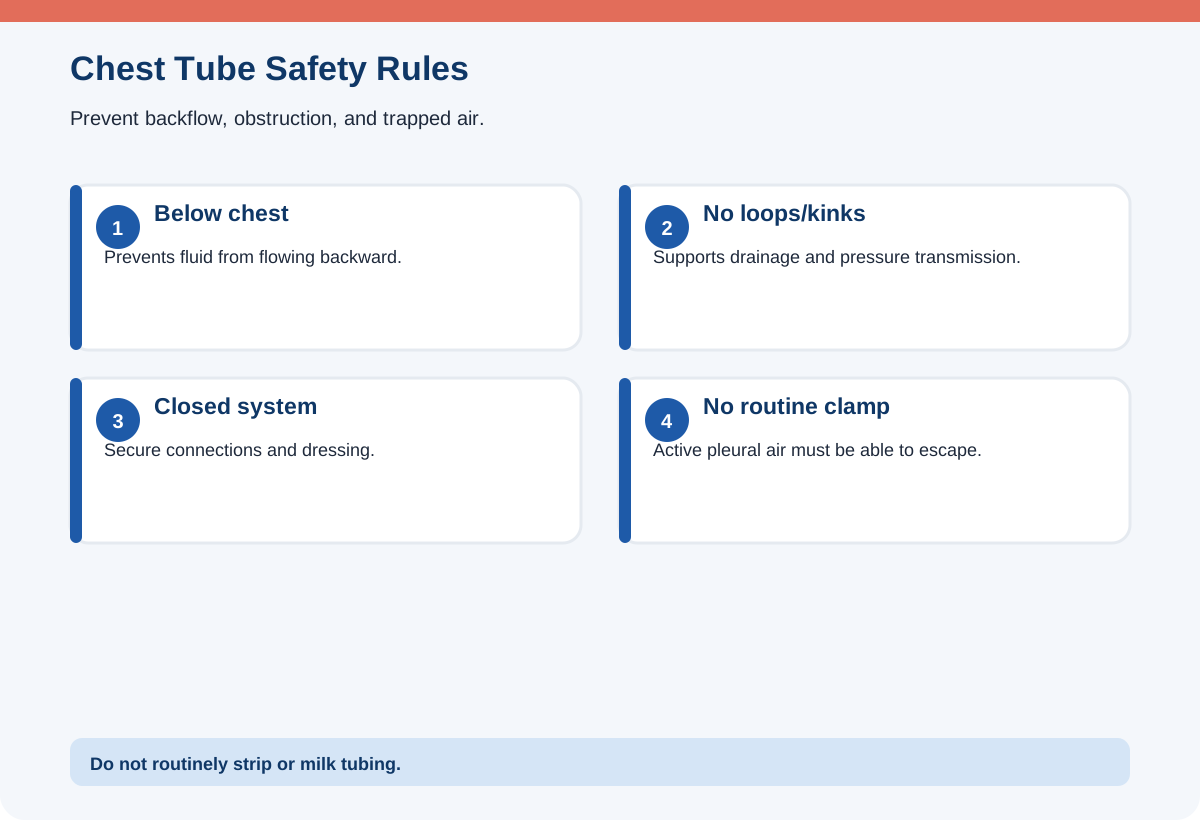
Keep the drainage unit upright and below the level of the chest. Secure connections and avoid dependent loops where fluid can collect and obstruct flow. The tubing should not lie under the patient or be compressed by a bedrail. Ensure enough slack for movement without allowing traction on the insertion site.
Assess and mark drainage at regular intervals. Report a rapid increase, unexpectedly bright-red drainage, a sudden change in character, or a concerning decrease accompanied by respiratory decline. Thresholds for reporting depend on surgery, age, and local policy; do not memorize one universal number as a substitute for trends.
Inspect for bleeding, drainage, loose sutures, air leakage, and subcutaneous emphysema. Mild crepitus can occur near the site, but rapidly expanding swelling into the neck or chest with respiratory symptoms is concerning. Maintain an occlusive dressing as ordered and manage pain so the patient can breathe deeply and cough.
Avoid unsafe clamping, stripping, and dependent loops
Do not routinely clamp a chest tube. If air cannot escape from an active pneumothorax, pressure can build and cause tension pneumothorax. Temporary clamping may be ordered for specific reasons such as changing the drainage system, checking for an air leak, or preparing for removal, but it requires close observation and immediate unclamping if distress occurs.
Do not routinely strip or milk tubing. These actions can create dangerously high negative pressure and damage tissue. Follow a specific order or policy if manipulation is ever indicated. Instead, correct kinks, straighten dependent loops, and maintain the system below the chest.
Never raise the drainage system above the patient because fluid could flow backward. When transporting, keep it upright and below chest level; do not clamp merely for transport unless there is a specific order and indication.
Respond to disconnection or system breakage
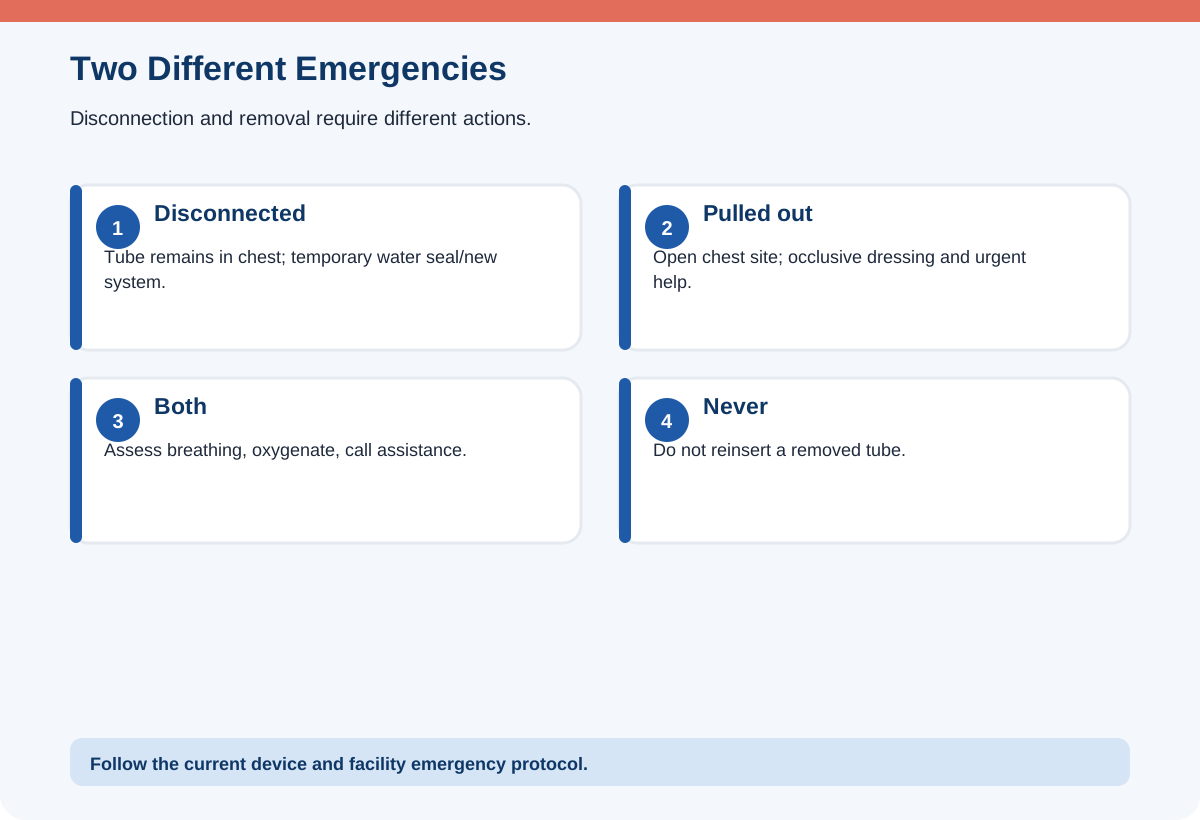
If the tubing disconnects from the drainage unit, prevent air from entering the pleural space and restore a closed system. Follow the device and facility protocol. Common emergency approaches include placing the end of the chest tube in sterile water to create a temporary water seal while a new system is prepared, or reconnecting to a sterile replacement connector if immediately available. Do not leave the tube open to air.
If the drainage unit cracks or tips, place it upright, assess whether the water seal remains at the required level, and replace the system if integrity is compromised. Keep emergency supplies at the bedside according to policy, often including sterile water, occlusive dressings, and clamps for limited emergency use.
Throughout the event, assess respiratory status and call for assistance. A mechanically perfect repair is not enough if the patient has developed hypoxemia or a tension pneumothorax.
Respond to accidental tube removal and respiratory deterioration
If the chest tube is pulled from the patient, immediately cover the insertion site with a sterile occlusive dressing. Many protocols use petroleum gauze taped on three sides so air can escape, while others use a fully occlusive dressing and immediate provider management. Follow the current policy and the patient’s clinical condition. Call for urgent help and prepare for reinsertion.
If the tube separates from the system but remains in the patient, do not treat it as removal from the chest. Create the temporary water seal or reconnect as directed. These two emergencies require different actions.
For sudden severe dyspnea, absent breath sounds on one side, hypotension, distended neck veins, or tracheal deviation, suspect tension pneumothorax. Activate emergency response and prepare for immediate decompression. Do not waste time repeatedly adjusting the drainage chamber while the patient deteriorates.
Prepare for removal and post-removal care
Before removal, verify the order, recent imaging or criteria, analgesia plan, and required supplies. Explain that the patient may be asked to perform a Valsalva maneuver, exhale, or hold the breath during removal depending on the technique. Position as directed and support anxiety and pain control.
After removal, apply the prescribed occlusive dressing, assess breath sounds, respiratory effort, oxygenation, pain, and the site. Monitor for recurrent pneumothorax, bleeding, subcutaneous emphysema, or infection. A follow-up chest image may be ordered.
Teach the patient to report new shortness of breath, chest pain, drainage, fever, or loosening of the dressing. The absence of a tube does not mean the risk ends immediately.
A simple NCLEX® clinical-judgment workflow
Recognize the indication, system type, suction order, chamber findings, drainage trend, tubing position, insertion site, and patient’s respiratory status. Analyze whether a change reflects healing, obstruction, air leak, bleeding, disconnection, or recurrent pneumothorax. Prioritize the patient with hypoxemia, shock, unilateral absent breath sounds, tracheal deviation, or rapidly increasing bloody drainage. Generate device correction and patient stabilization actions. Take action without routinely clamping or manipulating the tube. Evaluate breath sounds, oxygenation, work of breathing, drainage, water seal, and imaging results.
Original practice scenarios with rationales
These are original educational examples written for RN Clarity. They are not copied, recalled, or represented as actual NCLEX® questions.
Scenario 1: Continuous water-seal bubbling
A patient with a chest tube has continuous bubbling in the water-seal chamber.
Best response: Assess the patient and then check the insertion site, connections, and tubing for an air leak.
Rationale: Continuous water-seal bubbling commonly indicates an air leak.
Why the alternatives are weaker: Increasing wall suction does not repair the leak. Clamping and leaving it clamped can cause tension pneumothorax.
Scenario 2: Sudden no tidaling
Tidaling suddenly stops and the patient becomes dyspneic with diminished breath sounds.
Best response: Assess urgently for obstruction, kinking, displacement, or recurrent pneumothorax and activate help.
Rationale: No tidaling with respiratory decline is not reassuring.
Why the alternatives are weaker: Documenting “lung re-expanded” ignores deterioration. Stripping the tube is not routine safe care.
Scenario 3: System disconnects
The chest tube separates from the drainage unit while still in the patient.
Best response: Use the emergency protocol to create a temporary sterile water seal or reconnect to a new sterile system while assessing the patient.
Rationale: The priority is preventing air entry and restoring one-way drainage.
Why the alternatives are weaker: Taping the open end closed can trap pleural air. Removing the tube is not a nursing solution.
Scenario 4: Tube pulled from chest
During transfer, the chest tube is accidentally pulled out of the patient.
Best response: Apply the policy-specified sterile occlusive dressing, call urgent help, and monitor for pneumothorax.
Rationale: The chest-wall opening must be protected while definitive management is arranged.
Why the alternatives are weaker: Placing the removed tube back into the site is unsafe. Putting the removed tube in water does not close the chest wound.
Scenario 5: Rapid bloody drainage
After thoracic surgery, drainage suddenly becomes bright red and increases rapidly while blood pressure falls.
Best response: Treat as possible hemorrhage, notify urgently, support circulation, and prepare for surgical evaluation.
Rationale: The trend and hemodynamic change are more important than a memorized threshold.
Why the alternatives are weaker: Clamping may conceal bleeding and create pressure. Waiting for the next scheduled assessment is unsafe.
Common NCLEX® traps
- Bubbling means the same in every chamber. Water-seal bubbling and wet-suction bubbling have different meanings.
- No tidaling always means healing. It can also mean obstruction or displacement.
- Clamp for transport. Routine clamping can trap air.
- Strip the tube to clear it. Stripping creates high negative pressure and is not routine care.
- Raise the system onto the bed. Keep it upright and below the chest.
- Treat disconnection and removal identically. One leaves the tube in the patient; the other leaves an open chest-wall site.
- Focus on the chamber before the patient. Respiratory instability is the priority.
- Use one universal drainage cutoff. Interpret amount, rate, color, surgery, and hemodynamics together.
What to memorize and what to understand
Memorize the functions of the collection, water-seal, and suction-control chambers; the meaning of continuous water-seal bubbling; the rule to keep the system below the chest; and the difference between a disconnected system and a tube pulled from the patient. Understand why routine clamping and stripping are dangerous and why absent tidaling requires patient assessment before interpretation.
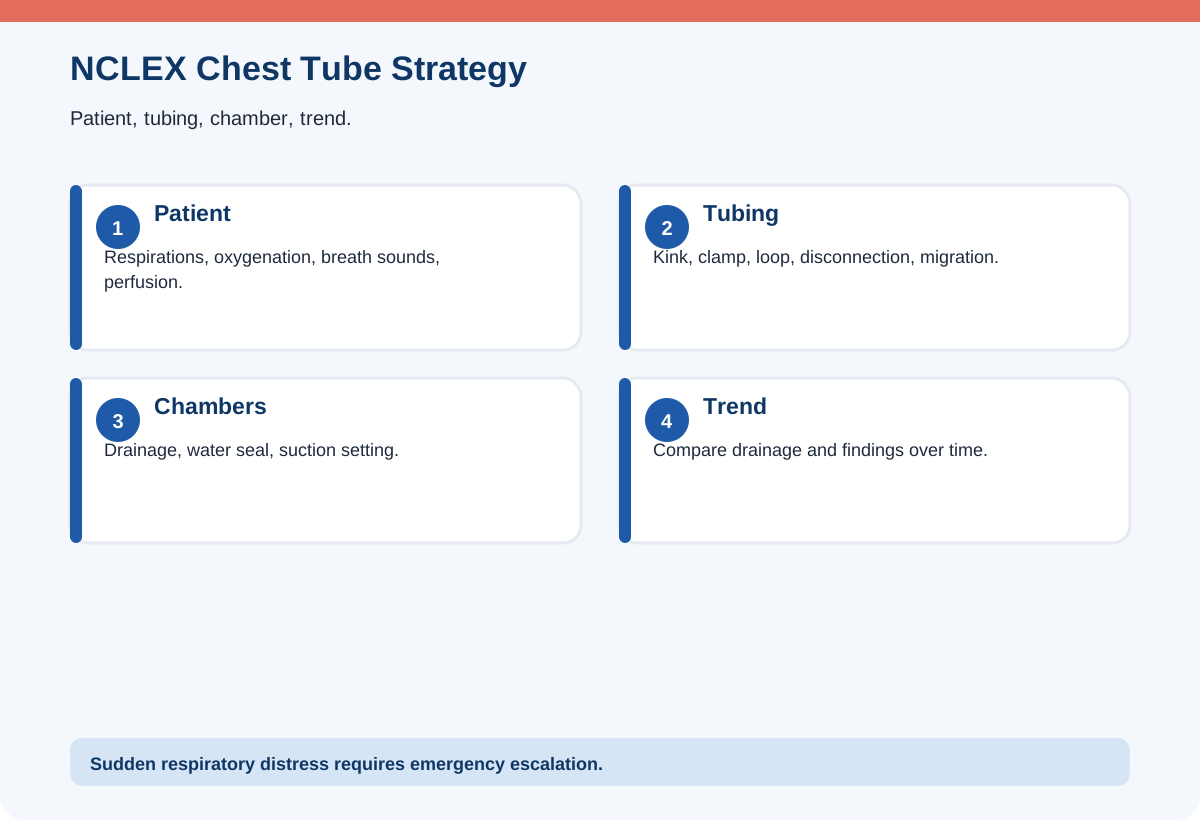
The safest exam mindset is “patient, tubing, chamber, trend.” Start with breathing, then inspect the mechanical system, then compare drainage over time.
A seven-day review plan
Day 1: Draw the pleural space and explain why air or fluid collapses the lung. Day 2: Label collection, water-seal, and suction-control chambers. Day 3: Practice tidaling and bubbling interpretations for spontaneous and positive-pressure breathing. Day 4: Review drainage, insertion site, dependent loops, and subcutaneous emphysema. Day 5: Learn the separate responses for disconnection, broken system, and tube removal. Day 6: Practice tension pneumothorax and hemorrhage prioritization. Day 7: Teach the complete safety check aloud while using the diagrams in this guide.
Frequently asked questions
What does continuous bubbling in the water-seal chamber mean?
It usually suggests an air leak. Assess the patient and inspect the insertion site, tubing, connections, and drainage unit.
Is bubbling in the suction-control chamber normal?
Gentle bubbling may be expected in a traditional wet-suction chamber. Dry-suction systems may not bubble.
What does no tidaling mean?
It may mean the lung has re-expanded or the system is obstructed, kinked, clamped, or displaced. Assess the patient and system.
Should chest tubes be clamped during transport?
Not routinely. Keep the system upright and below chest level and clamp only for a specific approved indication.
What if the tube comes out of the patient?
Cover the site with the policy-specified sterile occlusive dressing, call urgent help, and monitor for recurrent pneumothorax.
Can a nurse strip a chest tube?
Routine stripping or milking is not recommended because it can create excessive negative pressure. Follow a specific order and policy.
Final rapid-review checklist
- I know why chest tubes remove air or fluid.
- I can identify collection, water-seal, and suction functions.
- I distinguish water-seal air-leak bubbling from wet-suction bubbling.
- I keep the system upright and below the chest.
- I do not routinely clamp, strip, or milk tubing.
- I know separate actions for disconnection and accidental removal.
- I assess the patient before troubleshooting the device.
- I recognize tension pneumothorax and rapid hemorrhage as emergencies.
Sources and further reading
- NCSBN, 2026 NCLEX-RN® Test Plan: https://www.nclex.com/test-plans.page
- NCBI Bookshelf, Nursing Advanced Skills, “Manage Chest Tube Drainage Systems”: https://www.ncbi.nlm.nih.gov/books/NBK594490/
- NCBI Bookshelf, Care of a Chest Tube: https://www.ncbi.nlm.nih.gov/books/NBK556088/
- American Association for Respiratory Care, clinical practice guidelines: https://www.aarc.org/resources/clinical-resources/clinical-practice-guidelines/
Educational disclaimer
RN Clarity provides educational study support only. This article is not medical advice, does not replace a nursing program, clinical instructor, employer policy, or current provider order, and is not affiliated with or endorsed by NCSBN, Pearson VUE, or the NCLEX-RN® program. In an actual clinical setting, follow current laws, facility policies, approved references, and the directions of the responsible licensed clinician.
Structured data
{
  "@context": "https://schema.org",
  "@graph": [
    {
      "@type": "BlogPosting",
      "headline": "NCLEX-RN® Chest Tubes and Pleural Drainage: Tidaling, Bubbling, Air Leaks, and Emergencies",
      "description": "Learn chest tube chambers, tidaling, bubbling, air leaks, drainage, clamping rules, disconnection, accidental removal, and NCLEX® nursing priorities.",
      "mainEntityOfPage": {
        "@type": "WebPage",
        "@id": "https://rnclarity.com/blog/nclex-rn-chest-tubes-pleural-drainage-tidaling-bubbling"
      },
      "url": "https://rnclarity.com/blog/nclex-rn-chest-tubes-pleural-drainage-tidaling-bubbling",
      "datePublished": "ACTUAL_FIRST_LIVE_DATE",
      "dateModified": "ACTUAL_FIRST_LIVE_DATE",
      "author": {
        "@type": "Organization",
        "name": "RN Clarity"
      },
      "publisher": {
        "@type": "Organization",
        "name": "RN Clarity"
      },
      "inLanguage": "en-US",
      "isAccessibleForFree": true,
      "about": [
        "NCLEX-RN® examination",
        "Nursing education",
        "NCLEX® chest tube nursing"
      ]
    },
    {
      "@type": "BreadcrumbList",
      "itemListElement": [
        {
          "@type": "ListItem",
          "position": 1,
          "name": "Home",
          "item": "https://rnclarity.com/"
        },
        {
          "@type": "ListItem",
          "position": 2,
          "name": "Blog",
          "item": "https://rnclarity.com/blog"
        },
        {
          "@type": "ListItem",
          "position": 3,
          "name": "NCLEX-RN® Chest Tubes and Pleural Drainage: Tidaling, Bubbling, Air Leaks, and Emergencies",
          "item": "https://rnclarity.com/blog/nclex-rn-chest-tubes-pleural-drainage-tidaling-bubbling"
        }
      ]
    },
    {
      "@type": "FAQPage",
      "mainEntity": [
        {
          "@type": "Question",
          "name": "What does continuous bubbling in the water-seal chamber mean?",
          "acceptedAnswer": {
            "@type": "Answer",
            "text": "It usually suggests an air leak. Assess the patient and inspect the insertion site, tubing, connections, and drainage unit."
          }
        },
        {
          "@type": "Question",
          "name": "Is bubbling in the suction-control chamber normal?",
          "acceptedAnswer": {
            "@type": "Answer",
            "text": "Gentle bubbling may be expected in a traditional wet-suction chamber. Dry-suction systems may not bubble."
          }
        },
        {
          "@type": "Question",
          "name": "What does no tidaling mean?",
          "acceptedAnswer": {
            "@type": "Answer",
            "text": "It may mean the lung has re-expanded or the system is obstructed, kinked, clamped, or displaced. Assess the patient and system."
          }
        },
        {
          "@type": "Question",
          "name": "Should chest tubes be clamped during transport?",
          "acceptedAnswer": {
            "@type": "Answer",
            "text": "Not routinely. Keep the system upright and below chest level and clamp only for a specific approved indication."
          }
        },
        {
          "@type": "Question",
          "name": "What if the tube comes out of the patient?",
          "acceptedAnswer": {
            "@type": "Answer",
            "text": "Cover the site with the policy-specified sterile occlusive dressing, call urgent help, and monitor for recurrent pneumothorax."
          }
        },
        {
          "@type": "Question",
          "name": "Can a nurse strip a chest tube?",
          "acceptedAnswer": {
            "@type": "Answer",
            "text": "Routine stripping or milking is not recommended because it can create excessive negative pressure. Follow a specific order and policy."
          }
        }
      ]
    }
  ]
}