NCLEX-RN® End-of-Life Care: Palliative Care, Hospice, Advance Directives, Death, and Organ Donation
Study end-of-life communication, palliative care, hospice, advance directives, death, and organ donation.
postNumber: 87 title: "NCLEX-RN® End-of-Life Care: Palliative Care, Hospice, Advance Directives, Death, and Organ Donation" h1: "NCLEX-RN® End-of-Life Care: Palliative Care, Hospice, Advance Directives, Death, and Organ Donation" slug: "nclex-rn-end-of-life-palliative-hospice-advance-directives" canonicalUrl: "https://rnclarity.com/blog/nclex-rn-end-of-life-palliative-hospice-advance-directives" primaryKeyword: "NCLEX® end of life care" secondaryKeywords:
- "palliative care versus hospice NCLEX®"
- "advance directives nursing"
- "comfort care nursing priorities"
- "death and dying therapeutic communication"
- "organ donation nursing role" metaTitle: "NCLEX® End-of-Life Care: Hospice and Advance Directives" metaDescription: "Learn palliative care, hospice, advance directives, comfort medications, signs of dying, family communication, postmortem care, and organ donation roles." excerpt: "A compassionate, legally aware guide to comfort, autonomy, symptom relief, family support, and nursing responsibilities at the end of life." suggestedPublishDate: "2026-09-03" status: "draft_nurse_review_required" schemaTypes: ["BlogPosting", "FAQPage", "BreadcrumbList"] diagramCount: 5 clinicalReview: "Required before publication"
NCLEX-RN® End-of-Life Care: Palliative Care, Hospice, Advance Directives, Death, and Organ Donation
Quick answer: Palliative care can begin at any stage of serious illness and can occur alongside disease-directed treatment. Hospice focuses on comfort when a person is approaching the end of life under eligibility rules. The nurse protects the patient’s goals and advance directives, treats pain and dyspnea, explains expected changes, supports family, and follows legal and organizational procedures for death and organ donation.
Editorial status: This is a complete educational draft. A qualified U.S. registered nurse or nurse educator should clinically review it before publication. Drug doses, facility procedures, and emergency algorithms must be checked against the current source and local policy.
Suggested reading time: 18–22 minutes
Designed for: NCLEX-RN® candidates, including internationally educated nurses and repeat test-takers.
Table of contents
- Distinguish palliative care and hospice
- Protect autonomy and advance-care planning
- Manage pain, dyspnea, secretions, and agitation
- Recognize signs that death is approaching
- Support nutrition, hydration, skin, and mouth comfort
- Communicate with patients and families
- Understand DNR, withholding, and withdrawing treatment
- Provide postmortem care and follow donation procedures
- A simple NCLEX® clinical-judgment workflow
- Original practice scenarios with rationales
- Common NCLEX® traps
- What to memorize and what to understand
- A seven-day review plan
- Frequently asked questions
- Final rapid-review checklist
Why this topic matters for the NCLEX-RN®
End-of-life questions test whether the nurse can choose comfort without abandoning safety or autonomy. A patient with a do-not-resuscitate order still receives assessment, pain treatment, oxygen or other comfort measures, hygiene, emotional support, and treatment consistent with goals. DNR means no resuscitation after cardiopulmonary arrest; it does not mean “do not treat.”
The exam also distinguishes the patient’s decision-maker from family preference. A capable adult makes personal healthcare decisions. When capacity is lost, the legally authorized surrogate and advance directive guide care. The nurse advocates, documents, communicates changes, and requests ethics or palliative consultation when conflict persists.
Distinguish palliative care and hospice
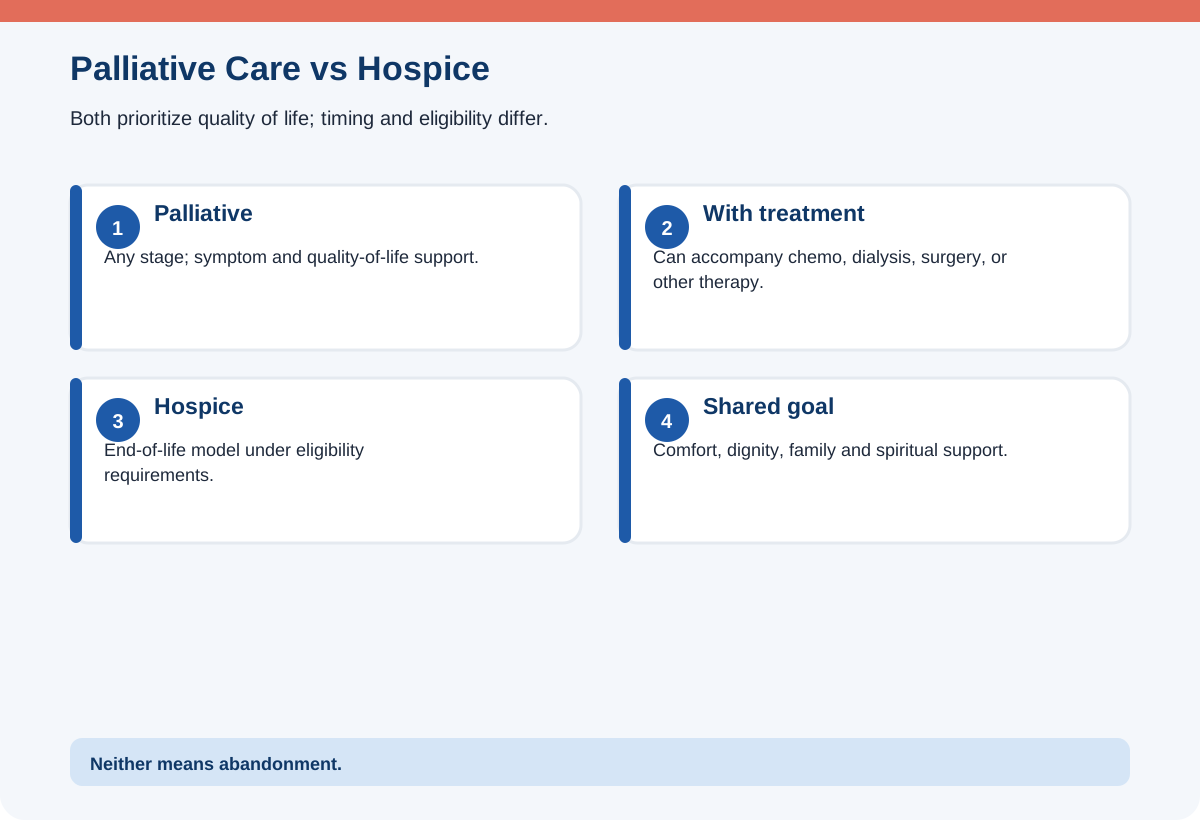
Palliative care aims to improve quality of life and relieve physical, emotional, social, and spiritual suffering during serious illness. It can be provided from diagnosis and can accompany chemotherapy, dialysis, surgery, or other disease-directed treatment.
Hospice is a model of end-of-life care focused on comfort rather than curative treatment for the terminal condition. In the United States, Medicare hospice eligibility generally includes physician certification that the illness is expected to lead to death within about six months if it follows its usual course, along with election of hospice benefits. Patients can leave hospice or be discharged if their situation changes.
Do not tell a patient that accepting palliative care means giving up. Ask what matters most: comfort, time at home, alertness, symptom control, family events, spiritual practices, or avoiding hospitalization. Goals guide the plan.
| Concept | When used | Key NCLEX® point |
|---|---|---|
| Palliative care | Any stage of serious illness | Can occur with curative/disease-directed treatment |
| Hospice | Approaching end of life under eligibility rules | Comfort-focused interdisciplinary care |
| DNR | No CPR after arrest | Does not cancel other care |
| Advance directive | Guides care if patient cannot speak | Capable patient’s current choice still controls |
Protect autonomy and advance-care planning
Advance directives may include a living will, a healthcare power of attorney or proxy, and specific treatment preferences. Terminology and legal requirements vary by jurisdiction. Confirm the document is available, current, and communicated to the team.
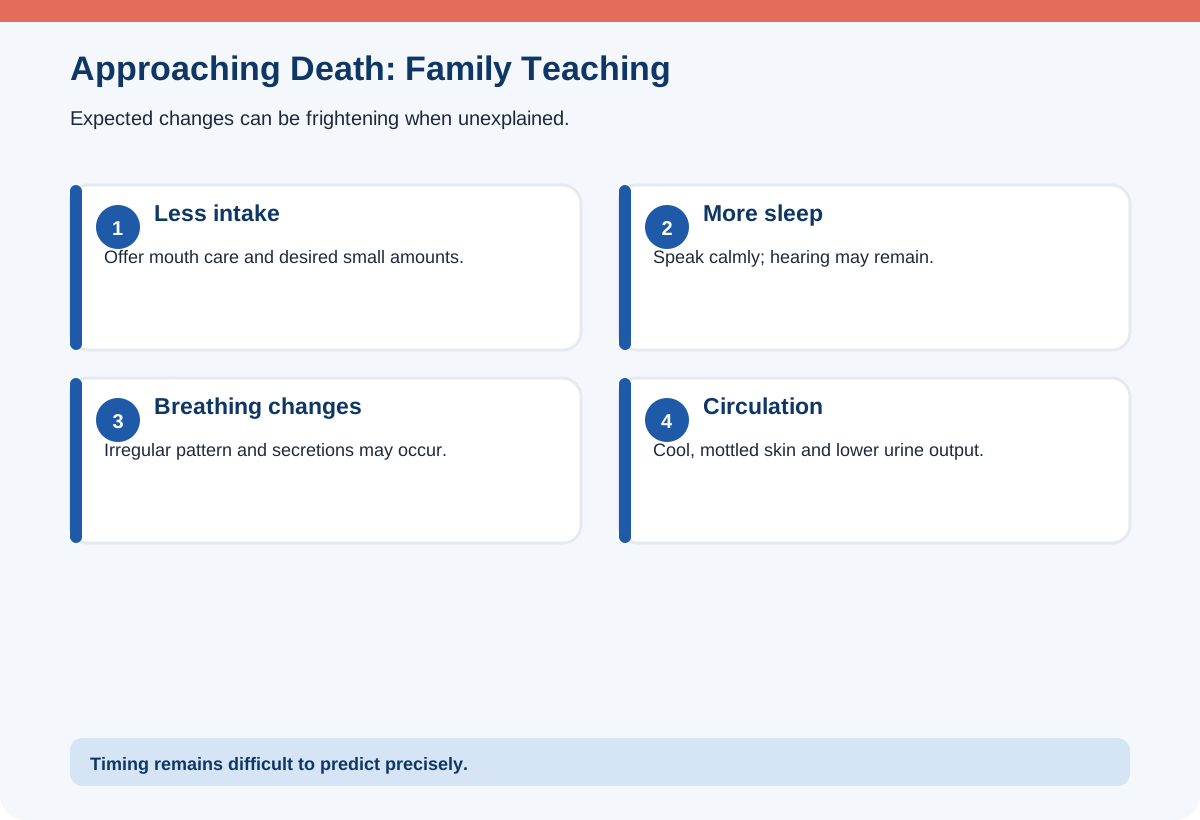
Decision-making capacity is task-specific and can fluctuate. A patient has capacity when able to understand relevant information, appreciate consequences, reason about choices, and communicate a decision. Disagreement with the healthcare team does not automatically mean incapacity.
When the patient has capacity, family members do not override the patient. When capacity is absent, the legally authorized surrogate uses the patient’s known wishes and values, or best-interest standards when wishes are unknown. The nurse should identify conflict early, provide accurate information, and request ethics, social-work, spiritual-care, or palliative support rather than taking sides.
Manage pain, dyspnea, secretions, and agitation
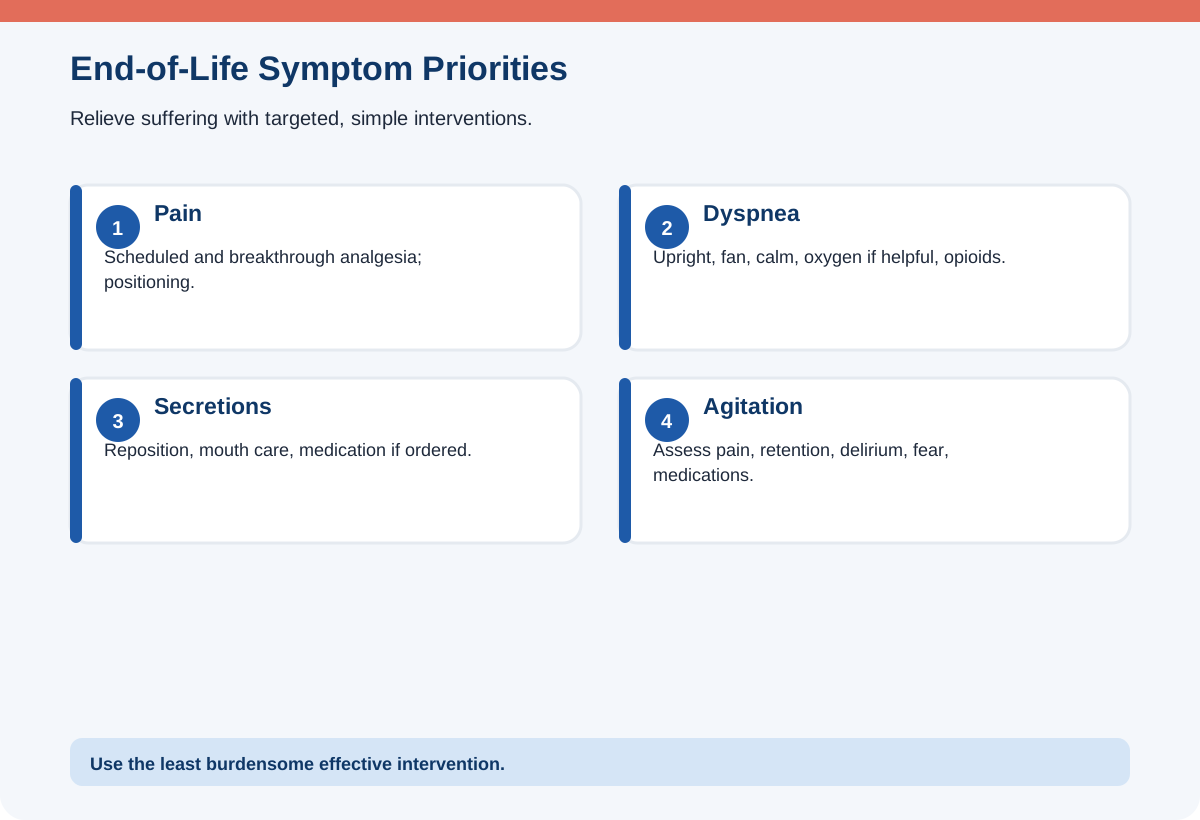
Pain is assessed by the patient’s report whenever possible. Use scheduled medication for persistent pain, breakthrough doses for episodic pain, and nonpharmacologic support such as positioning, heat or cold when appropriate, massage, calm presence, and environmental adjustment. Opioids are commonly used for pain and dyspnea at end of life. Titrate to relief while monitoring sedation and respiratory comfort.
Giving an appropriate opioid dose for symptom relief is ethically different from intentionally causing death. The goal, dose, and titration are directed toward comfort. Do not withhold needed medication solely because respiration is already slower in a dying patient; assess distress and follow the comfort plan.
For dyspnea, use upright positioning, a fan, calm coaching, oxygen when it improves comfort or hypoxemia is present, and prescribed opioids. For noisy secretions, reposition, reduce burdensome fluids when appropriate, provide gentle oral suction only when helpful, and use anticholinergic medication if ordered. Deep suction can cause distress and often does not improve terminal secretions. Agitation may reflect pain, urinary retention, medication effect, delirium, fear, or spiritual distress; assess reversible causes consistent with goals.
Recognize signs that death is approaching
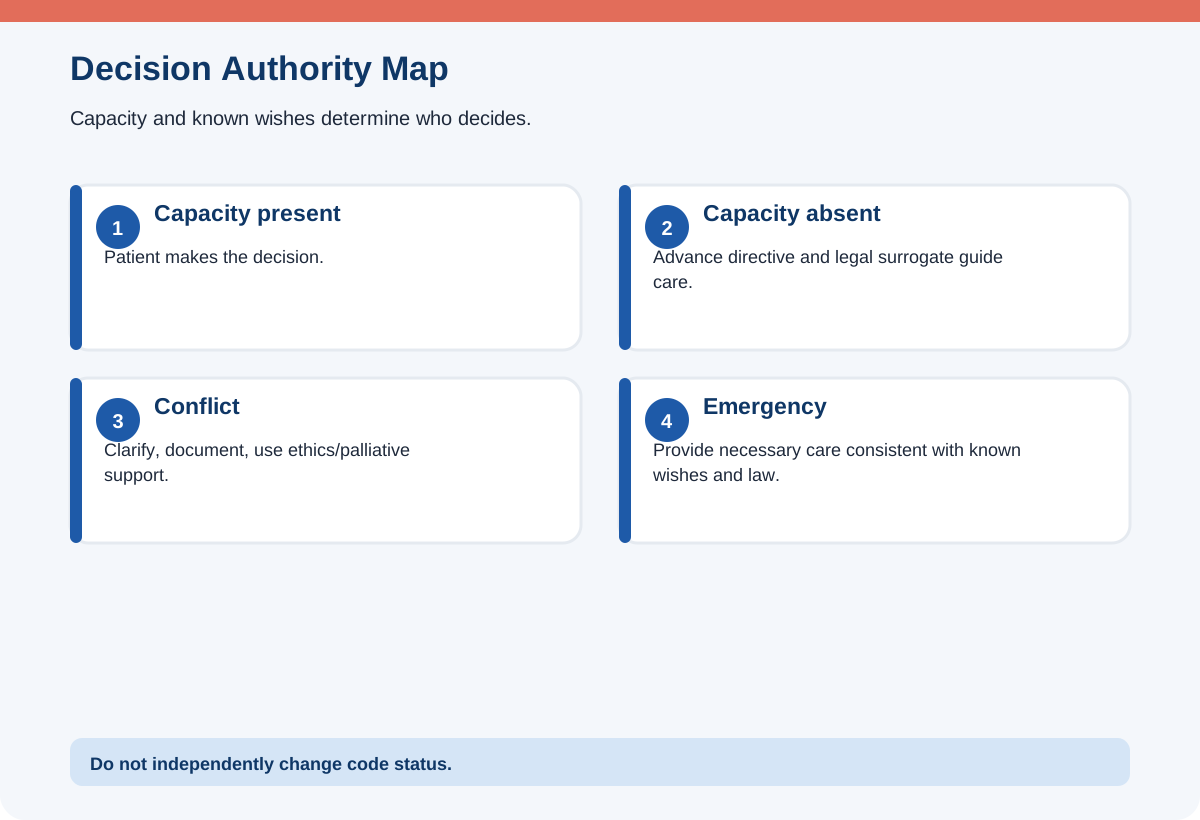
Common changes include increasing sleep, less interest in food and fluid, weakness, reduced urine output, cool mottled extremities, changes in breathing pattern, irregular pulse, decreased responsiveness, and noisy upper-airway secretions. These findings do not occur in a fixed order, and timing is difficult to predict.
Explain changes in simple language. Tell families that reduced intake is often part of the dying process and that forcing food or fluid can cause discomfort, aspiration, or edema. Offer mouth care, ice chips when safe, lip moisturizer, and small preferred amounts if the patient wants them.
Hearing may remain present even when the patient cannot respond. Encourage family to speak calmly, identify themselves, share meaningful words, and avoid distressing arguments at the bedside.
Support nutrition, hydration, skin, and mouth comfort
At end of life, nutrition and hydration decisions are based on goals, benefits, burdens, and patient preferences. Artificial nutrition may be appropriate in some conditions but can also cause aspiration, fluid overload, diarrhea, infection, restraints, or discomfort without improving quality or survival in other situations.
Provide frequent mouth care, reposition for comfort, protect skin, manage incontinence gently, and use pressure-relieving surfaces. Do not turn a fragile patient on an inflexible schedule when movement causes severe distress; individualize the plan.
Treat constipation, nausea, urinary retention, and dry mouth proactively. Simplify medication regimens by discontinuing drugs that do not support current goals, under the prescriber’s plan. A statin or vitamin may no longer help, while analgesics, antiemetics, laxatives, and anxiolytics may remain important.
Communicate with patients and families
Use clear, honest language. Instead of “everything will be fine,” say, “I can see how frightening this is. I will stay with you and make sure we respond to discomfort.” Ask, “What is your biggest concern right now?” and “What would a good day look like?”
When a family says, “Do not tell the patient,” explore the reason and cultural context, but do not promise deception. Ask the patient how much information they want and whom they want involved. Respect cultural and spiritual practices unless they create immediate harm or violate law.
Use silence. Sit at eye level. Avoid changing the subject when the patient speaks about death. A statement such as “Tell me what worries you about dying” is therapeutic. Avoid imposing personal beliefs or telling the family how they should grieve.
Understand DNR, withholding, and withdrawing treatment
A DNR order applies to cardiopulmonary resuscitation after arrest. Before arrest, continue all care consistent with the treatment plan. Clarify related decisions about intubation, hospitalization, antibiotics, vasopressors, artificial nutrition, dialysis, and comfort-focused treatment.
Withholding a treatment means not starting it; withdrawing means stopping a treatment already in place. Ethically and legally, they can be equivalent when they reflect informed goals and applicable law. Stopping a ventilator or dialysis is not abandonment; nursing care intensifies around comfort, symptom control, family support, and dignity.
If the nurse believes an order is unclear or conflicts with known wishes, pause nonemergency action, clarify, notify the appropriate chain, and advocate. Do not independently change code status or treatment.
Provide postmortem care and follow donation procedures
After death is pronounced by the authorized clinician, follow legal and organizational policy. Confirm whether the death is reportable to the medical examiner or coroner, whether an autopsy is planned, and whether lines or tubes must remain. Apply identification, inventory belongings, support cultural practices, and care for the body with dignity.
Organ and tissue donation processes are coordinated through the designated organ-procurement organization or trained donation personnel. Refer potential donors according to required policy; do not independently decide eligibility or pressure the family. In many settings, bedside staff should not make the formal donation request unless trained and assigned.
If donation is possible, physiologic support may continue after neurologic death or during evaluation according to orders. Brain death is a legal determination under jurisdictional standards and is not the same as coma. The nurse supports the family with clear, consistent language.
Clinical integration: connecting the topic to a complete patient picture
End-of-life nursing is active care. The plan may include fewer laboratory tests or disease-directed procedures, but assessment becomes more focused on comfort and meaning. A patient may choose to remain alert for a family visit even if that means accepting some pain, while another may prioritize complete relief even with more sedation. Neither choice is automatically more correct. The nurse asks what outcome the patient values and reports when the current regimen does not achieve it.
Family distress can produce requests for treatments that no longer help or requests to hide information. Use a structured conversation: identify what the family understands, ask what they fear will happen, explain the likely benefit and burden of the intervention, and return to the patient’s stated goals. A palliative-care or ethics consultation is not a sign of failure; it is a resource for complex values and conflict.
Documentation should record symptoms, patient goals, surrogate and directive information, medication response, family teaching, spiritual or cultural requests, and changes communicated to the team. At death, continue privacy and respect. Explain the next steps, allow time with the body when possible, and avoid rushing the family unless legal or donation procedures require prompt action.
A simple NCLEX® clinical-judgment workflow
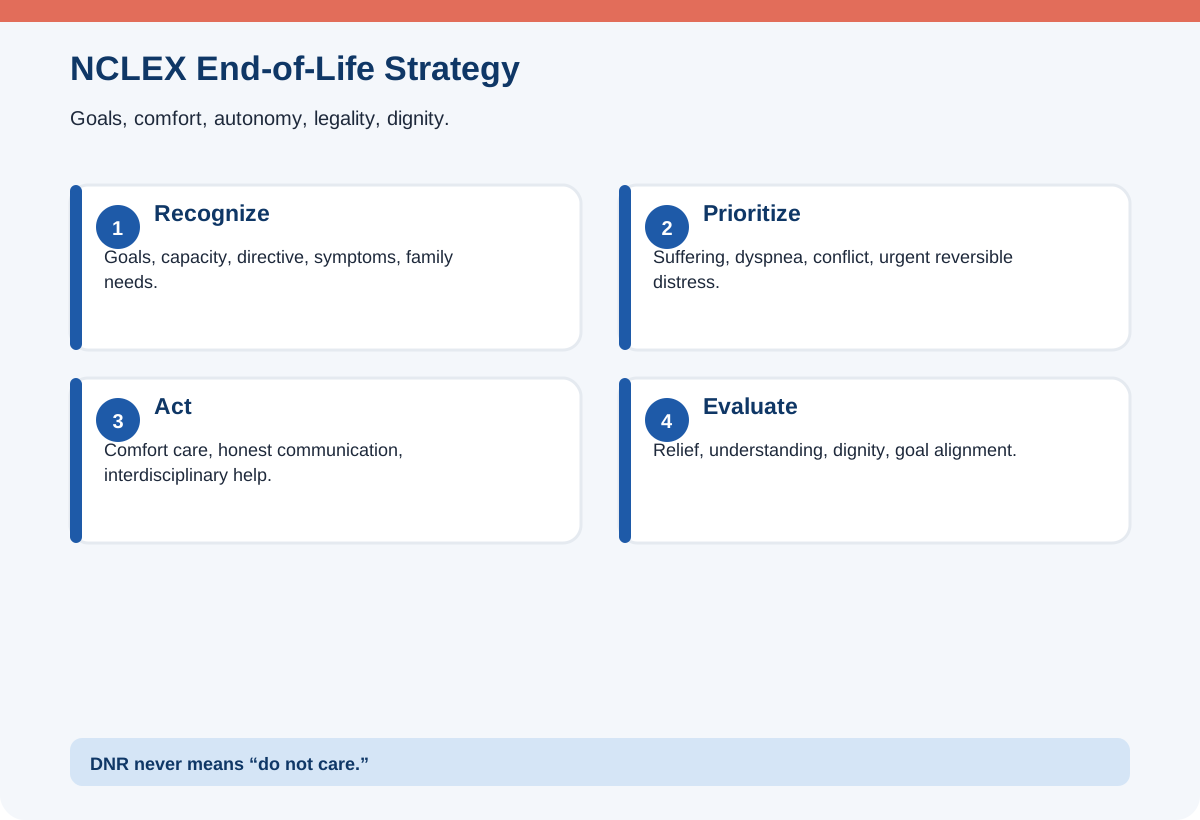
Recognize patient goals, capacity, advance directives, surrogate authority, symptom burden, stage of dying, family distress, and legal requirements. Analyze whether an intervention improves comfort or creates burden. Prioritize uncontrolled pain, severe dyspnea, agitation from a reversible cause, conflict that blocks known wishes, and immediate family safety. Generate symptom, communication, and interdisciplinary actions. Take action without equating DNR with no care. Evaluate comfort, dignity, understanding, and alignment with documented goals.
Original practice scenarios with rationales
These are original educational examples written for RN Clarity. They are not copied, recalled, or represented as actual NCLEX® questions.
Scenario 1: DNR and dyspnea
A patient with a DNR order becomes severely short of breath but still has a pulse.
Best response: Assess and treat dyspnea according to the comfort and treatment plan.
Rationale: DNR limits CPR after arrest; it does not prohibit symptom treatment before arrest.
Why the alternatives are weaker: Withholding oxygen or opioids solely because of DNR is abandonment. Beginning CPR while a pulse is present is inappropriate.
Scenario 2: Family requests secrecy
The family asks the nurse not to tell a capable patient about a terminal prognosis.
Best response: Explore their concern and ask the patient how much information and family involvement the patient wants.
Rationale: The capable patient’s preferences guide disclosure and decisions.
Why the alternatives are weaker: Promising secrecy may violate autonomy. Confronting the family harshly damages trust.
Scenario 3: Terminal secretions
An unconscious dying patient has noisy upper-airway secretions but no signs of distress.
Best response: Reposition, provide mouth care, explain the sound to family, and use ordered secretion measures rather than deep suctioning routinely.
Rationale: The sound often distresses family more than the patient, and deep suction can be burdensome.
Why the alternatives are weaker: Aggressive repeated suction may cause injury. Forcing fluids can worsen secretions.
Scenario 4: Pain medication concern
A family member worries that prescribed morphine will cause death because the patient’s breathing is slow.
Best response: Explain that the medication is titrated to relieve pain and dyspnea, assess comfort and sedation, and administer according to the plan.
Rationale: Appropriate symptom relief is ethically and clinically distinct from intending death.
Why the alternatives are weaker: Withholding all medication can cause suffering. Promising no respiratory effect is inaccurate.
Scenario 5: Organ donation question
A nurse believes a dying patient may be eligible for organ donation.
Best response: Make the required referral to the designated donation organization and continue patient care without independently promising eligibility.
Rationale: Trained donation professionals determine eligibility and coordinate the request process.
Why the alternatives are weaker: Asking the family for consent without following the referral process may conflict with policy. Declaring the patient ineligible exceeds the nurse’s role.
Common NCLEX® traps
- DNR means do not treat. Comfort and goal-consistent care continue.
- Hospice and palliative care are identical. Palliative care can begin earlier and coexist with disease treatment.
- Opioid comfort dosing equals euthanasia. Intent and titration are symptom relief.
- Force food and fluid. Reduced intake may be natural and forced intake can burden the patient.
- Family automatically decides. A capable patient decides; otherwise legal surrogate rules apply.
- Avoid discussing death. Honest, compassionate communication reduces isolation.
- Deep suction terminal secretions. It may cause more distress than benefit.
- Nurse decides donation eligibility. Refer to the designated organization and follow policy.
What to memorize and what to understand
Memorize the difference between palliative care, hospice, DNR, and advance directives; the core symptom strategies; and the nursing role in organ-donation referral. Understand autonomy, capacity, surrogate decision-making, and why withdrawing a burdensome treatment can be consistent with ethical care.
The guiding question is: “What action best supports the patient’s stated goals while relieving suffering and preserving dignity?”
A seven-day review plan
Day 1: Compare palliative care, hospice, comfort care, and DNR. Day 2: Review capacity, advance directives, surrogates, and conflict resolution. Day 3: Study pain, dyspnea, secretions, nausea, constipation, and agitation. Day 4: Review signs of approaching death and family teaching. Day 5: Practice therapeutic statements and cultural humility. Day 6: Review withdrawal of treatment, postmortem care, medical examiner, and donation referral. Day 7: Complete scenarios and explain how each answer supports autonomy, comfort, or legal safety.
Frequently asked questions
Can palliative care be given with chemotherapy or dialysis?
Yes. Palliative care can accompany disease-directed treatment at any stage of serious illness.
Does DNR mean no oxygen or pain medication?
No. DNR means no CPR after cardiopulmonary arrest; other care continues according to goals.
Is hospice only for the last few days?
No. Eligibility commonly uses a prognosis of about six months if the illness follows its usual course, and patients may receive hospice for longer if still eligible.
Can opioids be used for end-of-life dyspnea?
Yes. They are commonly titrated to relieve breathlessness and pain while the nurse monitors comfort and adverse effects.
Who makes decisions if the patient lacks capacity?
The legally authorized surrogate follows the patient’s known wishes and applicable law.
What is the nurse’s role in organ donation?
Make required referrals, maintain care, support the family, and allow trained donation professionals to determine eligibility and coordinate requests.
Final rapid-review checklist
- I distinguish palliative care, hospice, and DNR.
- I protect the capable patient’s autonomy.
- I use advance directives and legal surrogate hierarchy appropriately.
- I treat pain, dyspnea, secretions, nausea, and agitation.
- I explain expected dying changes honestly and gently.
- I do not force food or fluids when they create burden.
- I continue goal-consistent care for DNR patients.
- I follow postmortem and organ-donation referral procedures.
Sources and further reading
- NCSBN, 2026 NCLEX-RN® Test Plan: https://www.nclex.com/test-plans.page
- National Institute on Aging, What Are Palliative Care and Hospice Care?: https://www.nia.nih.gov/health/hospice-and-palliative-care/what-are-palliative-care-and-hospice-care
- National Institute on Aging, advance care planning: https://www.nia.nih.gov/health/advance-care-planning/advance-care-planning-advance-directives-health-care
- Medicare, hospice care coverage: https://www.medicare.gov/coverage/hospice-care
- HRSA, OrganDonor.gov: https://www.organdonor.gov/
Educational disclaimer
RN Clarity provides educational study support only. This article is not medical advice, does not replace a nursing program, clinical instructor, employer policy, or current provider order, and is not affiliated with or endorsed by NCSBN, Pearson VUE, or the NCLEX-RN® program. In an actual clinical setting, follow current laws, facility policies, approved references, and the directions of the responsible licensed clinician.
Structured data
{
  "@context": "https://schema.org",
  "@graph": [
    {
      "@type": "BlogPosting",
      "headline": "NCLEX-RN® End-of-Life Care: Palliative Care, Hospice, Advance Directives, Death, and Organ Donation",
      "description": "Learn palliative care, hospice, advance directives, comfort medications, signs of dying, family communication, postmortem care, and organ donation roles.",
      "mainEntityOfPage": {
        "@type": "WebPage",
        "@id": "https://rnclarity.com/blog/nclex-rn-end-of-life-palliative-hospice-advance-directives"
      },
      "url": "https://rnclarity.com/blog/nclex-rn-end-of-life-palliative-hospice-advance-directives",
      "datePublished": "ACTUAL_FIRST_LIVE_DATE",
      "dateModified": "ACTUAL_FIRST_LIVE_DATE",
      "author": {
        "@type": "Organization",
        "name": "RN Clarity"
      },
      "publisher": {
        "@type": "Organization",
        "name": "RN Clarity"
      },
      "inLanguage": "en-US",
      "isAccessibleForFree": true,
      "about": [
        "NCLEX-RN® examination",
        "Nursing education",
        "NCLEX® end of life care"
      ]
    },
    {
      "@type": "BreadcrumbList",
      "itemListElement": [
        {
          "@type": "ListItem",
          "position": 1,
          "name": "Home",
          "item": "https://rnclarity.com/"
        },
        {
          "@type": "ListItem",
          "position": 2,
          "name": "Blog",
          "item": "https://rnclarity.com/blog"
        },
        {
          "@type": "ListItem",
          "position": 3,
          "name": "NCLEX-RN® End-of-Life Care: Palliative Care, Hospice, Advance Directives, Death, and Organ Donation",
          "item": "https://rnclarity.com/blog/nclex-rn-end-of-life-palliative-hospice-advance-directives"
        }
      ]
    },
    {
      "@type": "FAQPage",
      "mainEntity": [
        {
          "@type": "Question",
          "name": "Can palliative care be given with chemotherapy or dialysis?",
          "acceptedAnswer": {
            "@type": "Answer",
            "text": "Yes. Palliative care can accompany disease-directed treatment at any stage of serious illness."
          }
        },
        {
          "@type": "Question",
          "name": "Does DNR mean no oxygen or pain medication?",
          "acceptedAnswer": {
            "@type": "Answer",
            "text": "No. DNR means no CPR after cardiopulmonary arrest; other care continues according to goals."
          }
        },
        {
          "@type": "Question",
          "name": "Is hospice only for the last few days?",
          "acceptedAnswer": {
            "@type": "Answer",
            "text": "No. Eligibility commonly uses a prognosis of about six months if the illness follows its usual course, and patients may receive hospice for longer if still eligible."
          }
        },
        {
          "@type": "Question",
          "name": "Can opioids be used for end-of-life dyspnea?",
          "acceptedAnswer": {
            "@type": "Answer",
            "text": "Yes. They are commonly titrated to relieve breathlessness and pain while the nurse monitors comfort and adverse effects."
          }
        },
        {
          "@type": "Question",
          "name": "Who makes decisions if the patient lacks capacity?",
          "acceptedAnswer": {
            "@type": "Answer",
            "text": "The legally authorized surrogate follows the patient’s known wishes and applicable law."
          }
        },
        {
          "@type": "Question",
          "name": "What is the nurse’s role in organ donation?",
          "acceptedAnswer": {
            "@type": "Answer",
            "text": "Make required referrals, maintain care, support the family, and allow trained donation professionals to determine eligibility and coordinate requests."
          }
        }
      ]
    }
  ]
}