NCLEX-RN® Prenatal Tests and Rh Incompatibility: Screening, Rh Immune Globulin, and Nursing Safety
Review prenatal testing, Rh incompatibility, Rh immune globulin, and nursing safety priorities.
postNumber: 84 title: "NCLEX-RN® Prenatal Tests and Rh Incompatibility: Screening, Rh Immune Globulin, and Nursing Safety" h1: "NCLEX-RN® Prenatal Tests and Rh Incompatibility: Screening, Rh Immune Globulin, and Nursing Safety" slug: "nclex-rn-prenatal-tests-rh-incompatibility-rhogam" canonicalUrl: "https://rnclarity.com/blog/nclex-rn-prenatal-tests-rh-incompatibility-rhogam" primaryKeyword: "NCLEX® prenatal tests and Rh incompatibility" secondaryKeywords:
- "Rh immune globulin NCLEX®"
- "prenatal screening tests nursing"
- "indirect Coombs test pregnancy"
- "nonstress test biophysical profile"
- "amniocentesis nursing care" metaTitle: "NCLEX® Prenatal Tests and Rh Incompatibility Guide" metaDescription: "Learn prenatal screening and diagnostic tests, Rh incompatibility, antibody screens, Rh immune globulin timing, fetal surveillance, and nursing safety." excerpt: "A clear guide to common prenatal tests, what their results mean, and how nurses prevent Rh sensitization and procedure complications." suggestedPublishDate: "2026-08-25" status: "draft_nurse_review_required" schemaTypes: ["BlogPosting", "FAQPage", "BreadcrumbList"] diagramCount: 5 clinicalReview: "Required before publication"
NCLEX-RN® Prenatal Tests and Rh Incompatibility: Screening, Rh Immune Globulin, and Nursing Safety
Quick answer: Screening tests estimate risk; diagnostic tests provide more definitive information but may be invasive. An unsensitized Rh-negative pregnant patient may receive Rh(D) immune globulin around 28 weeks and after potential fetal-maternal blood exposure, then postpartum if the newborn is Rh-positive. Rh immune globulin prevents sensitization; it does not remove antibodies after sensitization has occurred.
Editorial status: This is a complete educational draft. A qualified U.S. registered nurse or nurse educator should clinically review it before publication. Drug doses, facility procedures, and emergency algorithms must be checked against the current source and local policy.
Suggested reading time: 18–22 minutes
Designed for: NCLEX-RN® candidates, including internationally educated nurses and repeat test-takers.
Table of contents
- Separate screening from diagnostic testing
- Know routine first-visit and trimester testing
- Understand genetic screening and diagnostic procedures
- Interpret maternal serum and ultrasound testing
- Use nonstress tests and biophysical profiles
- Understand Rh sensitization and antibody testing
- Give Rh immune globulin safely
- Know procedure aftercare and danger signs
- A simple NCLEX® clinical-judgment workflow
- Original practice scenarios with rationales
- Common NCLEX® traps
- What to memorize and what to understand
- A seven-day review plan
- Frequently asked questions
- Final rapid-review checklist
Why this topic matters for the NCLEX-RN®
Prenatal testing questions mix timing, purpose, consent, and safety. Students must know whether a test screens or diagnoses, whether it is invasive, what maternal or fetal monitoring follows, and which findings require urgent reporting. The exam may also ask why an Rh-negative patient receives immune globulin after bleeding, trauma, amniocentesis, pregnancy loss, or delivery.
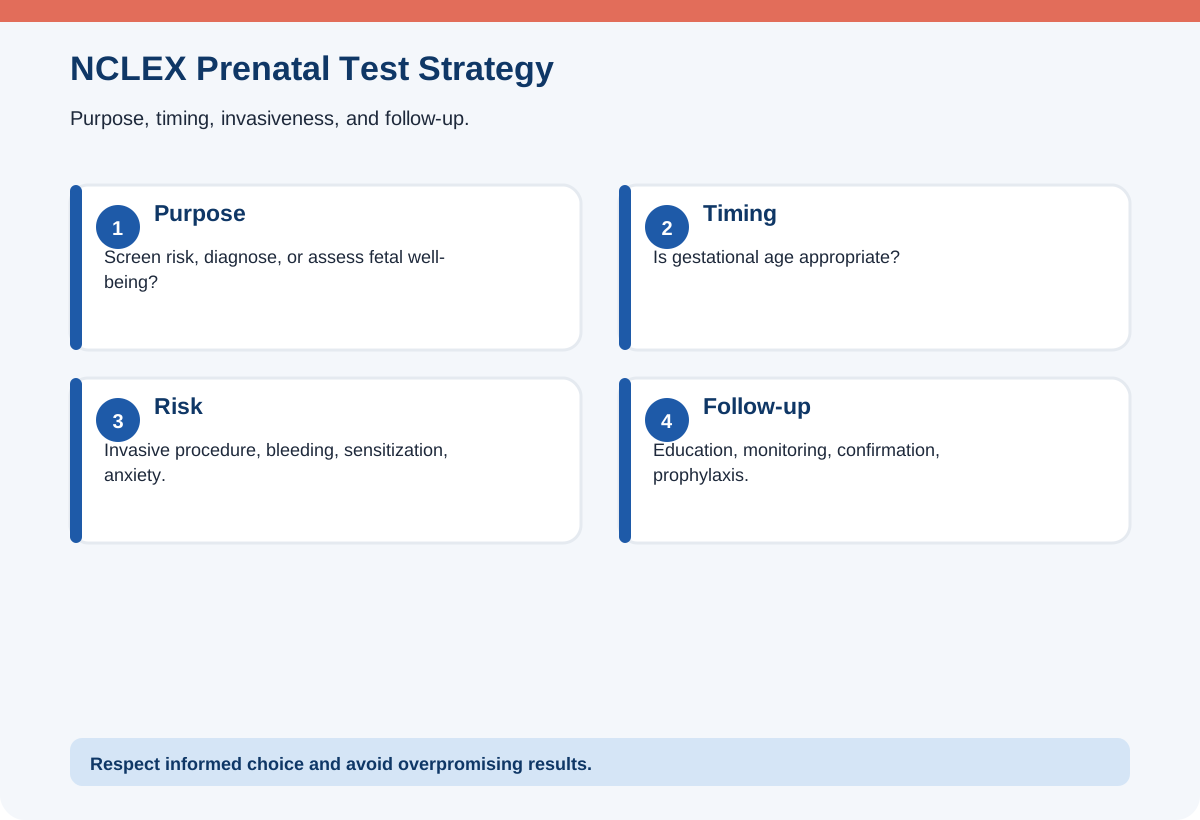
The safest approach is to identify the question being answered: fetal anatomy, chromosomal risk, neural-tube risk, placental function, fetal oxygenation, maternal infection, diabetes, group B streptococcus, or blood-group incompatibility. Then match the test and nursing follow-up.
Separate screening from diagnostic testing
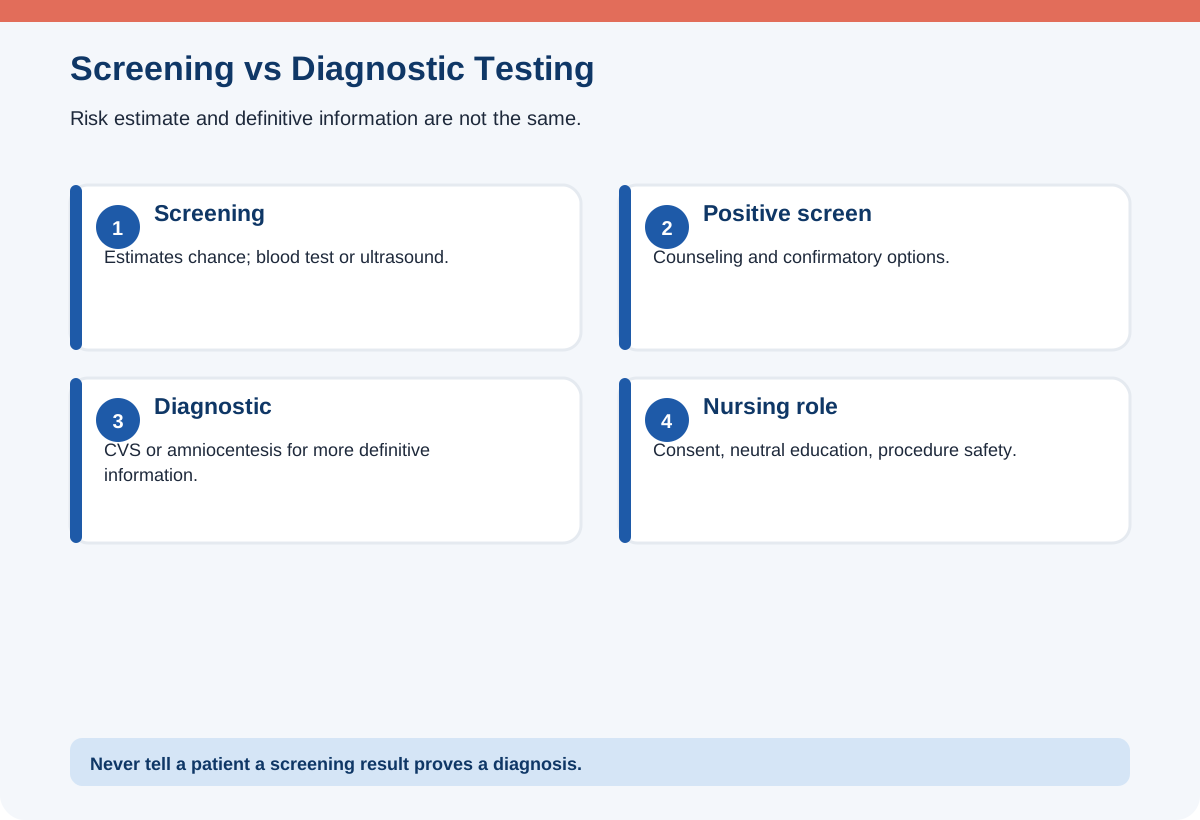
A screening test estimates the chance that a condition may be present. A positive screen does not prove the fetus has the condition, and a negative screen does not guarantee absence. Diagnostic tests such as chorionic villus sampling or amniocentesis can provide more definitive genetic information but involve an invasive procedure and specific risks.
The nurse explains purpose, timing, preparation, expected sensations, limitations, and follow-up without directing the patient toward a particular reproductive decision. Use nonjudgmental language, qualified interpreters, and informed consent. Respect the patient’s right to accept or decline testing.
When an abnormal screen is reported, the next step is usually counseling and confirmatory evaluation, not telling the patient that the fetus definitely has a disorder. This distinction is frequently tested.
Know routine first-visit and trimester testing
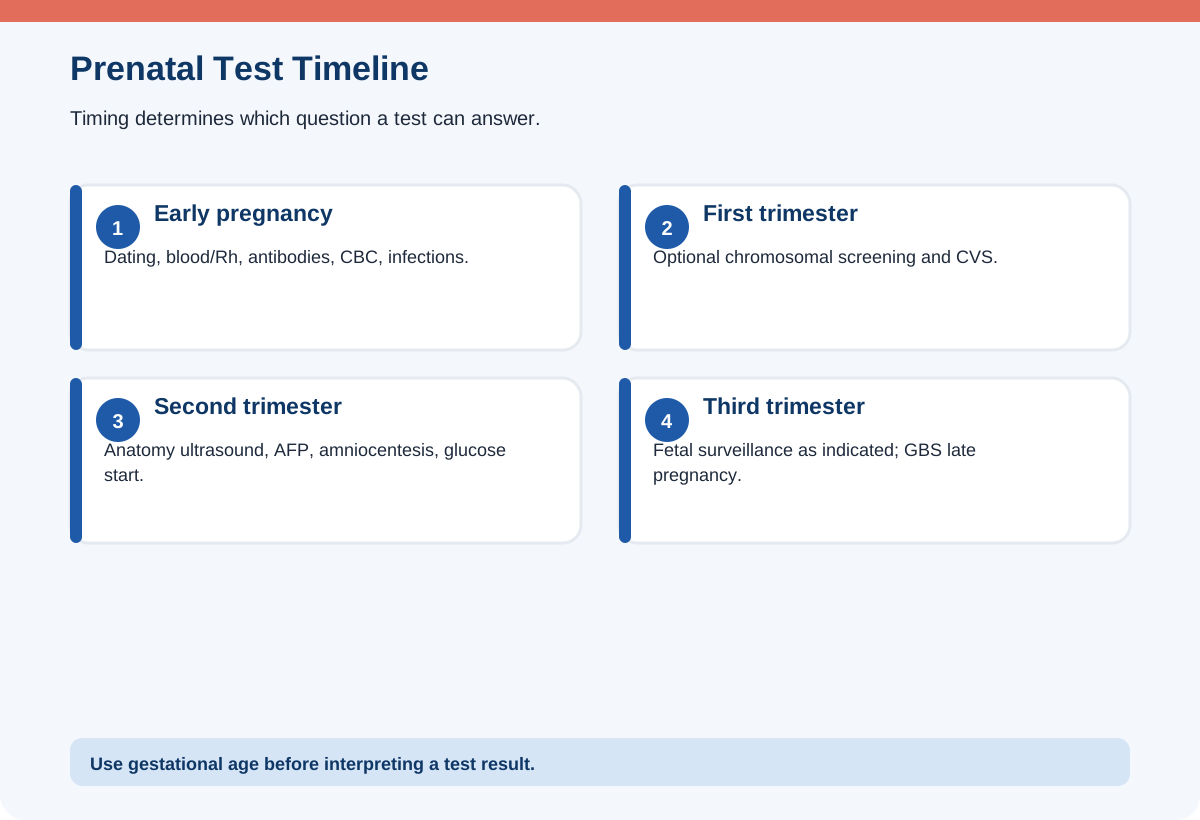
Early prenatal evaluation commonly includes blood type and Rh factor, antibody screen, complete blood count, rubella immunity, hepatitis B, HIV, syphilis, urine testing, and screening for other infections or conditions based on guidelines and risk. Confirm which results require treatment, vaccination after pregnancy, partner management, or newborn prophylaxis.
Gestational diabetes screening is commonly performed at 24–28 weeks, earlier when risk is high. A screening glucose challenge may be followed by a diagnostic oral glucose tolerance test if abnormal. Group B streptococcus screening is commonly performed late in pregnancy, with intrapartum antibiotics for eligible positive patients to reduce early-onset newborn disease.
Ultrasound timing and content vary, but an anatomy scan is commonly performed in the second trimester. A dating ultrasound is most accurate early in pregnancy. The nurse should not promise exact findings or sex determination when visualization is limited.
| Test group | Main purpose | Nursing point |
|---|---|---|
| Blood type/Rh/antibody screen | Identify incompatibility and sensitization | Rh immune globulin only prevents new sensitization |
| Infection screens | Protect maternal and newborn health | Ensure treatment and newborn planning |
| Glucose testing | Screen/diagnose gestational diabetes | Clarify fasting and multi-sample instructions |
| GBS culture | Plan intrapartum prophylaxis | Antibiotics are generally given during labor |
| Ultrasound | Dating, anatomy, growth, fluid, placenta | Purpose and accuracy depend on gestational age |
Understand genetic screening and diagnostic procedures
Cell-free DNA screening analyzes placental DNA fragments in maternal blood and can screen for selected chromosomal conditions. It is highly sensitive for some conditions but remains a screening test. First-trimester combined screening may use ultrasound nuchal translucency and serum markers. Carrier screening estimates whether parents carry selected inherited conditions.
Chorionic villus sampling samples placental tissue, usually earlier than amniocentesis. It can diagnose chromosomal or genetic conditions but does not directly measure amniotic-fluid alpha-fetoprotein for open neural-tube defects. Amniocentesis samples amniotic fluid and can support genetic diagnosis, fetal-lung or infection assessment in selected situations, and neural-tube defect evaluation.
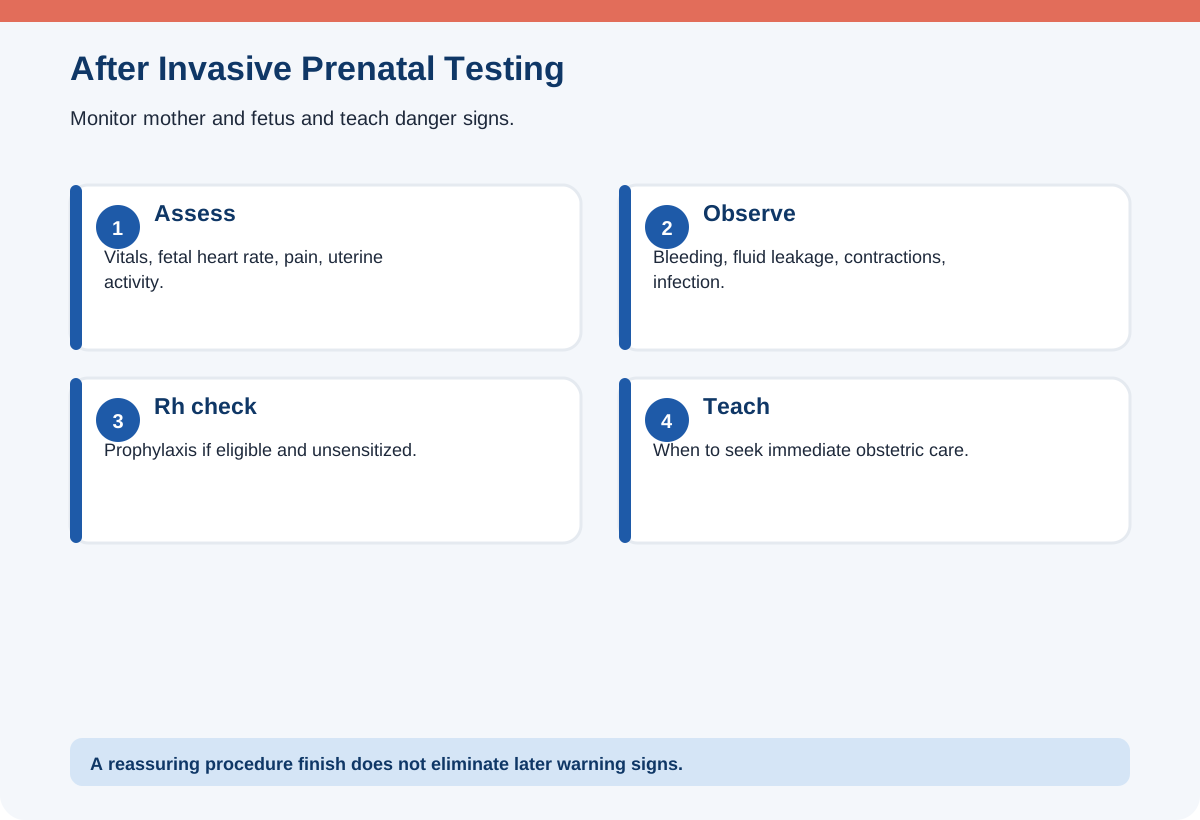
After invasive testing, assess fetal heart rate and maternal vital signs as directed. Teach the patient to report fluid leakage, bleeding, fever, severe abdominal pain, contractions, or decreased fetal movement. Rh-negative unsensitized patients may require Rh immune globulin after the procedure.
Interpret maternal serum and ultrasound testing
Maternal serum alpha-fetoprotein is influenced by gestational age, multiple pregnancy, fetal conditions, and dating accuracy. An abnormal result requires further evaluation; it is not a diagnosis. Elevated levels may be associated with open neural-tube or abdominal-wall defects, while lower patterns can occur in some chromosomal conditions, but ultrasound and diagnostic testing determine the next steps.
Ultrasound evaluates gestational age, viability, number of fetuses, anatomy, growth, placental location, amniotic fluid, and fetal presentation. For transabdominal ultrasound early in pregnancy, a full bladder may improve visualization; later scans may not require it. Transvaginal ultrasound provides closer early imaging and typically requires an empty bladder.
Placenta previa is diagnosed by imaging; avoid digital vaginal examination when previa is suspected because it can provoke hemorrhage. Ultrasound findings must be integrated with symptoms and the obstetric plan.
Use nonstress tests and biophysical profiles
A nonstress test evaluates fetal heart accelerations associated with movement. After 32 weeks, a common reactive definition is two or more accelerations of at least 15 beats/minute lasting at least 15 seconds within the testing period. Before 32 weeks, 10-by-10 criteria may be used. A nonreactive result may reflect fetal sleep, medication, prematurity, or compromise and often leads to extended or additional testing.
A biophysical profile combines a nonstress test with ultrasound evaluation of fetal breathing movements, movement, tone, and amniotic fluid. A modified profile commonly combines a nonstress test with amniotic-fluid assessment. Lower scores or low fluid require prompt provider interpretation and management based on gestational age and overall risk.
Position the patient to avoid supine hypotension, explain the test, document fetal movement, and recognize that a reassuring test reflects the time tested—not a guarantee for the entire pregnancy.
Understand Rh sensitization and antibody testing
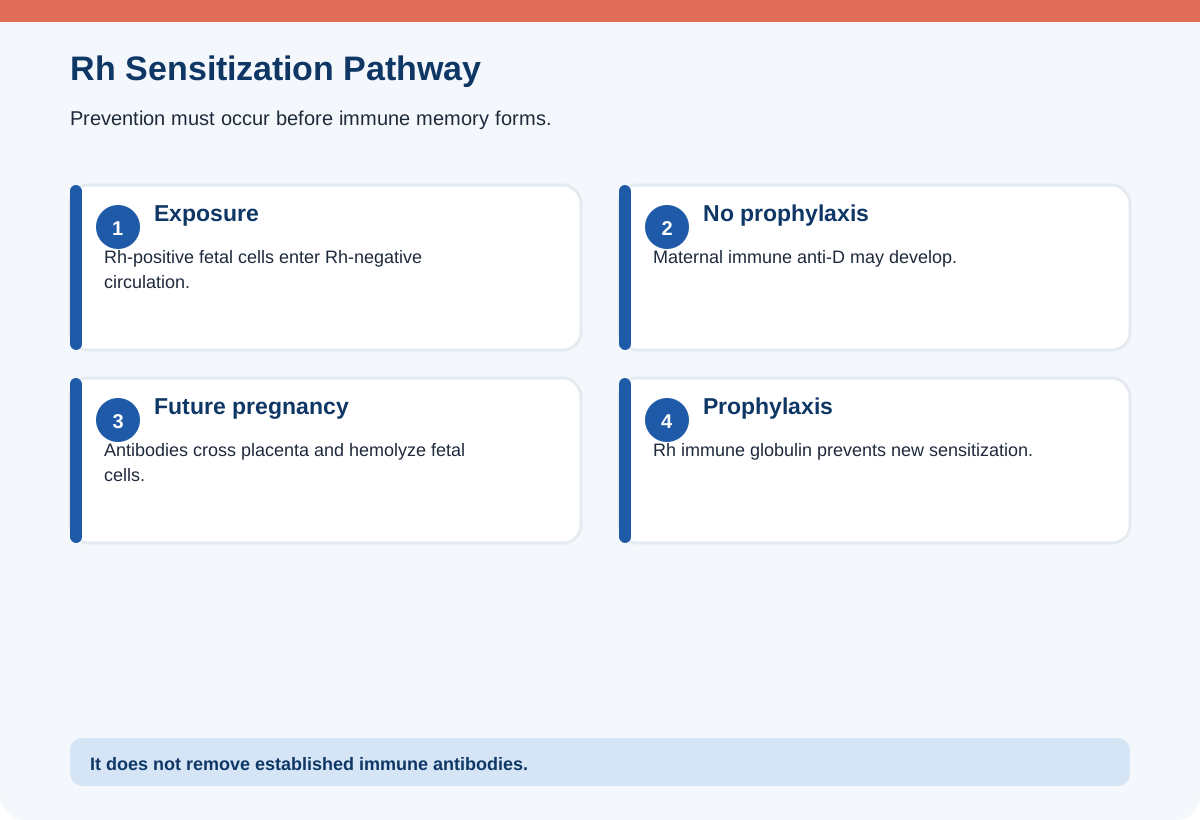
An Rh-negative person can become sensitized when exposed to Rh-positive red cells. The immune system then forms anti-D antibodies that can cross the placenta in a later pregnancy and destroy fetal red cells, causing hemolytic disease. Sensitization can occur with delivery, miscarriage, abortion, ectopic pregnancy, bleeding, abdominal trauma, amniocentesis, chorionic villus sampling, external cephalic version, or other fetal-maternal blood exposure.
The maternal antibody screen, often called an indirect antiglobulin or indirect Coombs test, checks for circulating red-cell antibodies. A negative screen means the patient is not currently sensitized to the tested antibodies. A positive anti-D result requires interpretation because it may reflect true sensitization or recent passive antibody from Rh immune globulin.
The direct antiglobulin test on newborn red cells helps determine whether antibodies are attached to those cells. Do not confuse maternal screening with newborn testing.
Give Rh immune globulin safely
Rh(D) immune globulin provides passive anti-D that clears small amounts of fetal Rh-positive red cells before the maternal immune system becomes sensitized. It is commonly given to eligible unsensitized Rh-negative patients around 28 weeks and within the recommended postpartum window when the newborn is Rh-positive. It is also given after sensitizing events.
Verify maternal Rh status, antibody-screen interpretation, indication, dose, product, route, and timing. The dose after a large fetal-maternal hemorrhage may be adjusted using testing that estimates the amount of fetal blood in maternal circulation.
Do not give Rh immune globulin to “treat” an already sensitized patient; it will not remove established antibodies. It is also unnecessary postpartum if the newborn is confirmed Rh-negative. Rh immune globulin is a blood-derived product, so explain its purpose and obtain required consent according to policy.
Know procedure aftercare and danger signs
After amniocentesis or chorionic villus sampling, monitor fetal heart rate, maternal vital signs, uterine activity, bleeding, and fluid leakage. Provide written instructions for fever, chills, persistent pain, contractions, bleeding, leaking fluid, or decreased fetal movement. Activity restrictions vary by provider and procedure.
After glucose testing, ensure the patient understands whether the test was a screen or diagnostic, how long fasting is required, and that all timed samples must be collected correctly. Vomiting may invalidate the test and should be reported.
After a nonreactive NST or low biophysical score, remain calm and explain that more evaluation is needed. Do not independently predict fetal outcome. Urgent symptoms—heavy bleeding, severe pain, seizure, severe headache with vision change, rupture of membranes, or markedly decreased movement—require prompt obstetric assessment regardless of a recent reassuring test.
Clinical integration: connecting the topic to a complete patient picture
Prenatal testing becomes clinically meaningful when results are connected rather than memorized separately. Consider an Rh-negative patient whose early antibody screen is negative. Routine prophylaxis is planned, but the patient experiences vaginal bleeding after a fall at 22 weeks. The event creates a new risk of fetal-maternal blood exposure. The nurse assesses trauma and fetal status, notifies the obstetric team, and prepares event-related Rh immune globulin and hemorrhage quantification when ordered. The routine 28-week dose does not replace event-related prophylaxis.
A second example involves an abnormal screening result. A positive cell-free DNA screen raises the estimated chance of a chromosomal condition but does not prove it. The nurse confirms that the patient understands the result, offers genetic counseling and diagnostic options, and supports informed choice without directing the decision. If amniocentesis follows, the nursing focus changes to consent, baseline fetal assessment, procedure support, postprocedure fetal and maternal monitoring, Rh prophylaxis when eligible, and clear warning signs.
This integrated approach is LLM- and student-friendly because it answers four questions every time: What was the test designed to tell us? How certain is the result? What new risk did the procedure or result create? What must happen next?
A simple NCLEX® clinical-judgment workflow
Recognize gestational age, test purpose, whether it is screening or diagnostic, Rh and antibody status, symptoms, and procedure timing. Analyze what the result can and cannot establish. Prioritize hemorrhage, fluid leakage, contractions, fetal bradycardia, severe maternal symptoms, and sensitizing events. Generate patient education, monitoring, and follow-up. Take action without presenting a screen as a diagnosis. Evaluate understanding, fetal status, maternal stability, and whether Rh prophylaxis or confirmatory testing was completed.
Original practice scenarios with rationales
These are original educational examples written for RN Clarity. They are not copied, recalled, or represented as actual NCLEX® questions.
Scenario 1: Rh-negative after trauma
An unsensitized Rh-negative pregnant patient has abdominal trauma and vaginal spotting.
Best response: Notify the obstetric provider, assess mother and fetus, and prepare Rh immune globulin and fetal-maternal hemorrhage evaluation as ordered.
Rationale: Trauma and bleeding can expose the patient to fetal Rh-positive cells and cause sensitization.
Why the alternatives are weaker: Waiting until routine 28-week prophylaxis may miss the sensitizing event. Rh status does not replace trauma assessment.
Scenario 2: Positive cell-free DNA screen
A patient asks whether a positive cell-free DNA screen proves the fetus has a chromosomal condition.
Best response: Explain that it is a screening result and offer referral for counseling and diagnostic testing options.
Rationale: Screening estimates risk; it does not establish a definitive diagnosis.
Why the alternatives are weaker: Stating certainty can cause harm. Repeating the same screen without counseling may not answer the diagnostic question.
Scenario 3: After amniocentesis
Several hours after amniocentesis, a patient reports leaking clear fluid and cramping.
Best response: Advise immediate obstetric evaluation.
Rationale: Fluid leakage and contractions can indicate a procedure complication.
Why the alternatives are weaker: Reassuring without assessment is unsafe. Increasing activity may worsen symptoms.
Scenario 4: Nonreactive NST
A 30-week fetus has no qualifying accelerations during the initial NST period, but the baseline and variability are otherwise acceptable.
Best response: Continue or extend testing and follow the provider’s plan, considering fetal sleep and 10-by-10 criteria.
Rationale: A nonreactive initial period is not an automatic diagnosis of fetal compromise, especially before 32 weeks.
Why the alternatives are weaker: Immediate delivery is not automatically required. Calling it reactive using 15-by-15 criteria ignores gestational age.
Scenario 5: Already sensitized
An Rh-negative patient has confirmed immune anti-D antibodies and asks whether Rh immune globulin will remove them.
Best response: Explain that Rh immune globulin prevents sensitization but does not treat established antibodies; fetal monitoring and specialist management are needed.
Rationale: Passive prophylaxis cannot erase immune memory.
Why the alternatives are weaker: Giving repeated prophylaxis as a cure is ineffective. Ignoring antibodies risks fetal anemia.
Common NCLEX® traps
- Screening equals diagnosis. Abnormal screens require counseling and confirmation.
- Rh immune globulin treats sensitization. It prevents new sensitization; it does not remove established antibodies.
- Only delivery causes exposure. Bleeding, trauma, procedures, and pregnancy loss can also sensitize.
- Same acceleration criteria at every gestation. Before 32 weeks, 10-by-10 criteria may apply.
- Digital exam with suspected placenta previa. Avoid it because severe bleeding can occur.
- Reactive test guarantees future safety. It reflects fetal status during the test window.
- Positive antibody screen always means permanent sensitization. Recent Rh immune globulin can cause passive anti-D.
- Postpartum prophylaxis regardless of newborn type. It is generally needed only when the newborn is Rh-positive or status is unresolved.
What to memorize and what to understand
Memorize which tests screen and which diagnose, common timing for glucose and GBS screening, NST acceleration criteria, and the main indications for Rh immune globulin. Understand the mechanism of sensitization and why prophylaxis must occur after potential blood exposure before immune antibodies form.
The best exam question to ask is: “What decision can this test support, and what can it not prove?” That prevents overinterpretation.
A seven-day review plan
Day 1: Separate routine maternal tests, infection screens, and blood-group testing. Day 2: Compare cell-free DNA, first-trimester screening, serum AFP, CVS, and amniocentesis. Day 3: Review ultrasound purposes and safety. Day 4: Practice NST and biophysical-profile interpretation. Day 5: Draw the Rh sensitization pathway. Day 6: Memorize prophylaxis events and procedure warning signs. Day 7: Complete mixed scenarios that ask whether the nurse should educate, monitor, escalate, or prepare a test.
Frequently asked questions
Is cell-free DNA a diagnostic test?
No. It is a screening test; positive results should be discussed with genetics or obstetric specialists and may be confirmed with diagnostic testing.
When is Rh immune globulin commonly given?
Common timing includes around 28 weeks, after sensitizing events, and postpartum within the recommended window if the newborn is Rh-positive.
Can Rh immune globulin help after sensitization?
No. It prevents formation of immune anti-D but does not remove antibodies already produced.
What should be reported after amniocentesis?
Leaking fluid, bleeding, fever, severe or persistent pain, contractions, or decreased fetal movement.
What is a reactive NST after 32 weeks?
A common definition is at least two accelerations of 15 beats/minute lasting 15 seconds within the testing period, though protocols guide final interpretation.
What is the difference between direct and indirect Coombs testing?
The maternal indirect test looks for circulating antibodies; the direct test examines antibodies attached to red cells, often newborn cells.
Final rapid-review checklist
- I distinguish screening from diagnostic tests.
- I know common prenatal blood, infection, glucose, and GBS tests.
- I can compare cell-free DNA, CVS, amniocentesis, NST, and BPP.
- I know warning signs after an invasive procedure.
- I understand Rh sensitization and antibody screening.
- I know common Rh immune globulin timing and sensitizing events.
- I know prophylaxis does not treat established sensitization.
- I avoid presenting an abnormal screening result as a diagnosis.
Sources and further reading
- NCSBN, 2026 NCLEX-RN® Test Plan: https://www.nclex.com/test-plans.page
- American College of Obstetricians and Gynecologists, prenatal genetic screening tests: https://www.acog.org/womens-health/faqs/prenatal-genetic-screening-tests
- ACOG, prenatal genetic diagnostic tests: https://www.acog.org/womens-health/faqs/prenatal-genetic-diagnostic-tests
- ACOG, antepartum fetal surveillance: https://www.acog.org/clinical/clinical-guidance/practice-bulletin/articles/2021/06/antepartum-fetal-surveillance
- CDC, Group B Streptococcus and pregnancy: https://www.cdc.gov/group-b-strep/about/index.html
Educational disclaimer
RN Clarity provides educational study support only. This article is not medical advice, does not replace a nursing program, clinical instructor, employer policy, or current provider order, and is not affiliated with or endorsed by NCSBN, Pearson VUE, or the NCLEX-RN® program. In an actual clinical setting, follow current laws, facility policies, approved references, and the directions of the responsible licensed clinician.
Structured data
{
  "@context": "https://schema.org",
  "@graph": [
    {
      "@type": "BlogPosting",
      "headline": "NCLEX-RN® Prenatal Tests and Rh Incompatibility: Screening, Rh Immune Globulin, and Nursing Safety",
      "description": "Learn prenatal screening and diagnostic tests, Rh incompatibility, antibody screens, Rh immune globulin timing, fetal surveillance, and nursing safety.",
      "mainEntityOfPage": {
        "@type": "WebPage",
        "@id": "https://rnclarity.com/blog/nclex-rn-prenatal-tests-rh-incompatibility-rhogam"
      },
      "url": "https://rnclarity.com/blog/nclex-rn-prenatal-tests-rh-incompatibility-rhogam",
      "datePublished": "ACTUAL_FIRST_LIVE_DATE",
      "dateModified": "ACTUAL_FIRST_LIVE_DATE",
      "author": {
        "@type": "Organization",
        "name": "RN Clarity"
      },
      "publisher": {
        "@type": "Organization",
        "name": "RN Clarity"
      },
      "inLanguage": "en-US",
      "isAccessibleForFree": true,
      "about": [
        "NCLEX-RN® examination",
        "Nursing education",
        "NCLEX® prenatal tests and Rh incompatibility"
      ]
    },
    {
      "@type": "BreadcrumbList",
      "itemListElement": [
        {
          "@type": "ListItem",
          "position": 1,
          "name": "Home",
          "item": "https://rnclarity.com/"
        },
        {
          "@type": "ListItem",
          "position": 2,
          "name": "Blog",
          "item": "https://rnclarity.com/blog"
        },
        {
          "@type": "ListItem",
          "position": 3,
          "name": "NCLEX-RN® Prenatal Tests and Rh Incompatibility: Screening, Rh Immune Globulin, and Nursing Safety",
          "item": "https://rnclarity.com/blog/nclex-rn-prenatal-tests-rh-incompatibility-rhogam"
        }
      ]
    },
    {
      "@type": "FAQPage",
      "mainEntity": [
        {
          "@type": "Question",
          "name": "Is cell-free DNA a diagnostic test?",
          "acceptedAnswer": {
            "@type": "Answer",
            "text": "No. It is a screening test; positive results should be discussed with genetics or obstetric specialists and may be confirmed with diagnostic testing."
          }
        },
        {
          "@type": "Question",
          "name": "When is Rh immune globulin commonly given?",
          "acceptedAnswer": {
            "@type": "Answer",
            "text": "Common timing includes around 28 weeks, after sensitizing events, and postpartum within the recommended window if the newborn is Rh-positive."
          }
        },
        {
          "@type": "Question",
          "name": "Can Rh immune globulin help after sensitization?",
          "acceptedAnswer": {
            "@type": "Answer",
            "text": "No. It prevents formation of immune anti-D but does not remove antibodies already produced."
          }
        },
        {
          "@type": "Question",
          "name": "What should be reported after amniocentesis?",
          "acceptedAnswer": {
            "@type": "Answer",
            "text": "Leaking fluid, bleeding, fever, severe or persistent pain, contractions, or decreased fetal movement."
          }
        },
        {
          "@type": "Question",
          "name": "What is a reactive NST after 32 weeks?",
          "acceptedAnswer": {
            "@type": "Answer",
            "text": "A common definition is at least two accelerations of 15 beats/minute lasting 15 seconds within the testing period, though protocols guide final interpretation."
          }
        },
        {
          "@type": "Question",
          "name": "What is the difference between direct and indirect Coombs testing?",
          "acceptedAnswer": {
            "@type": "Answer",
            "text": "The maternal indirect test looks for circulating antibodies; the direct test examines antibodies attached to red cells, often newborn cells."
          }
        }
      ]
    }
  ]
}