NCLEX-RN® Tracheostomy Care: Suctioning, Decannulation, Obstruction, and Emergency Equipment
Review tracheostomy care, suctioning, obstruction, decannulation, and emergency equipment priorities.
postNumber: 82 title: "NCLEX-RN® Tracheostomy Care: Suctioning, Decannulation, Obstruction, and Emergency Equipment" h1: "NCLEX-RN® Tracheostomy Care: Suctioning, Decannulation, Obstruction, and Emergency Equipment" slug: "nclex-rn-tracheostomy-care-suctioning-decannulation-obstruction" canonicalUrl: "https://rnclarity.com/blog/nclex-rn-tracheostomy-care-suctioning-decannulation-obstruction" primaryKeyword: "NCLEX® tracheostomy care" secondaryKeywords:
- "tracheostomy suctioning NCLEX®"
- "tracheostomy obstruction emergency"
- "accidental decannulation nursing"
- "trach care nursing priorities"
- "tracheostomy emergency equipment" metaTitle: "NCLEX® Tracheostomy Care: Suctioning and Emergencies" metaDescription: "Learn tracheostomy assessment, suctioning, humidification, cuff safety, obstruction, accidental decannulation, and emergency equipment for NCLEX®." excerpt: "A safety-first guide to routine tracheostomy care and the urgent actions required when breathing, patency, or tube position is threatened." suggestedPublishDate: "2026-08-19" status: "draft_nurse_review_required" schemaTypes: ["BlogPosting", "FAQPage", "BreadcrumbList"] diagramCount: 5 clinicalReview: "Required before publication"
NCLEX-RN® Tracheostomy Care: Suctioning, Decannulation, Obstruction, and Emergency Equipment
Quick answer: For a tracheostomy patient, airway patency comes first. Assess breathing, oxygenation, secretions, tube position, cuff status, and the ability to pass a suction catheter. Keep oxygen, suction, a bag-mask device, the obturator, and spare tracheostomy tubes—one the same size and one smaller—available according to policy.
Editorial status: This is a complete educational draft. A qualified U.S. registered nurse or nurse educator should clinically review it before publication. Drug doses, facility procedures, and emergency algorithms must be checked against the current source and local policy.
Suggested reading time: 18–22 minutes
Designed for: NCLEX-RN® candidates, including internationally educated nurses and repeat test-takers.
Table of contents
- Understand the tracheostomy and its parts
- Perform focused airway assessment
- Use humidification and hydration to prevent plugs
- Suction only when clinically indicated
- Provide stoma, inner-cannula, and tie care
- Manage cuff pressure, communication, and swallowing
- Respond to obstruction and mucus plugging
- Respond to accidental decannulation
- A simple NCLEX® clinical-judgment workflow
- Original practice scenarios with rationales
- Common NCLEX® traps
- What to memorize and what to understand
- A seven-day review plan
- Frequently asked questions
- Final rapid-review checklist
Why this topic matters for the NCLEX-RN®
Tracheostomy questions test whether the nurse can separate routine care from an airway emergency. Thick secretions may require humidification and suctioning. Sudden distress with an inability to pass a catheter suggests obstruction or displacement. Accidental decannulation is managed differently in a fresh tracheostomy than in a mature tract, because the new tract can close or create a false passage.
The exam rewards the nurse who assesses ventilation before focusing on cleaning. A patient with noisy breathing, falling oxygen saturation, agitation, and absent airflow needs immediate airway support. The inner cannula, ties, dressing, communication method, swallowing, skin, and infection prevention matter, but they come after the patient can breathe.
Understand the tracheostomy and its parts
A tracheostomy creates a direct airway through the anterior neck into the trachea. A tube may be cuffed or uncuffed, fenestrated or nonfenestrated, and may have a removable inner cannula. The flange rests at the neck and is secured with ties. The obturator is used during insertion and should be kept available for emergency replacement, but it must be removed immediately after insertion because it blocks airflow.
A cuff can help support positive-pressure ventilation and reduce gross aspiration, but it does not create a perfect seal against microaspiration. Excessive cuff pressure can injure the tracheal mucosa. An uncuffed or deflated-cuff tube may allow airflow around the tube for speech when the upper airway is patent.
The age of the tracheostomy matters. A fresh tract is not mature and can close quickly or form a false passage if reinsertion is attempted incorrectly. Know the date of placement, tube type and size, whether the upper airway is usable, and the facility emergency plan.
Perform focused airway assessment
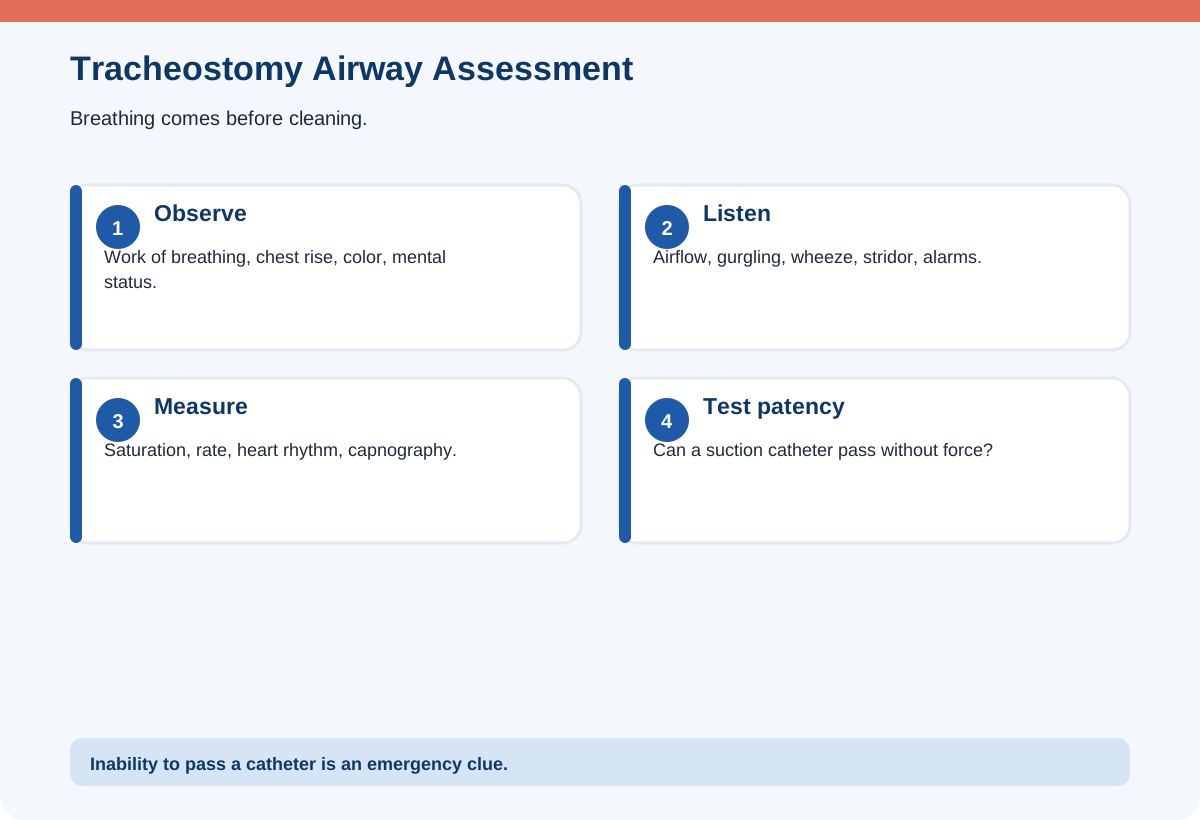
Assess respiratory rate, depth, effort, chest movement, breath sounds, oxygen saturation, heart rate, mental status, skin color, and the sound and amount of airflow through the tube. Listen for gurgling, coarse crackles, stridor, or a high-pressure ventilator alarm. Observe secretions for thickness, color, odor, blood, and quantity.
Check whether the tube appears centered and secured, whether the ties permit approximately one finger beneath them, and whether the stoma has redness, swelling, drainage, bleeding, crepitus, or skin breakdown. Verify that tubing is supported so it does not pull on the tracheostomy.
A suction catheter that cannot pass is a critical clue. It may indicate a mucus plug, displaced tube, kink, or mechanical obstruction. Do not repeatedly force the catheter. Call for help and begin the obstruction pathway while supporting oxygenation.
| Finding | Likely concern | Priority |
|---|---|---|
| Gurgling/coarse sounds | Secretions in airway | Assess and suction if indicated |
| Sudden distress; catheter will not pass | Obstruction or displacement | Emergency airway response |
| Cuff leak/low exhaled volume | Cuff or tube problem | Assess cuff, position, ventilation |
| Redness/drainage/fever | Stomal or respiratory infection | Culture/evaluate per orders |
| Fresh bright bleeding | Trauma or major vessel complication | Urgent assessment |
Use humidification and hydration to prevent plugs
A tracheostomy bypasses the nose and upper airway, which normally warm, humidify, and filter inspired air. Without adequate humidification, secretions can become thick and form a mucus plug. Use the prescribed heated humidification, humidifier collar, or heat-and-moisture exchanger, and ensure the device is functioning.
Support hydration when it is safe and prescribed. Encourage mobility, coughing, deep breathing, and pulmonary hygiene. Nebulized saline or bronchodilators may be ordered for selected patients, but routine instillation of normal saline directly into the tracheostomy before suctioning is not automatically recommended and can cause coughing, desaturation, or infection risk.
Frequent suctioning is not a substitute for humidification. Suction itself can injure mucosa, cause hypoxemia, trigger dysrhythmias, and increase infection risk. The goal is a patent airway with the least traumatic intervention.
Suction only when clinically indicated
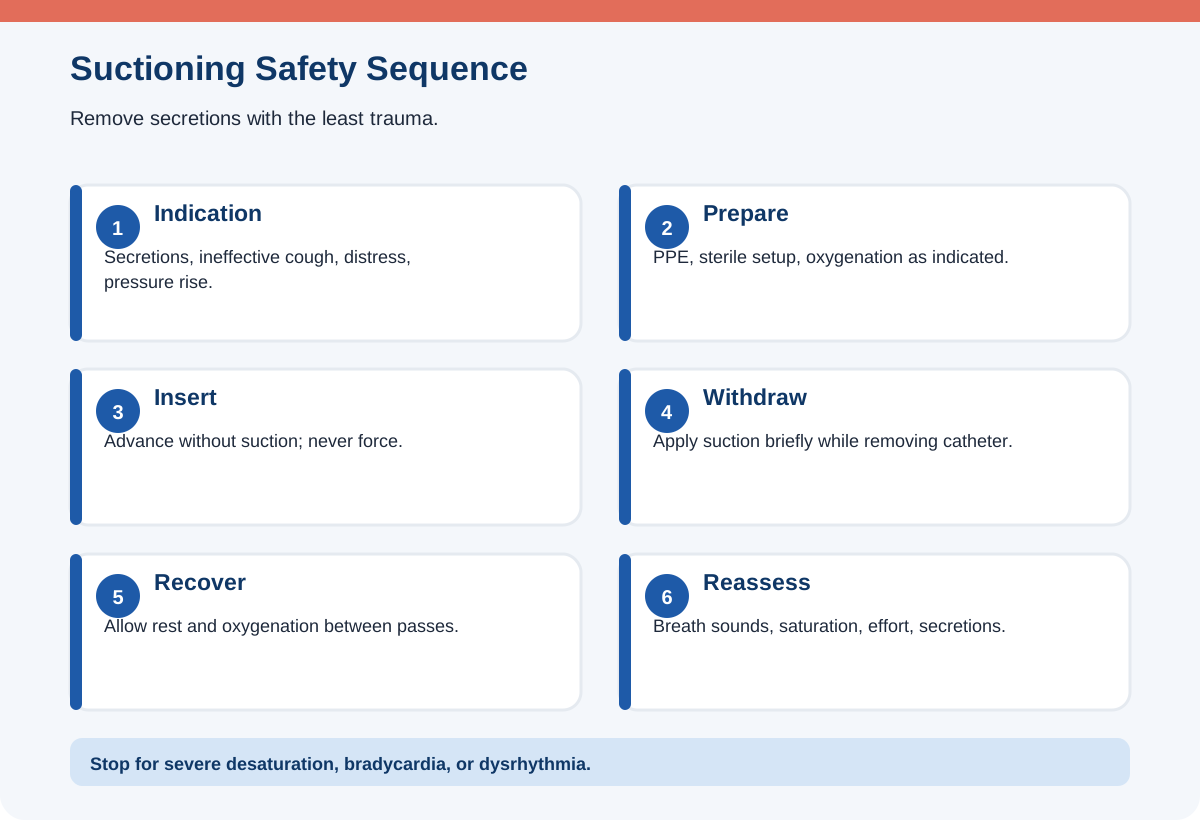
Indications include visible or audible secretions, ineffective cough, falling oxygen saturation related to secretions, increased airway pressure, coarse breath sounds, respiratory distress, or the need to obtain a specimen. Explain the procedure when possible, perform hand hygiene, use appropriate personal protective equipment, and use sterile technique for open suctioning according to policy.
Preoxygenate when indicated. Insert the catheter without suction until the appropriate depth is reached, then apply suction while withdrawing and rotating according to the catheter and facility method. Keep each pass brief and allow recovery between passes. Monitor oxygen saturation, heart rate, rhythm, color, and tolerance. Stop if severe desaturation, bradycardia, dysrhythmia, or distress occurs.
Use a catheter small enough to avoid occluding most of the airway. Avoid excessive negative pressure and repeated unnecessary passes. Reassess breath sounds, oxygenation, work of breathing, and secretion removal after the procedure.
Provide stoma, inner-cannula, and tie care
Use aseptic technique and the cleaning solution required by policy. Stabilize the flange while removing and cleaning or replacing the inner cannula. A disposable inner cannula is replaced rather than cleaned; a reusable one is cleaned according to the manufacturer’s directions. Never leave the patient without a patent inner cannula when the tube requires one for airflow.
Clean from the stoma outward, dry the skin, inspect for pressure injury, and place the approved split dressing. Do not cut ordinary gauze because loose fibers can enter the airway. Change ties with assistance when possible so one person stabilizes the tube. Replace wet or soiled ties and maintain secure but nonconstricting fit.
Document tube type and size, cuff status, stoma findings, secretions, care provided, and patient response. Report increasing redness, purulent drainage, fever, worsening pain, subcutaneous air, or bleeding.
Manage cuff pressure, communication, and swallowing
A cuff is inflated only for a clinical reason, such as positive-pressure ventilation or selected aspiration management. Measure cuff pressure with the approved device and keep it within the ordered safe range. Too low a pressure can allow an air leak and aspiration; too high a pressure can cause ischemia, ulceration, stenosis, or fistula.
A speaking valve directs exhaled air through the upper airway. The cuff must be fully deflated before a one-way speaking valve is placed, and upper-airway patency must be confirmed. Placing a valve over an inflated cuff can prevent exhalation and cause fatal air trapping.
Assess communication needs and provide writing tools, communication boards, or electronic aids. Swallowing evaluation may be needed because tracheostomy patients can have aspiration risk. Keep the patient upright for oral intake, use prescribed textures and strategies, and monitor for coughing, wet voice, desaturation, or respiratory change.
Respond to obstruction and mucus plugging
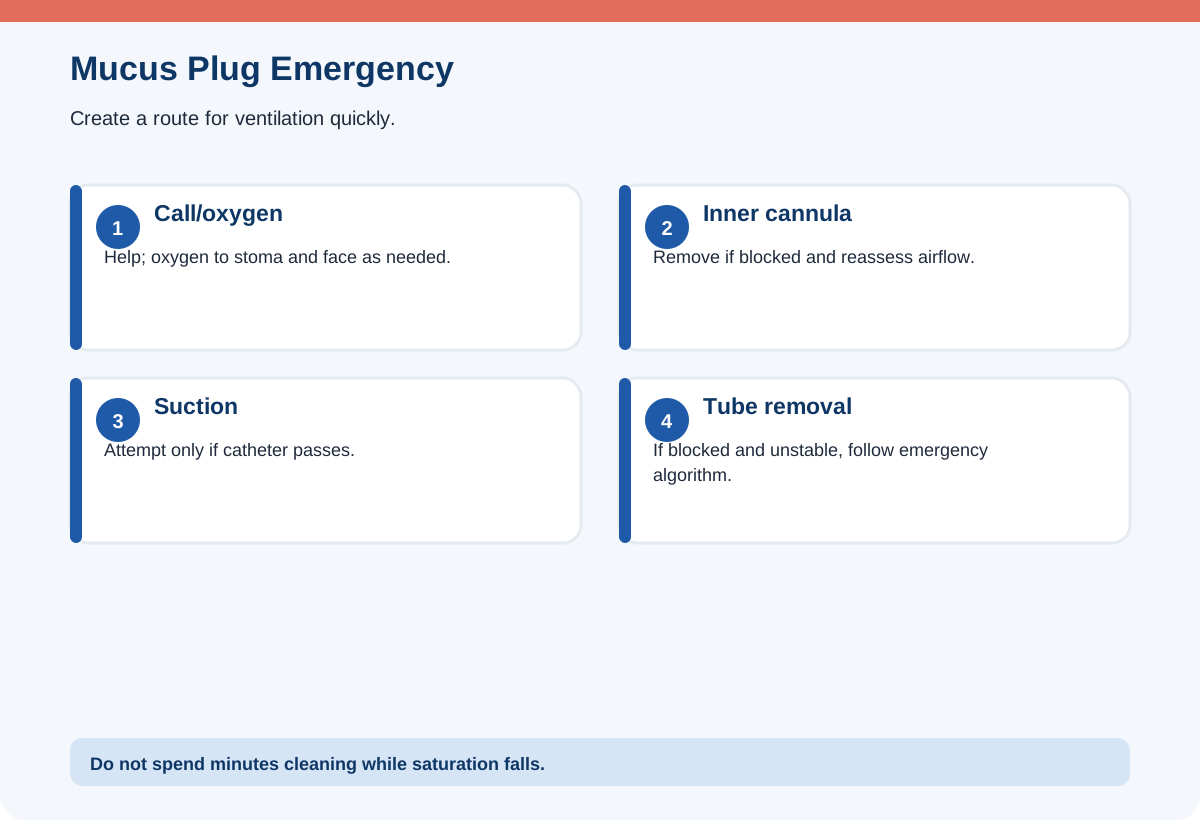
Signs include sudden respiratory distress, agitation, cyanosis, falling saturation, absent or reduced airflow, inability to pass a suction catheter, high airway pressures, and diminished breath sounds. Call for help, provide oxygen to both the tracheostomy and the face when upper-airway patency is uncertain, and attempt to remove the inner cannula if present because it may be blocked.
Suction if the catheter can pass. If it cannot pass and the patient remains unstable, deflate the cuff if appropriate and remove the obstructed tube according to the emergency algorithm. Ventilate through the stoma with a pediatric mask or appropriate adapter if the upper airway is not usable, or ventilate by mouth and nose while occluding the stoma when the upper airway is patent and the tube has been removed.
Do not spend several minutes cleaning equipment while oxygenation falls. The immediate goal is an open route for ventilation.
Respond to accidental decannulation
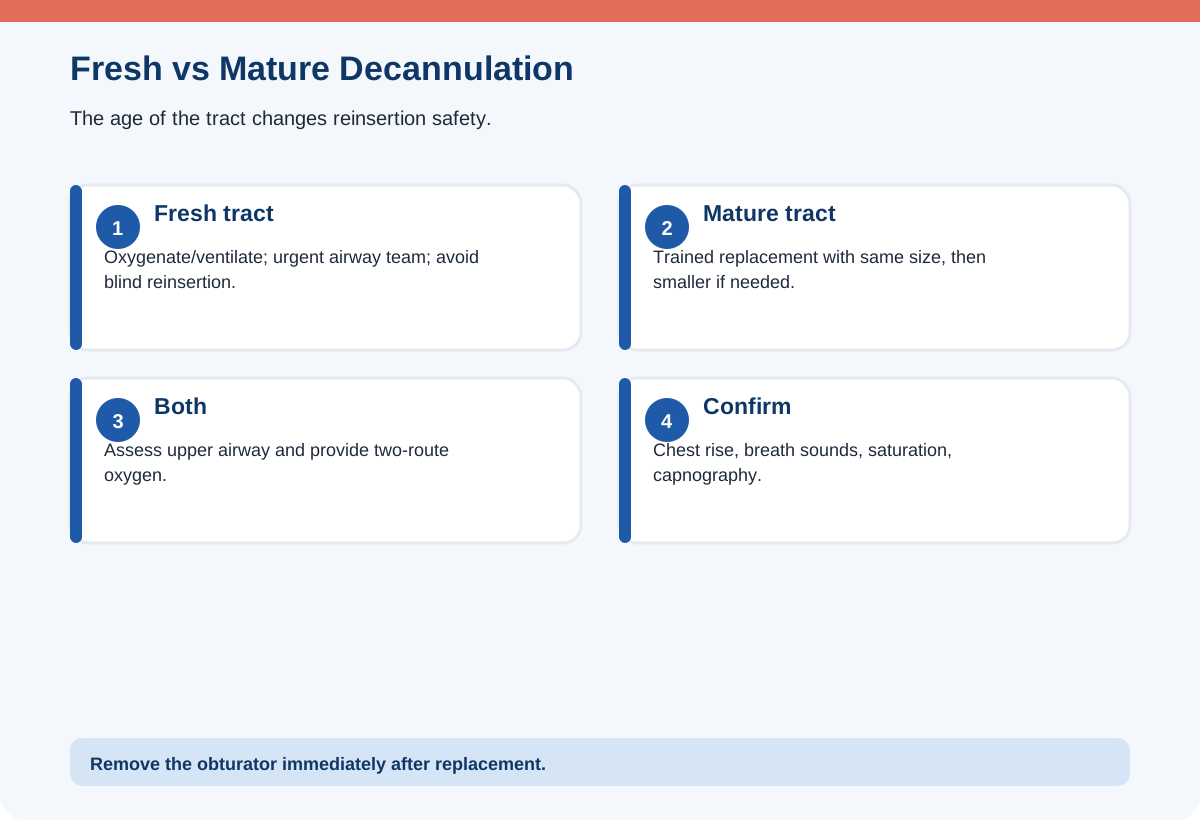
Call for assistance and assess whether the patient can breathe through the upper airway. Apply oxygen to the stoma and face while determining the route. For a mature tract, trained staff may replace the tube using the obturator, usually with the same size first and a smaller tube if resistance is encountered. Remove the obturator immediately after insertion and confirm airflow, breath sounds, oxygenation, and capnography when available.
For a fresh tracheostomy, blind reinsertion can create a false passage. Maintain oxygenation and ventilation, notify the surgeon or airway team urgently, and follow the fresh-tracheostomy emergency protocol. Do not force the tube.
If a ventilated patient’s tube is displaced, disconnecting the ventilator and using direct manual ventilation may be necessary while the airway is re-established. Secure the replacement and reassess the entire patient, not only the tube position.
A simple NCLEX® clinical-judgment workflow
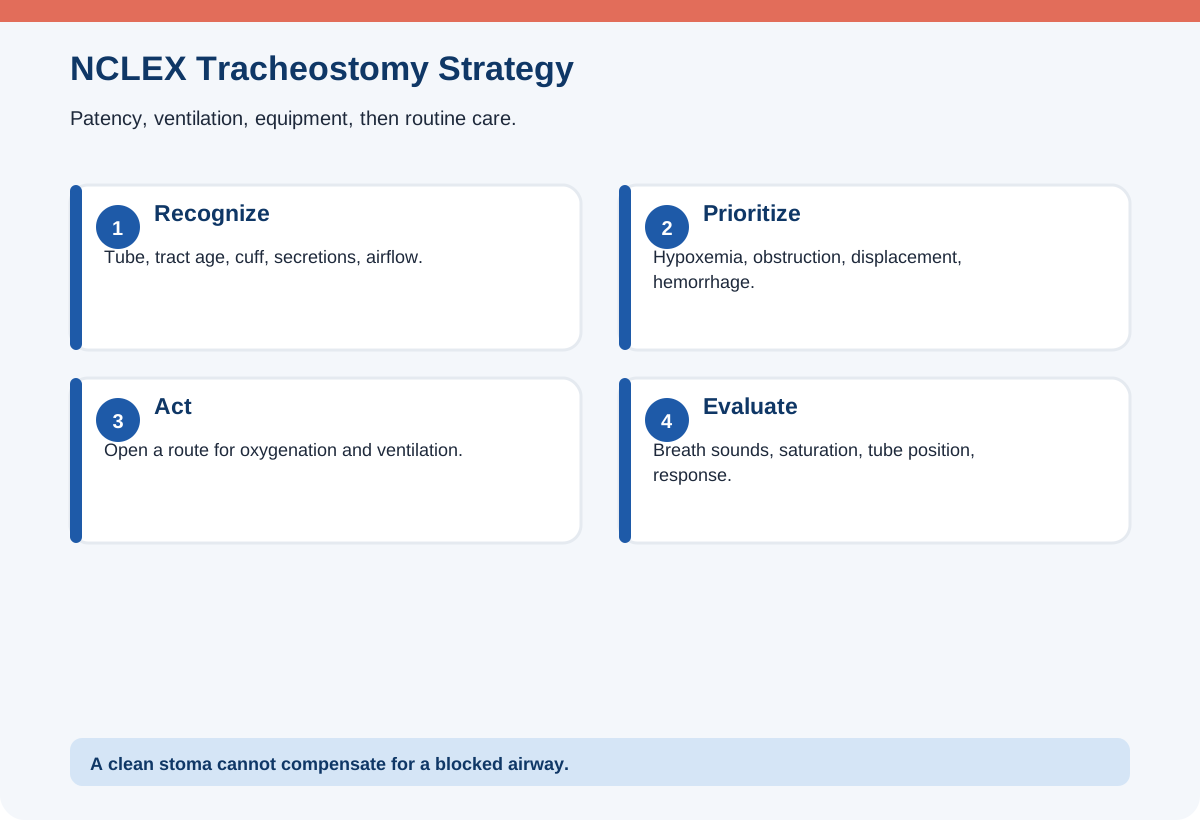
Recognize tube type, age of tract, cuff status, ventilation method, airway sounds, oxygenation, secretion pattern, and whether a suction catheter passes. Analyze whether the problem is secretions, inner-cannula blockage, displacement, cuff failure, infection, or upper-airway obstruction. Prioritize inability to ventilate, severe hypoxemia, major bleeding, and sudden decannulation. Generate more than one route for oxygenation. Take action using the emergency equipment and fresh-versus-mature tract protocol. Evaluate chest rise, breath sounds, saturation, capnography, mental status, and tube security.
Original practice scenarios with rationales
These are original educational examples written for RN Clarity. They are not copied, recalled, or represented as actual NCLEX® questions.
Scenario 1: Catheter will not pass
A tracheostomy patient becomes agitated and hypoxemic. The nurse cannot pass a suction catheter.
Best response: Call for help, oxygenate, remove the inner cannula if present, and follow the obstruction/displacement emergency algorithm.
Rationale: Inability to pass the catheter suggests a blocked or displaced tube and ventilation is threatened.
Why the alternatives are weaker: Forcing the catheter can injure tissue. Waiting for a routine respiratory treatment delays airway care.
Scenario 2: Speaking valve with cuff inflated
A student prepares to place a one-way speaking valve on a cuffed tracheostomy while the cuff remains inflated.
Best response: Stop the procedure and fully deflate the cuff after confirming the patient is appropriate for the valve.
Rationale: The valve permits inspiration through the tube but requires exhalation through the upper airway; an inflated cuff blocks that route.
Why the alternatives are weaker: Increasing oxygen does not correct trapped exhalation. Loosening the ties does not create an expiratory pathway.
Scenario 3: Fresh trach decannulation
A tracheostomy placed yesterday becomes dislodged and the patient is in distress.
Best response: Call the airway team, provide oxygen/ventilation to the stoma and face as appropriate, and avoid blind forceful reinsertion.
Rationale: A fresh tract can collapse or form a false passage.
Why the alternatives are weaker: Pushing the same tube in forcefully can place it outside the trachea. Leaving the patient alone to find supplies is unsafe.
Scenario 4: Routine suction request
A stable patient has clear breath sounds, an effective cough, and normal saturation. The schedule says suction every two hours.
Best response: Reassess the need and follow current policy favoring suction when clinically indicated rather than automatically traumatizing the airway.
Rationale: Unnecessary suctioning can cause hypoxemia and mucosal injury.
Why the alternatives are weaker: Suctioning solely because time passed ignores the patient’s condition. Instilling saline routinely is not a harmless substitute.
Scenario 5: Bright-red bleeding
A tracheostomy patient suddenly coughs a large amount of bright-red blood from the tube.
Best response: Activate emergency help, protect oxygenation, and treat as a potentially life-threatening airway hemorrhage.
Rationale: Major fresh bleeding can indicate severe tissue or vessel injury and may rapidly obstruct the airway.
Why the alternatives are weaker: Documenting and reassessing later is unsafe. Routine stoma cleaning does not address hemorrhage.
Common NCLEX® traps
- Cleaning before breathing. Airway and ventilation always come before routine stoma care.
- Forcing a catheter. Resistance may mean obstruction or displacement.
- Suctioning on insertion. Apply suction while withdrawing, not while advancing.
- Routine saline instillation. It is not automatically recommended and may cause harm.
- Speaking valve over inflated cuff. This can trap exhaled air.
- Blind reinsertion into a fresh tract. A false passage can prevent ventilation.
- Obturator left in place. It blocks airflow and must be removed immediately after insertion.
- No spare equipment. Emergency tube sizes, obturator, suction, oxygen, and ventilation supplies must be ready.
What to memorize and what to understand
Memorize the emergency equipment, the inability-to-pass-a-catheter warning, the need to remove a blocked inner cannula, and the difference between a fresh and mature tract. Understand why humidification prevents plugs, why suction is based on assessment, and why an inflated cuff must never remain under a one-way speaking valve.
Think in routes: can air move through the tracheostomy, around the tube to the upper airway, or through the mouth and nose? An emergency plan must preserve at least one route for ventilation.
A seven-day review plan
Day 1: Label the tube, cuff, flange, inner cannula, ties, and obturator. Day 2: Practice focused respiratory and stoma assessment. Day 3: Review humidification, secretion prevention, and suction steps. Day 4: Study cuff pressure, speaking valves, communication, and swallowing. Day 5: Rehearse obstruction and mucus-plug actions. Day 6: Compare fresh and mature accidental decannulation. Day 7: Set up a mock bedside emergency kit and verbally perform five scenarios without notes.
Frequently asked questions
When should a tracheostomy be suctioned?
When assessment shows retained secretions, ineffective cough, respiratory distress, increased airway pressure, or related oxygenation changes—not simply because a fixed time passed.
What does it mean if a suction catheter will not pass?
Suspect obstruction, kinking, or displacement and begin an airway emergency response.
Can a speaking valve be used with the cuff inflated?
No. A one-way speaking valve requires the cuff to be completely deflated and the upper airway to be patent.
What spare tubes should be at the bedside?
Common policy is one tube of the same size and one size smaller, along with the obturator and emergency airway supplies.
Why is a fresh tracheostomy more dangerous if it comes out?
The tract is not mature and can close or form a false passage during blind reinsertion.
Should normal saline be routinely instilled before suctioning?
Not automatically. Follow current policy and clinical indication because routine instillation can cause adverse effects.
Final rapid-review checklist
- I assess ventilation before routine tracheostomy care.
- I know the emergency equipment that should be available.
- I suction only when indicated and monitor tolerance.
- I understand humidification prevents mucus plugs.
- I know a speaking valve requires complete cuff deflation.
- I treat inability to pass a catheter as possible obstruction/displacement.
- I distinguish fresh from mature accidental decannulation.
- I remove the obturator immediately after tube insertion.
Sources and further reading
- NCSBN, 2026 NCLEX-RN® Test Plan: https://www.nclex.com/test-plans.page
- American Association for Respiratory Care, Clinical Practice Guidelines: https://www.aarc.org/resources/clinical-resources/clinical-practice-guidelines/
- CDC, Standard Precautions for procedures likely to generate splashes or sprays: https://www.cdc.gov/infection-control/hcp/isolation-precautions/appendix-a-table-4.html
- National Tracheostomy Safety Project, emergency algorithms and education: https://tracheostomy.org.uk/
Educational disclaimer
RN Clarity provides educational study support only. This article is not medical advice, does not replace a nursing program, clinical instructor, employer policy, or current provider order, and is not affiliated with or endorsed by NCSBN, Pearson VUE, or the NCLEX-RN® program. In an actual clinical setting, follow current laws, facility policies, approved references, and the directions of the responsible licensed clinician.
Structured data
{
  "@context": "https://schema.org",
  "@graph": [
    {
      "@type": "BlogPosting",
      "headline": "NCLEX-RN® Tracheostomy Care: Suctioning, Decannulation, Obstruction, and Emergency Equipment",
      "description": "Learn tracheostomy assessment, suctioning, humidification, cuff safety, obstruction, accidental decannulation, and emergency equipment for NCLEX®.",
      "mainEntityOfPage": {
        "@type": "WebPage",
        "@id": "https://rnclarity.com/blog/nclex-rn-tracheostomy-care-suctioning-decannulation-obstruction"
      },
      "url": "https://rnclarity.com/blog/nclex-rn-tracheostomy-care-suctioning-decannulation-obstruction",
      "datePublished": "ACTUAL_FIRST_LIVE_DATE",
      "dateModified": "ACTUAL_FIRST_LIVE_DATE",
      "author": {
        "@type": "Organization",
        "name": "RN Clarity"
      },
      "publisher": {
        "@type": "Organization",
        "name": "RN Clarity"
      },
      "inLanguage": "en-US",
      "isAccessibleForFree": true,
      "about": [
        "NCLEX-RN® examination",
        "Nursing education",
        "NCLEX® tracheostomy care"
      ]
    },
    {
      "@type": "BreadcrumbList",
      "itemListElement": [
        {
          "@type": "ListItem",
          "position": 1,
          "name": "Home",
          "item": "https://rnclarity.com/"
        },
        {
          "@type": "ListItem",
          "position": 2,
          "name": "Blog",
          "item": "https://rnclarity.com/blog"
        },
        {
          "@type": "ListItem",
          "position": 3,
          "name": "NCLEX-RN® Tracheostomy Care: Suctioning, Decannulation, Obstruction, and Emergency Equipment",
          "item": "https://rnclarity.com/blog/nclex-rn-tracheostomy-care-suctioning-decannulation-obstruction"
        }
      ]
    },
    {
      "@type": "FAQPage",
      "mainEntity": [
        {
          "@type": "Question",
          "name": "When should a tracheostomy be suctioned?",
          "acceptedAnswer": {
            "@type": "Answer",
            "text": "When assessment shows retained secretions, ineffective cough, respiratory distress, increased airway pressure, or related oxygenation changes—not simply because a fixed time passed."
          }
        },
        {
          "@type": "Question",
          "name": "What does it mean if a suction catheter will not pass?",
          "acceptedAnswer": {
            "@type": "Answer",
            "text": "Suspect obstruction, kinking, or displacement and begin an airway emergency response."
          }
        },
        {
          "@type": "Question",
          "name": "Can a speaking valve be used with the cuff inflated?",
          "acceptedAnswer": {
            "@type": "Answer",
            "text": "No. A one-way speaking valve requires the cuff to be completely deflated and the upper airway to be patent."
          }
        },
        {
          "@type": "Question",
          "name": "What spare tubes should be at the bedside?",
          "acceptedAnswer": {
            "@type": "Answer",
            "text": "Common policy is one tube of the same size and one size smaller, along with the obturator and emergency airway supplies."
          }
        },
        {
          "@type": "Question",
          "name": "Why is a fresh tracheostomy more dangerous if it comes out?",
          "acceptedAnswer": {
            "@type": "Answer",
            "text": "The tract is not mature and can close or form a false passage during blind reinsertion."
          }
        },
        {
          "@type": "Question",
          "name": "Should normal saline be routinely instilled before suctioning?",
          "acceptedAnswer": {
            "@type": "Answer",
            "text": "Not automatically. Follow current policy and clinical indication because routine instillation can cause adverse effects."
          }
        }
      ]
    }
  ]
}