NGN Item Types and Partial Credit Scoring: Highlight, Matrix, Drag-and-Drop, Bow-Tie, Cloze/Dropdown, and Extended Multiple Response
Understand NGN item types and partial-credit scoring, including highlight, matrix, drag-and-drop, bow-tie, cloze/dropdown, and extended multiple response items.
postNumber: 90 title: "NGN Item Types and Partial Credit Scoring: Highlight, Matrix, Drag-and-Drop, Bow-Tie, Cloze/Dropdown, and Extended Multiple Response" h1: "NGN Item Types and Partial Credit Scoring: Highlight, Matrix, Drag-and-Drop, Bow-Tie, Cloze/Dropdown, and Extended Multiple Response" slug: "ngn-item-types-partial-credit-scoring-matrix-bow-tie-trend" canonicalUrl: "https://rnclarity.com/blog/ngn-item-types-partial-credit-scoring-matrix-bow-tie-trend" primaryKeyword: "NGN item types and partial credit scoring" secondaryKeywords:
- "NCLEX® bow tie questions"
- "NCLEX® matrix questions"
- "NCLEX® drag-and-drop item"
- "NCLEX® partial credit scoring"
- "Next Generation NCLEX® item formats" metaTitle: "NGN Item Types and Partial Credit Scoring Guide" metaDescription: "Learn highlight, matrix, drag-and-drop, bow-tie, cloze/dropdown, extended multiple response, and NGN partial-credit scoring methods with a safe question-solving strategy." excerpt: "A format-by-format guide that teaches candidates how to read NGN instructions, organize clinical judgment, avoid over-selection, and use partial credit wisely." suggestedPublishDate: "2026-09-12" status: "draft_nurse_review_required" schemaTypes: ["BlogPosting", "FAQPage", "BreadcrumbList"] diagramCount: 5 clinicalReview: "Required before publication"
NGN Item Types and Partial Credit Scoring: Highlight, Matrix, Drag-and-Drop, Bow-Tie, Cloze/Dropdown, and Extended Multiple Response
Quick answer: NGN item formats are different interfaces for the same clinical-judgment process. Read the directions and selection limit first, identify relevant cues, decide the priority problem, choose actions tied to that problem, and verify expected outcomes. Partial credit may use plus/minus, zero/one, or rationale scoring depending on the item; do not assume that selecting extra options can only help.
Editorial status: This is a complete educational draft. A qualified U.S. registered nurse or nurse educator should clinically review it before publication. Drug doses, facility procedures, and emergency algorithms must be checked against the current source and local policy.
Suggested reading time: 18–22 minutes
Designed for: NCLEX-RN® candidates, including internationally educated nurses and repeat test-takers.
Table of contents
- Understand what NGN formats are testing
- Use partial credit without over-selecting
- Solve matrix and multiple-response items
- Solve bow-tie items
- Solve drag-and-drop items
- Solve cloze and dropdown items
- Solve highlight items
- Use case-study tabs and changing data
- A simple NCLEX® clinical-judgment workflow
- Original practice scenarios with rationales
- Common NCLEX® traps
- What to memorize and what to understand
- A seven-day review plan
- Frequently asked questions
- Final rapid-review checklist
Why this topic matters for the NCLEX-RN®
Many candidates understand nursing content but lose points because they misread the interface. They select too many matrix boxes, place bow-tie elements in the wrong columns, highlight an entire paragraph instead of the decisive cue, or miss a required drag-and-drop placement. The solution is not to memorize screen shapes. It is to slow down for instructions and map the format to the six clinical-judgment functions.
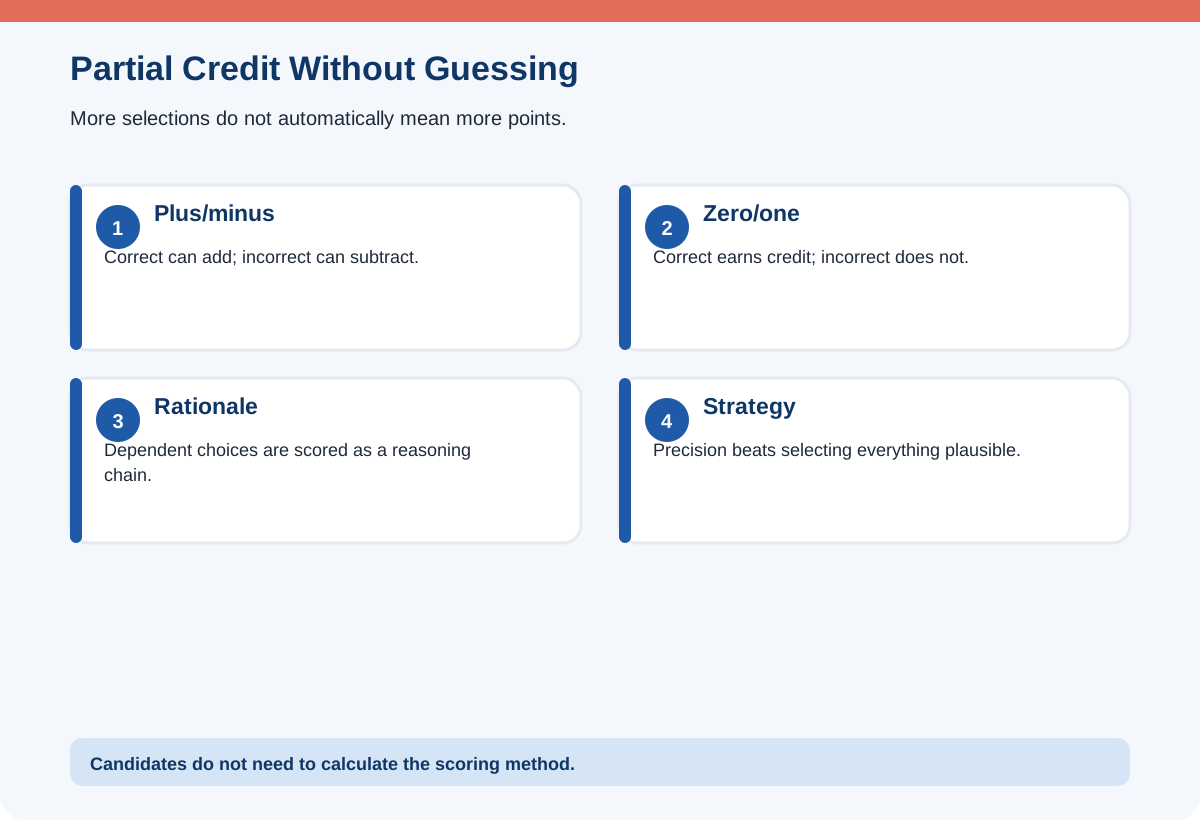
NCSBN describes multiple partial-credit methods. Plus/minus scoring can subtract for incorrect selections, zero/one scoring awards points for correct selections without negative points but does not reward incorrect choices, and rationale scoring links dependent elements so credit reflects whether the reasoning chain is correct. Candidates should answer exactly what is supported rather than selecting everything that sounds generally true.
Understand what NGN formats are testing
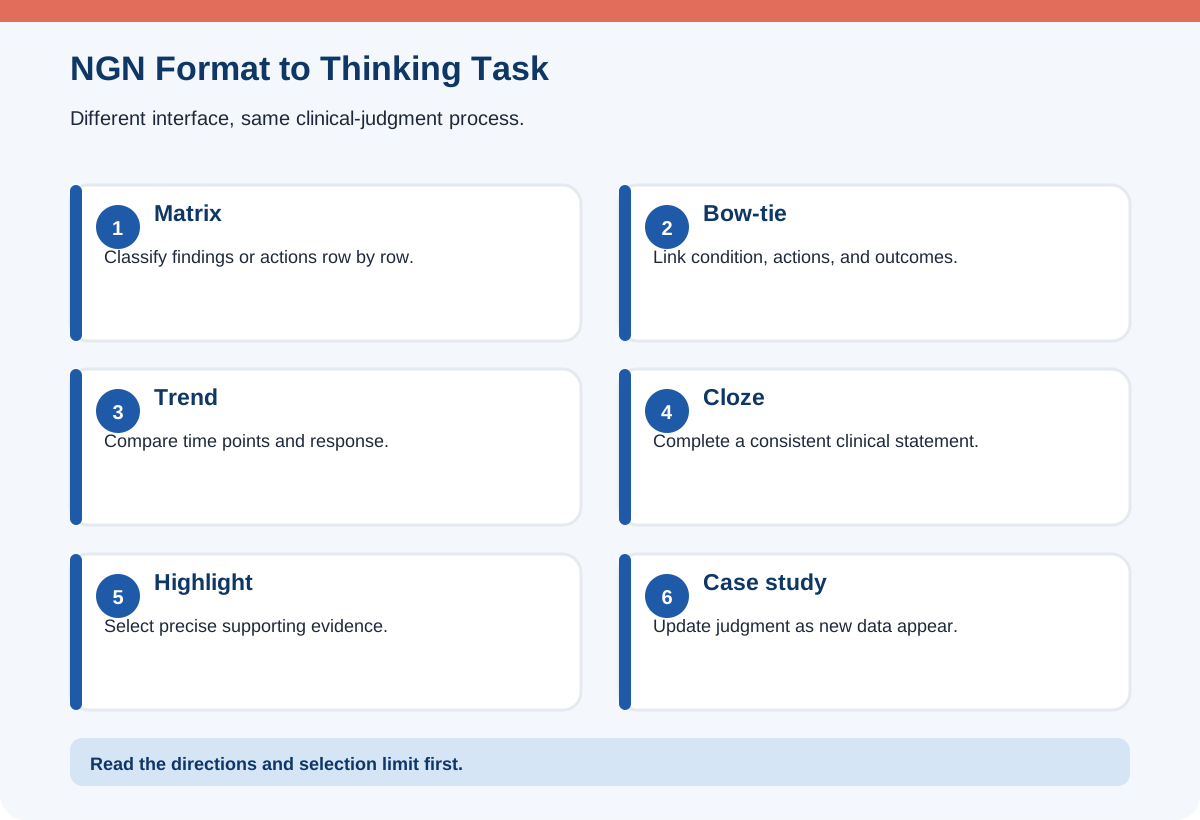
NGN formats measure clinical judgment through tasks such as recognizing cues, analyzing cues, prioritizing hypotheses, generating solutions, taking action, and evaluating outcomes. The interface may change, but the cognitive work remains the same. A matrix may ask which findings support or do not support a condition. A bow-tie may ask for the most likely condition, actions, and monitoring parameters. A highlight item may ask for the decisive cue in a client record.
Before reading every detail, note the task verb and answer structure. Are you choosing one condition or several? Does each row require one response? Is there a maximum number of highlights? Are columns labeled indicated, contraindicated, or nonessential? The instruction is part of the clinical problem.
Use scratch space mentally or physically when permitted: cues, problem, actions, outcomes. Do not let the visual format replace nursing logic.
| Item format | Main task | Frequent error |
|---|---|---|
| Matrix/grid | Classify each row or option | Leaving rows incomplete or checking extra columns |
| Bow-tie | Link condition, actions, and monitoring | Choosing actions for a different diagnosis |
| Drag-and-drop | Organize actions or findings | Placing an item in the wrong target |
| Cloze/drop-down | Complete a clinical statement | Ignoring grammar, units, or dependent choices |
| Highlight/hot spot | Select precise evidence | Highlighting broad irrelevant text |
Use partial credit without over-selecting
In plus/minus scoring, a correct selection can add credit and an incorrect selection can subtract credit, usually without producing a negative total for the item. This discourages selecting every option. In zero/one scoring, correct selections receive credit and incorrect choices do not; over-selection can still prevent full credit. In rationale scoring, linked responses may depend on one another. For example, credit for an action may depend on selecting the correct condition it treats.
You are not shown or expected to calculate the scoring method during the exam. The practical strategy is the same: select only options that directly answer the question and are supported by the case. Do not add a harmless intervention merely because it is common nursing care if the item asks for the two priority actions.
When the instructions give a selection count, follow it exactly. When they do not, judge each option independently. “Could be useful someday” is weaker than “is indicated now for this patient.”
Solve matrix and multiple-response items
A matrix organizes several statements into categories. Read the column labels before the rows. Similar-looking columns such as indicated, contraindicated, and nonessential require different judgments. Complete one row at a time and then scan vertically for consistency.
For a condition matrix, ask what each finding means physiologically. For an intervention matrix, ask whether the action treats the priority problem, creates harm, or simply does not matter yet. Do not assume every row needs several checked boxes unless the interface permits it.
Extended multiple response may ask for all findings that need follow-up, all appropriate actions, or a limited number of priorities. Use independent yes/no reasoning for each option. Avoid using a fixed rule such as “there must be four answers.” The number depends on the item.
Solve bow-tie items
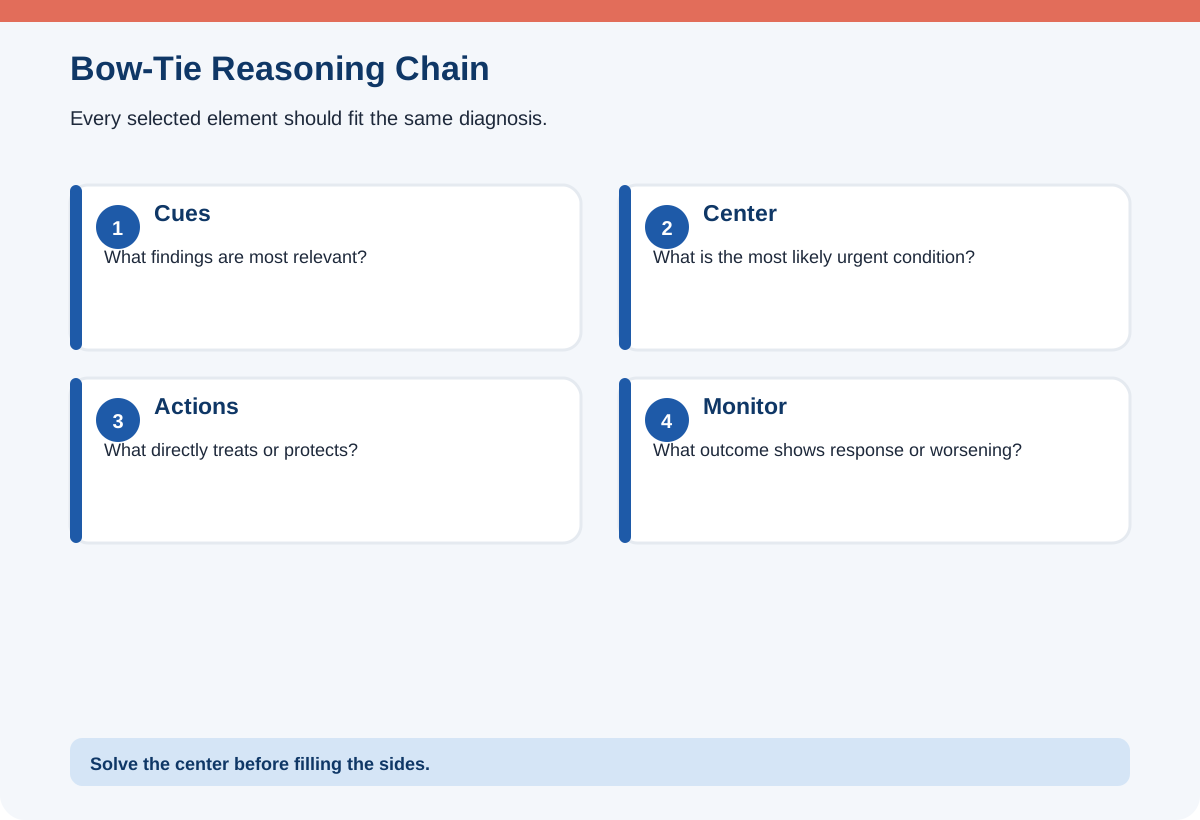
A bow-tie usually places a central condition or priority in the middle, actions on one side, and parameters to monitor on the other. Start with the center. If the diagnosis is wrong, the actions and monitoring may become internally inconsistent.
Build a short chain: cues → most likely urgent condition → actions that directly address it → outcomes that show improvement or deterioration. For suspected hypoglycemia, the actions might include giving rapid glucose and rechecking glucose, while monitoring mental status and blood glucose. Actions for DKA, stroke, or opioid overdose would not fit the same center.
Check that the monitoring parameters can actually evaluate the actions. A treatment for respiratory depression should be monitored with respiratory rate, ventilation, oxygenation, and consciousness—not only a distant laboratory value.
Solve drag-and-drop items
Drag-and-drop items ask you to place actions, findings, or other options into the correct sequence or target area. Read every target label first, then identify what each option means in the specific client context.
For a sequence, anchor the first action in safety and urgency before arranging later actions. For categories, evaluate each option independently rather than dragging by pattern alone. Recheck that every placement matches the directions before confirming.
Solve cloze and dropdown items
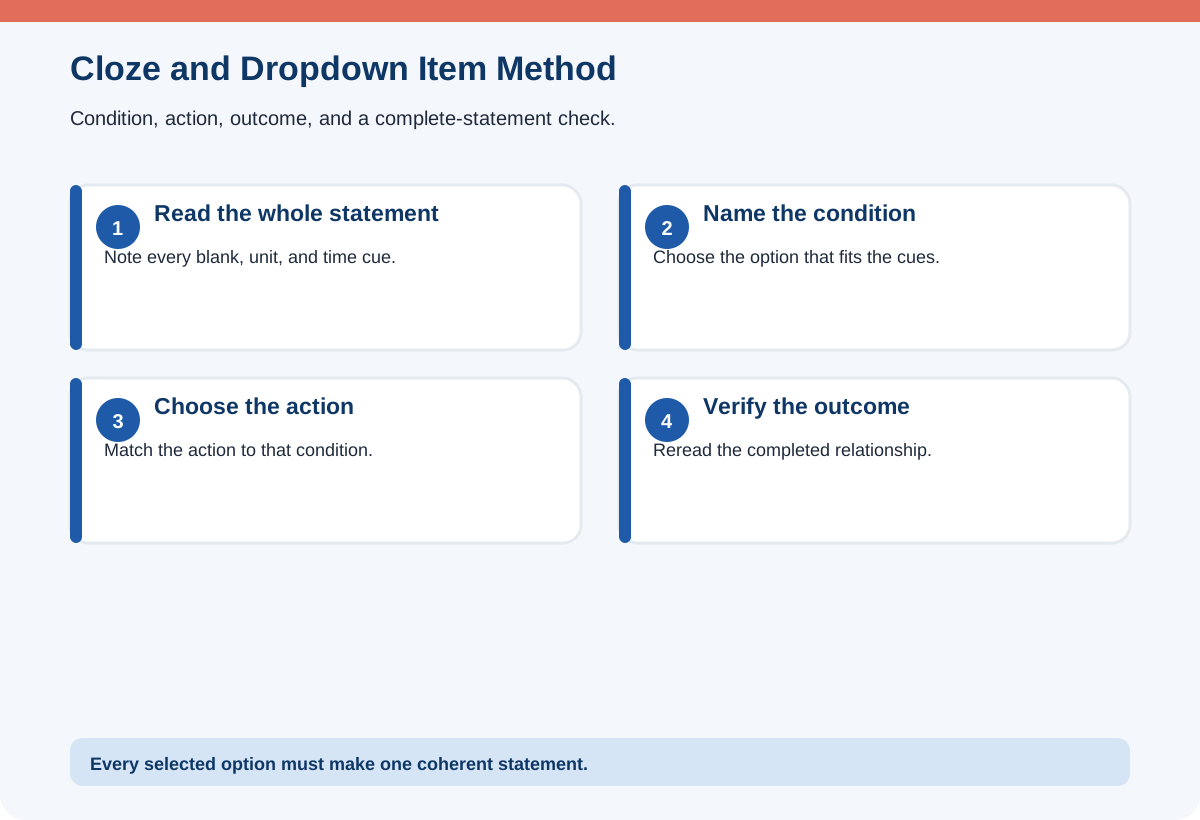
Cloze items ask you to complete a sentence or paragraph using drop-down choices. Read the entire statement before selecting the first blank because later blanks may change the meaning. Check grammar, units, timing, and logical consistency.
Some drop-down items contain dependent reasoning: condition, action, and rationale. Select the condition first, then ask which action follows and why. If the first choice changes, reread every later choice. Do not choose a plausible medication whose route or dose is inconsistent with the sentence.
For calculation-related cloze items, carry units through the work and confirm the requested rounding. A correct number with the wrong unit is not a safe clinical answer.
Solve highlight items
Highlight items ask for evidence in a record, paragraph, or note. Select the smallest complete phrase that proves the answer. If asked for signs of deterioration, highlight new hypoxemia, hypotension, altered cognition, or reduced urine output—not the patient’s name and entire history.
Read whether the prompt asks for supporting cues, irrelevant data, or findings that require follow-up. Highlighting too much can include incorrect material and reduce credit under some scoring designs. Use the exact number of selections if provided.
Highlight items may use text or a chart. Orient yourself first: labels, units, time, laterality, and scale. Identify the specific words or data that answer the prompt instead of selecting a broad area.
Use case-study tabs and changing data
NGN case studies reveal information across tabs or screens. Earlier data remain relevant, but the patient can change. Read new nursing notes, vital signs, laboratory results, orders, and responses before answering each item. Do not assume your first hypothesis remains correct when new evidence contradicts it.
Keep a concise running summary: who the patient is, the main risk, what changed, what has been done, and what response occurred. Separate old resolved cues from current active cues. A medication may have been discontinued; a result may belong to the previous day.
Each item is answered from the information available at that point. Avoid using imagined future information or changing an earlier answer because a later tab reveals something new. The exam is measuring how judgment updates over time.
Clinical integration: connecting the topic to a complete patient picture
A high-value way to practice NGN is to convert one ordinary clinical case into several formats. Start with a patient who has fever, hypotension, tachycardia, confusion, elevated lactate, and reduced urine output. A matrix can classify findings as supporting sepsis, unrelated, or evidence of organ dysfunction. A bow-tie can place septic shock in the center, select fluid and antimicrobial actions, and monitor pressure, lactate, urine output, and mental status. A drag-and-drop item can sequence the immediate nursing actions. A highlight item can ask for the earliest cue that required escalation.
This method reveals whether the student understands the patient or merely recognizes a screen pattern. When reviewing an error, label it as an instruction error, cue-selection error, hypothesis error, action error, or evaluation error. The label tells you what to fix. Reading more pharmacology will not correct a habit of ignoring selection limits; practicing more interfaces will not correct failure to recognize shock.
Use an evidence threshold for every selection. Ask, “Which exact cue makes this answer true for this patient now?” If you cannot point to a cue or a direct safety principle, remove the selection. For action choices, ask whether the nurse has enough information and authority to perform it now. For evaluation choices, ask whether the parameter can change in response to the intervention within the time described.
Finally, practice calm navigation. Read tabs and timestamps, note whether an order is active or discontinued, and distinguish a result that is pending from one that is final. The interface is part of the item, but it should not distract from the patient story.
A simple NCLEX® clinical-judgment workflow
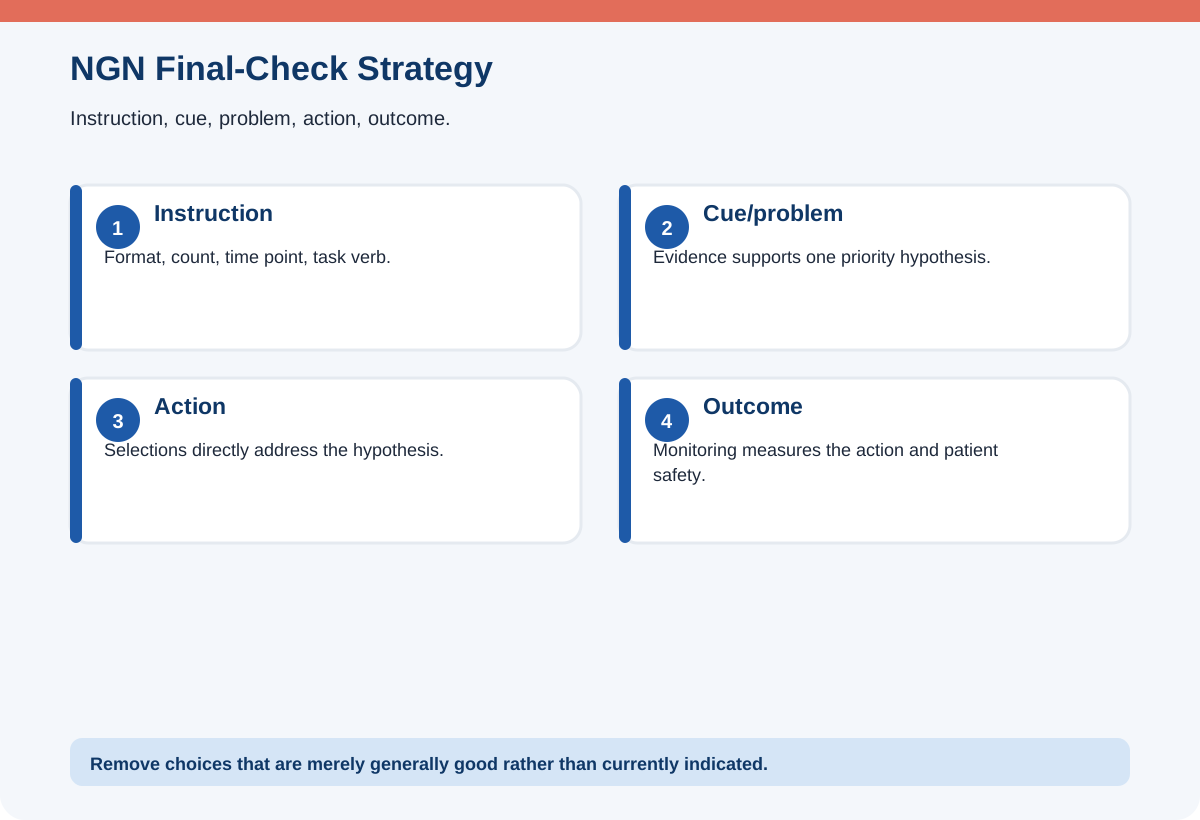
Recognize the item’s directions, selection count, time point, and relevant case cues. Analyze the pathophysiology and relationships among cues. Prioritize the most dangerous and likely hypothesis. Generate only solutions that address that hypothesis. Take action in the order required by safety. Evaluate using outcomes that directly measure the intervention. Before submitting, verify that every selected box, highlight, or drop-down belongs to the same clinical story.
Original practice scenarios with rationales
These are original educational examples written for RN Clarity. They are not copied, recalled, or represented as actual NCLEX® questions.
Scenario 1: Matrix over-selection
A matrix asks whether each intervention is indicated, contraindicated, or nonessential. A candidate checks both indicated and nonessential for the same row.
Best response: Select the single classification that best matches the row when the interface requires one response per row.
Rationale: Contradictory classifications show the instructions were not followed.
Why the alternatives are weaker: Checking extra boxes does not protect against uncertainty and may lose credit.
Scenario 2: Bow-tie respiratory depression
The case shows slow respirations, pinpoint pupils, and low consciousness after opioid administration.
Best response: Place opioid-induced respiratory depression in the center, choose ventilation/naloxone actions, and monitor respirations, oxygenation, and consciousness.
Rationale: All parts of the bow-tie form one coherent clinical chain.
Why the alternatives are weaker: Choosing stroke in the center makes naloxone and respiratory monitoring inconsistent.
Scenario 3: Trend in platelets
Platelets fall from 240,000 to 110,000 to 72,000 after several days of heparin, while the patient develops leg pain.
Best response: Recognize a concerning downward trend and possible HIT requiring urgent follow-up.
Rationale: The relative fall and new thrombosis cue matter even before the count becomes extremely low.
Why the alternatives are weaker: Reading only the latest value misses the medication-related trend.
Scenario 4: Highlight evidence
A note includes chronic arthritis, a new oxygen saturation of 84%, mild old edema, and a family visit. The prompt asks for the cue requiring immediate follow-up.
Best response: Highlight the new oxygen saturation of 84%.
Rationale: It is the precise evidence of an immediate oxygenation threat.
Why the alternatives are weaker: Highlighting the entire paragraph adds irrelevant cues and can reduce precision.
Scenario 5: Cloze dependency
A cloze sentence asks for the most likely condition, first action, and outcome to monitor.
Best response: Choose the condition first, then ensure the action treats it and the outcome measures that action.
Rationale: Dependent choices should create a consistent reasoning chain.
Why the alternatives are weaker: Selecting each blank independently can produce a medically contradictory sentence.
Common NCLEX® traps
- Select everything plausible. Partial credit does not make over-selection safe.
- Ignore selection limits. The directions determine how the item is scored and completed.
- Start bow-tie with actions. A wrong center condition makes the whole chain unstable.
- Read only the newest trend value. Change over time is the point of the item.
- Highlight whole paragraphs. Choose the smallest decisive evidence.
- Assume a fixed number of SATA answers. The number varies by item.
- Use later case information for an earlier item. Answer from the data available at that point.
- Choose generally good care over priority care. Select what directly addresses the current problem.
What to memorize and what to understand
Memorize the purpose and common error of each item type and the three broad partial-credit approaches described by NCSBN: plus/minus, zero/one, and rationale scoring. Understand that you do not need to calculate points. Your task is to build a coherent chain from cue to condition to action to outcome.
The most useful phrase is “instruction, cue, problem, action, outcome.” Apply it before touching the interface.
A seven-day review plan
Day 1: Review the six clinical-judgment functions and map each to question verbs. Day 2: Practice matrix and extended multiple response with strict instruction reading. Day 3: Build ten bow-ties from short clinical cases. Day 4: Practice drag-and-drop sequencing and categorization. Day 5: Complete cloze/dropdown items and reread the full sentence after every choice. Day 6: Practice precise highlighting. Day 7: Complete a full case study and keep a running patient summary across tabs.
Frequently asked questions
Does NGN give partial credit?
Yes. NCSBN describes plus/minus, zero/one, and rationale-scoring approaches for eligible items.
Should I select extra options because partial credit exists?
No. Incorrect selections may reduce or prevent credit depending on the scoring method. Select only supported answers.
What is the best way to solve a bow-tie item?
Choose the central condition first, then actions that treat it and parameters that measure response.
How should I handle a drag-and-drop item?
Read every target label before moving an option. For sequences, identify the safest first action; for categories, evaluate each option against the specific client situation.
How much should I highlight?
Select the smallest phrase or data element that directly answers the prompt, while following any selection limit.
Are NGN item formats more important than content?
No. The format organizes the response, but safe clinical judgment and content knowledge determine the answer.
Final rapid-review checklist
- I read the directions and selection limit before answering.
- I know partial credit does not justify guessing extra options.
- I complete matrix rows consistently.
- I solve the center of a bow-tie before actions and monitoring.
- I read every target label before placing a drag-and-drop option.
- I reread the full sentence after cloze selections.
- I highlight only decisive evidence.
- I update my hypothesis when later case data change the picture.
Sources and further reading
- NCSBN, 2026 NCLEX-RN® Test Plan: https://www.nclex.com/test-plans.page
- NCSBN, NCLEX® FAQs on partial-credit scoring and item formats: https://www.nclex.com/faqs.page
- NCSBN, Next Generation NCLEX® information: https://www.nclex.com/next-generation-nclex.page
- NCSBN, Prepare for the NCLEX®: https://www.nclex.com/prepare.page
Educational disclaimer
RN Clarity provides educational study support only. This article is not medical advice, does not replace a nursing program, clinical instructor, employer policy, or current provider order, and is not affiliated with or endorsed by NCSBN, Pearson VUE, or the NCLEX-RN® program. In an actual clinical setting, follow current laws, facility policies, approved references, and the directions of the responsible licensed clinician.
Structured data
{
  "@context": "https://schema.org",
  "@graph": [
    {
      "@type": "BlogPosting",
      "headline": "NGN Item Types and Partial Credit Scoring: Highlight, Matrix, Drag-and-Drop, Bow-Tie, Cloze/Dropdown, and Extended Multiple Response",
      "description": "Learn highlight, matrix, drag-and-drop, bow-tie, cloze/dropdown, extended multiple response, and NGN partial-credit scoring methods with a safe question-solving strategy.",
      "mainEntityOfPage": {
        "@type": "WebPage",
        "@id": "https://rnclarity.com/blog/ngn-item-types-partial-credit-scoring-matrix-bow-tie-trend"
      },
      "url": "https://rnclarity.com/blog/ngn-item-types-partial-credit-scoring-matrix-bow-tie-trend",
      "datePublished": "ACTUAL_FIRST_LIVE_DATE",
      "dateModified": "ACTUAL_FIRST_LIVE_DATE",
      "author": {
        "@type": "Organization",
        "name": "RN Clarity"
      },
      "publisher": {
        "@type": "Organization",
        "name": "RN Clarity"
      },
      "inLanguage": "en-US",
      "isAccessibleForFree": true,
      "about": [
        "NCLEX-RN® examination",
        "Nursing education",
        "NGN item types and partial credit scoring"
      ]
    },
    {
      "@type": "BreadcrumbList",
      "itemListElement": [
        {
          "@type": "ListItem",
          "position": 1,
          "name": "Home",
          "item": "https://rnclarity.com/"
        },
        {
          "@type": "ListItem",
          "position": 2,
          "name": "Blog",
          "item": "https://rnclarity.com/blog"
        },
        {
          "@type": "ListItem",
          "position": 3,
          "name": "NGN Item Types and Partial Credit Scoring: Highlight, Matrix, Drag-and-Drop, Bow-Tie, Cloze/Dropdown, and Extended Multiple Response",
          "item": "https://rnclarity.com/blog/ngn-item-types-partial-credit-scoring-matrix-bow-tie-trend"
        }
      ]
    },
    {
      "@type": "FAQPage",
      "mainEntity": [
        {
          "@type": "Question",
          "name": "Does NGN give partial credit?",
          "acceptedAnswer": {
            "@type": "Answer",
            "text": "Yes. NCSBN describes plus/minus, zero/one, and rationale-scoring approaches for eligible items."
          }
        },
        {
          "@type": "Question",
          "name": "Should I select extra options because partial credit exists?",
          "acceptedAnswer": {
            "@type": "Answer",
            "text": "No. Incorrect selections may reduce or prevent credit depending on the scoring method. Select only supported answers."
          }
        },
        {
          "@type": "Question",
          "name": "What is the best way to solve a bow-tie item?",
          "acceptedAnswer": {
            "@type": "Answer",
            "text": "Choose the central condition first, then actions that treat it and parameters that measure response."
          }
        },
        {
          "@type": "Question",
          "name": "How should I handle a drag-and-drop item?",
          "acceptedAnswer": {
            "@type": "Answer",
            "text": "Read every target label before moving an option. For sequences, identify the safest first action; for categories, evaluate each option against the specific client situation."
          }
        },
        {
          "@type": "Question",
          "name": "How much should I highlight?",
          "acceptedAnswer": {
            "@type": "Answer",
            "text": "Select the smallest phrase or data element that directly answers the prompt, while following any selection limit."
          }
        },
        {
          "@type": "Question",
          "name": "Are NGN item formats more important than content?",
          "acceptedAnswer": {
            "@type": "Answer",
            "text": "No. The format organizes the response, but safe clinical judgment and content knowledge determine the answer."
          }
        }
      ]
    }
  ]
}