COPD Nursing Guide: Pathophysiology, Assessment, Oxygen, Medications and Care Plans
Understand COPD nursing care using GOLD 2026, with spirometry, exacerbation assessment, inhaler technique, oxygen safety and clinical cases.
1. Quick Answer and Essential Facts
Chronic obstructive pulmonary disease, or COPD, is a heterogeneous lung condition associated with chronic respiratory symptoms and persistent airflow obstruction. Nursing care focuses on breathing, activity, treatment delivery, exacerbation recognition, prevention and the practical ability to manage the condition. A person is more than a spirometry grade: symptoms, prior exacerbations, comorbidities and daily function all influence care.
In the appropriate clinical context, post-bronchodilator spirometry showing an FEV1/FVC ratio below 0.70 supports confirmation of COPD. Symptoms alone, a smoking history or a chest radiograph do not replace the diagnostic process. GOLD 2026 also changed the ABE assessment framework: one or more moderate or severe exacerbations in the previous year places a patient in the exacerbation-risk group E. Older summaries requiring two moderate events are outdated for this framework. GOLD 2026 resources.
| Essential point | Nursing meaning |
|---|---|
| Breathlessness has several possible causes | Do not attribute every new episode to COPD. |
| Inhaler technique affects delivery | Observe use of the actual device and correct specific errors. |
| Oxygen is a prescribed treatment | Use the ordered target and assess ventilation as well as oxygenation. |
| Exacerbation history matters | Ask about treatment and hospital visits over the previous year. |
| Function can decline before the patient volunteers symptoms | Ask what activities have changed. |
| Rehabilitation is part of treatment | Support referral and a feasible participation plan. |
This guide addresses adult nursing education and the 2026 GOLD framework. It does not provide a universal prescription or replace local emergency protocols. Original examples, cases and diagrams are teaching materials, not reports of actual patients or validated diagnostic tools.
Go deeper: Build the foundation with medical surgical nursing made simple, abg interpretation for nurses, head to toe nursing assessment.
2. Airflow Obstruction, Emphysema and Airway Disease
Air moves through progressively smaller conducting airways before reaching the gas-exchanging regions. In COPD, airway changes and loss of elastic support can make expiration difficult. Air may remain trapped, especially when breathing becomes faster and less time is available to exhale. The patient can feel that taking the next breath requires increasing effort.
Emphysema describes destruction and enlargement of distal air spaces, while chronic bronchitis is a clinical pattern of chronic productive cough after other causes are considered. These concepts overlap within COPD but are not interchangeable with the complete diagnosis. A patient may have different degrees of airway disease, emphysema and mucus-related symptoms.
Avoid outdated appearance-based stereotypes. Labels based on a patient's color, body size or assumed phenotype can obscure mixed disease and are not a reliable guide to treatment. Describe actual findings: respiratory effort, symptoms, oxygen support, sputum pattern and functional limitation.
- Airway and tissue change: Expiratory flow becomes limited.
- Incomplete emptying: Air trapping can increase, especially during faster breathing.
- Mechanical burden: Breathing requires more effort.
- Functional effect: Activity may provoke breathlessness and avoidance.
- Care focus: Assess symptoms, deliver treatment correctly and support safe activity.
For a learner, the key connection is between physiology and an observable task. A patient who pauses while dressing may be responding to respiratory effort, not lack of motivation. Asking what happens during the task provides more useful information than merely recording that the person needs help with dressing.
3. Oxygenation and Ventilation Are Different
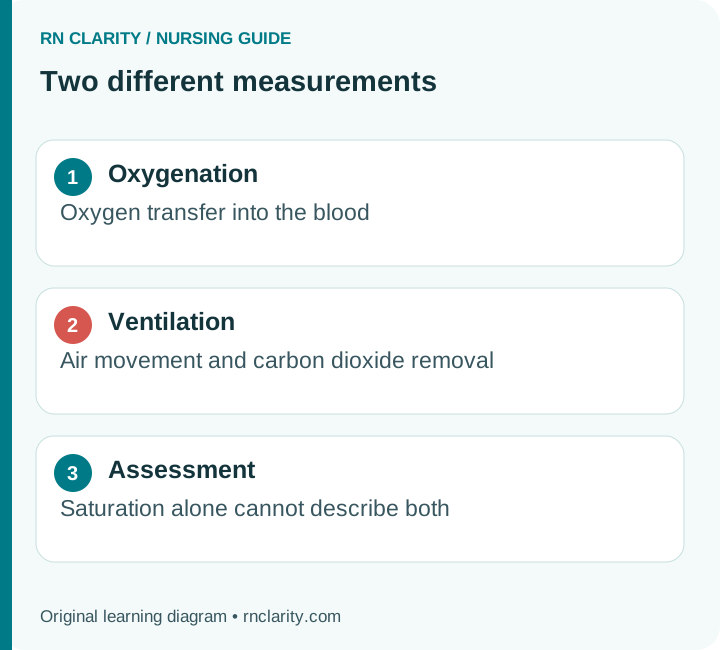
Oxygenation concerns oxygen transfer into the blood, while ventilation concerns movement of air and carbon dioxide elimination. Pulse oximetry estimates oxygen saturation; it does not measure carbon dioxide. A patient can have an acceptable saturation on supplemental oxygen while ventilation is inadequate or consciousness is worsening.
Blood-gas testing may help evaluate carbon dioxide and acid-base status when indicated. Interpret results with the patient's baseline, current symptoms and treatment. Some patients have chronic carbon dioxide elevation with compensation, while an acute change can be dangerous. A single value without context may not distinguish the two.
Do not teach that oxygen should be withheld from a hypoxemic patient because COPD is present. The safe approach is controlled, prescribed oxygen with monitoring and timely reassessment. Excessive oxygen can worsen hypercapnia in susceptible patients through several mechanisms; the explanation is more complex than simply “removing the hypoxic drive.”
When handing off, include the oxygen device, flow or setting, ordered target, respiratory effort and mental status. “Saturation is normal” leaves out whether substantial support is required. The receiving clinician needs to understand both the number and the conditions producing it.
4. Causes, Exposures and Risk Without Blame
Tobacco smoke is an important risk factor, but COPD also occurs in people who have never smoked. Occupational exposures, indoor and outdoor air pollution, developmental factors and genetic susceptibility can contribute. A careful history should not stop once a smoking history is found.
Ask about current and previous work, dust, fumes, household fuel exposure and other relevant environments. The purpose is to identify contributors and opportunities to reduce ongoing exposure. A respectful question produces better information than an assumption that the patient brought the illness on themselves.
Smoking cessation support remains important for those who smoke. Ask readiness and offer evidence-based assistance through the care team. Repeated attempts are common, and a previous unsuccessful attempt can provide information about what support is needed next. Do not make access to compassionate care conditional on quitting.
The NHLBI also emphasizes avoiding relevant irritants, including smoke, dust, chemical fumes and air pollution. Practical advice should consider the person's housing and employment constraints. A recommendation to leave an exposure may be difficult without social or occupational support. NHLBI: COPD prevention.
5. Symptoms and the Baseline Story
Common symptoms include breathlessness, cough, sputum and reduced activity tolerance. The pattern varies. Some patients describe repeated “chest infections,” while others mainly report that ordinary activities take longer. Ask about both symptoms and adaptation: the person may have stopped climbing stairs and therefore report less breathlessness simply because they no longer attempt the activity.
Establish the usual baseline before interpreting a change. How far can the patient normally walk? What oxygen or inhalers are usually used? What does typical sputum look like? How often is rescue treatment needed? What happened during previous exacerbations?
| Baseline area | Useful question |
|---|---|
| Activity | What can you usually do without stopping? |
| Sleep | Has breathing changed your sleeping position or sleep quality? |
| Cough and sputum | What is usual, and what is different now? |
| Treatment | Which medicines are maintenance and which are for symptoms? |
| Exacerbations | What episodes required additional treatment or hospital care? |
| Support | Who can help, and what equipment or supplies are available? |
Document the patient's own description when it clarifies a change. “I could walk to the corner last week, but now I stop halfway to the bathroom” conveys a meaningful functional decline. A generic phrase such as “short of breath” does not preserve the same information.
6. Spirometry and Diagnostic Interpretation
Spirometry measures forced expiratory performance. FEV1 is the volume exhaled in the first second of a forced expiration, while FVC is the total forced vital capacity in that maneuver. The ratio helps identify airflow obstruction. Technique and test quality matter, so a numerical result should be interpreted with the formal report and clinical context.
The post-bronchodilator criterion is not a license to diagnose every borderline value without further review. Age, measurement variability and the complete presentation matter. The clinician may repeat or extend testing when needed. Nurses can help patients understand preparation and what the test is intended to measure without making a diagnosis from a printout alone.
Do not confuse FEV1 percent predicted with the FEV1/FVC ratio. They answer different questions. A report may use one to describe the degree of obstruction and the other to establish an obstructive pattern. Mixing them can produce a fundamentally incorrect interpretation.
For teaching, use an analogy carefully: the test examines how much air can be forced out and how quickly, but it does not directly measure every aspect of lung health. Imaging, diffusion testing and other investigations may answer different questions. A patient with persistent symptoms still needs an explanation even if one test does not confirm the expected diagnosis.
7. GOLD Grades and the 2026 ABE Groups
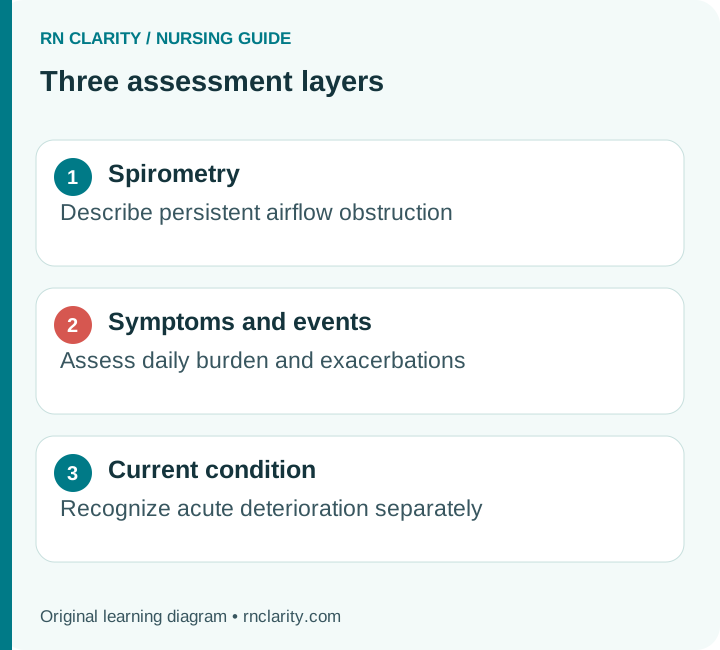
GOLD grades 1 through 4 describe the degree of airflow obstruction using post-bronchodilator FEV1 percent predicted after obstruction is established. The familiar ranges are at least 80%, 50–79%, 30–49% and below 30%, respectively. These grades are different from the ABE groups, which incorporate symptoms and exacerbation history. Do not call group B “stage two” as though the systems were interchangeable.
In GOLD 2026, groups A and B have no moderate or severe exacerbations in the previous year and differ by symptom burden. Group E includes at least one moderate or severe exacerbation. The report uses symptom instruments such as mMRC and CAAT, the updated name for the assessment test previously commonly called CAT. Use the actual instrument and its instructions rather than recreating a score from memory.
| Framework | Main information | Common mistake |
|---|---|---|
| Spirometric grade | Degree of airflow obstruction | Treating it as the whole measure of daily burden |
| ABE group | Symptoms and exacerbation history | Using outdated event criteria or confusing letters with grades |
| Current acute assessment | Present severity and respiratory failure concerns | Assuming a stable-care category determines emergency urgency |
The GOLD 2026 changes summary explains the lower exacerbation threshold and the distinction between initial and follow-up treatment. A person already receiving therapy is evaluated through a follow-up approach; the initial-treatment chart should not be reapplied mechanically at every visit.
8. Focused Respiratory Assessment
Begin with appearance, responsiveness, respiratory rate and effort, speech and posture. Observe whether the patient is using accessory muscles, pausing to speak or becoming exhausted. Compare with baseline and reassess after treatment. A reduction in audible wheeze is not necessarily improvement if airflow and consciousness are deteriorating.
Auscultation contributes information about air entry and added sounds, but findings must be integrated with the rest of the assessment. A quiet chest in a severely distressed patient can be concerning. Conversely, a patient may have important symptoms without dramatic auscultatory findings.
Assess oxygenation using the prescribed method and note signal quality. FDA guidance describes limitations of pulse oximeters and advises interpreting readings with symptoms and other information. Factors including perfusion and skin pigmentation can affect accuracy. FDA: pulse oximeter basics.
Record the oxygen device and settings, position and activity level. Findings while resting upright on treatment should not be documented as if they were obtained without support. This context helps the next nurse judge whether the patient is improving, stable with assistance or requiring increasing treatment.
9. Sputum, Cough and Airway Clearance
Ask about the amount, color, consistency and change in sputum, along with the effectiveness of cough. A change can be relevant to an exacerbation assessment, but sputum appearance alone does not establish the complete diagnosis or dictate an antibiotic. The treating team considers the overall presentation and current guidance.
Encourage the airway-clearance approach appropriate to the patient and prescribed plan. Some people benefit from coached cough or other techniques, while others need respiratory-therapy assessment. Do not assume that vigorous coughing is suitable for every patient or that every person with COPD needs the same device.
Hydration advice must account for comorbidities and orders. A patient with heart failure or kidney disease may have an individualized fluid plan. Avoid giving generic large-volume drinking instructions that conflict with that plan. Comfort measures and secretion management should be coordinated rather than treated as isolated tasks.
If sputum sampling is ordered, follow collection and transport requirements and explain what specimen is needed. Saliva in a container is not automatically an adequate lower-respiratory specimen. Document collection timing and relevant treatment, and ensure that a delay or inability to obtain a sample is communicated without unnecessarily delaying urgent care.
10. Breathlessness: Severity, Function and Patient Experience
Breathlessness is subjective and can be frightening. Ask the patient to describe its intensity and what makes it better or worse. Observe function and physiologic findings, but do not dismiss the report because the person looks calm. People develop different ways of coping and expressing distress.
Distinguish stable chronic limitation from a new change. A familiar level of exertional breathlessness still deserves management, while a sudden increase may require urgent evaluation. The patient's own comparison with baseline is valuable, especially when numerical observations have changed only modestly.
- Experience: What does the patient feel?
- Function: What activity is now difficult?
- Observation: What do breathing, circulation and consciousness show?
- Context: What treatment and support are present?
- Trend: Is the pattern improving or worsening?
Reassessment should use a comparable activity or condition when safe. “Less breathless” becomes more informative when the patient can speak in longer phrases, recover more quickly or complete a previously limited task. Do not provoke unsafe exertion simply to obtain a comparison in a deteriorating patient.
11. Conditions That Can Mimic or Worsen an Exacerbation
Heart failure, pneumonia, pulmonary embolism, pneumothorax, arrhythmia and other conditions can overlap with COPD symptoms. A known diagnosis should not close the assessment prematurely. Sudden chest symptoms, new asymmetry, fever, edema or a different pattern from prior episodes can change the clinical concern.
The nurse's role is to identify and communicate the relevant cues, not to exclude every differential diagnosis independently. Ask what is different from the patient's usual exacerbations and report objective changes. The team determines imaging, laboratory testing and treatment.
Avoid attributing all distress to anxiety. Anxiety can accompany breathing difficulty, but it does not rule out physiologic deterioration. Support calm communication while continuing assessment. A person who becomes confused or unusually sleepy needs urgent attention rather than reassurance alone.
For a case discussion, ask learners what evidence would make them reconsider the initial explanation. This promotes flexible reasoning. The goal is not an exhaustive list of rare diseases; it is recognition that a familiar label can conceal a new problem with a different treatment requirement.
12. Bronchodilators: Rescue and Maintenance Roles
Bronchodilators help reduce airway smooth-muscle constriction through different mechanisms. Short-acting beta2 agonists and short-acting muscarinic antagonists may be used for symptom relief or acute treatment, while long-acting agents support maintenance therapy. The prescribed combination depends on the patient's clinical situation and current treatment plan.
Ask the patient to identify which device is intended for routine maintenance and which is used for acute symptoms under the plan. Color alone is not a reliable identifier across brands or countries. The actual medicine name, device and instructions should be clear.
| Group | General role | Nursing focus |
|---|---|---|
| Short-acting beta2 agonist | Rapid bronchodilation in the prescribed plan | Response, pulse-related symptoms, tremor and correct delivery |
| Short-acting muscarinic antagonist | Bronchodilation, often in acute regimens | Correct device use and product-specific precautions |
| Long-acting beta2 agonist | Maintenance bronchodilation | Regular schedule and distinction from rescue instructions |
| Long-acting muscarinic antagonist | Maintenance bronchodilation | Technique, tolerance and adherence to the actual regimen |
Do not assume that a prescribed inhaler is ineffective before checking whether the patient can use it correctly and obtain it consistently. Conversely, do not attribute persistent symptoms only to technique when the patient may need clinical reassessment. Delivery, adherence, diagnosis and treatment selection all deserve consideration.
13. Inhaled Corticosteroids and Individualized Use
Inhaled corticosteroids are not automatically required for every patient with COPD. Their role depends on exacerbation history, eosinophil-related information, concurrent asthma and the overall treatment assessment. The risks and benefits differ from simply adding another bronchodilator. A patient should not start or stop them independently because of a general article.
When an inhaled corticosteroid is prescribed, teach the product-specific administration and mouth-care instructions. Assess for local adverse effects and communicate concerns. Explain that this is not the same as an immediate rescue treatment for sudden severe breathlessness.
Combination inhalers can make the regimen simpler but can also hide duplicate ingredients when another device is added. Reconcile the medication names, not just the number of inhalers. A patient may have two devices containing the same long-acting component without realizing it.
For an assignment, avoid claiming that one eosinophil value alone determines all treatment. It informs a clinical decision in context. Likewise, a history of asthma changes the management discussion and should be accurately recorded rather than inferred from the presence of wheeze.
14. Inhaler Technique: Observe the Actual Device
Different inhalers require different preparation and inspiratory technique. A pressurized metered-dose inhaler, a dry-powder inhaler and a soft-mist inhaler should not be taught as if their steps were identical. Use the manufacturer's instructions and a device-specific checklist.
Ask the patient to demonstrate without prompting first when appropriate. This reveals what they do at home. Then correct the specific step and ask for a repeat demonstration. Merely asking “Do you know how to use it?” can miss errors in preparation, seal, breathing pattern or dose loading.
Assess dexterity, cognition, coordination and the ability to generate the required inhalation. An inhaler can be pharmacologically suitable but mechanically unsuitable for a particular person. The respiratory therapist, pharmacist and prescriber can help select a feasible delivery system. ATS: inhaled delivery systems.
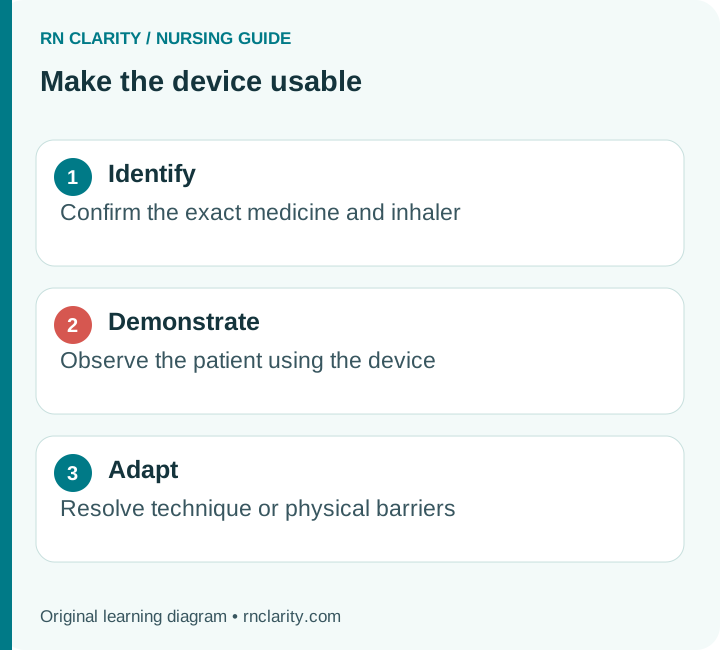
- Identify: Match the medicine and device to the current plan.
- Demonstrate: Observe the patient's usual steps.
- Correct: Teach the specific error using device instructions.
- Repeat: Confirm the patient can perform the sequence.
- Revisit: Recheck after device changes and at follow-up.
Record the error and correction, not simply “inhaler teaching done.” For example, document that the patient demonstrated the final technique successfully or that a dexterity barrier remains unresolved. The next clinician then knows whether more explanation or a different device is needed.
15. Spacers, Nebulizers and Equipment Hygiene
A spacer or valved holding chamber may help with a compatible metered-dose inhaler, but compatibility and technique must be confirmed. It is not an attachment for every device. Follow the product instructions for assembly, cleaning and use.
Nebulized therapy requires the correct medication, dose, equipment and delivery setup. Assess the patient's ability to tolerate and complete treatment and monitor response. Do not assume that a nebulizer is always stronger or better than a correctly used inhaler; the appropriate route depends on the patient and clinical plan.
Cleaning and maintenance affect safety and performance. Ask how the patient cleans, dries and stores equipment and whether replacement parts are available. A vague instruction to keep the device clean may not be sufficient. Demonstrate the steps for the actual model and follow infection-control guidance in clinical settings.
At home, electricity, space and portability can affect the practicality of equipment. A person may be unable to use a prescribed system during work or travel. Identify these constraints before concluding that treatment is being deliberately skipped. The team may need to adapt delivery while preserving the intended therapy.
16. Oxygen Therapy: Targets, Monitoring and Safety
Oxygen is used for hypoxemia under a prescribed plan, not simply because the patient reports breathlessness. The target and delivery method depend on the clinical situation, blood-gas information and risk of hypercapnic respiratory failure. During acute care, controlled oxygen and reassessment are essential.
Do not turn a commonly taught target range into an instruction for every patient in every setting. Many protocols use a target of 88–92% for patients at risk of hypercapnic respiratory failure while blood gases and the clinical assessment guide subsequent treatment. The actual order and emergency protocol determine care. A severely hypoxemic patient still needs prompt oxygen treatment and appropriate support.
Assess the whole patient after oxygen changes: saturation, respiratory effort, consciousness and relevant gas results. Increasing oxygen does not correct every ventilation problem. A patient becoming more drowsy or exhausted may need urgent ventilatory assessment even if the displayed saturation improves.
Home oxygen creates a fire hazard. Patients and household members should not smoke or use ignition sources near oxygen equipment. Secure and handle equipment according to supplier instructions and plan for power interruption when relevant. The NHLBI explains that oxygen therapy requires qualification and individualized use, with explicit fire-safety education. NHLBI: COPD treatment.
17. Long-Term Oxygen Is Not for Every Patient
Long-term oxygen can benefit selected patients with severe chronic resting hypoxemia. Evidence does not support assuming the same benefit for all people with moderate desaturation. The Long-Term Oxygen Treatment Trial addressed moderate resting or exercise-related desaturation and did not establish the expected broad benefit from routinely prescribing oxygen in that population. NHLBI: LOTT questions and answers.
The clinical team determines eligibility, prescription and reassessment. A patient who needed oxygen during an acute illness may require later review rather than an assumption that the same prescription is permanent. Conversely, a patient should not stop prescribed oxygen because they feel better without evaluation.
Teach the actual settings for rest, activity or sleep if they differ. Equipment may deliver continuous flow or a pulse-dose setting, and the numbers are not necessarily interchangeable. Do not translate one device's setting into another without the supplier and clinical team's guidance.
Ask about practical use: tubing trip hazards, portable supply, skin irritation and confidence outside the home. Addressing these issues supports mobility and treatment use. A prescription that leaves the patient afraid to leave the house may need additional equipment education and rehabilitation support.
18. Exacerbations: Recognizing a Meaningful Change
An exacerbation involves an acute worsening of respiratory symptoms beyond the usual variation. Ask about the timeline, breathlessness, cough, sputum and the effect on function. Some episodes require additional medication, while others require hospital care. The current severity assessment determines urgency.
Do not wait for a patient to use the word exacerbation. They may describe “my usual inhaler is not helping,” “I cannot get to the bathroom” or “this cough is different.” Those statements should prompt focused assessment and the action plan.
Assess for respiratory failure and competing diagnoses. A new need for substantial support, worsening consciousness, exhaustion or hemodynamic concerns can require emergency escalation. A prior history of mild episodes does not guarantee that the current episode is mild.
The patient's written plan should specify when to contact the team, how prescribed rescue treatment is used and which symptoms require emergency care. If a clinician has supplied a rescue pack, the instructions must be individualized. A general guide should not tell every patient to start antibiotics or steroids independently for any cough.
19. Acute Medicines and Antimicrobial Decisions
Acute treatment may include short-acting bronchodilators, a brief systemic corticosteroid course and antibiotics when indicated. Selection depends on severity, symptoms, prior microbiology and other patient factors. GOLD 2026 describes short courses for appropriate exacerbations and distinguishes antibiotic indications from a blanket rule that every exacerbation is bacterial.
Nursing monitoring includes respiratory response, adverse effects, glucose changes with systemic steroids and the practical ability to take the prescribed route. A patient with diabetes may need a temporary monitoring or medication adjustment plan. The nurse should communicate the change rather than assume that the usual diabetes regimen will remain adequate.
Check allergies and the nature of previous reactions before antimicrobial administration, and follow the medication-safety process. Obtain ordered specimens appropriately, but do not create unnecessary delays in urgent treatment. Document the response and any suspected adverse reaction.
At discharge, clarify the duration and stop date of short-course medicines. A patient should not continue a steroid or antibiotic indefinitely because it appears beside maintenance medicines on a list. Reconcile temporary and long-term treatment and confirm that the patient can distinguish them.
20. Noninvasive Ventilation and Escalation
Noninvasive ventilation can support selected patients with acute hypercapnic respiratory failure, while other forms of respiratory support may be appropriate in different presentations. GOLD 2026 distinguishes acute hypoxemic support from hypercapnic failure and emphasizes appropriate escalation. The treating team determines the device, settings and suitability.
Nursing care includes monitoring consciousness, respiratory effort, mask tolerance, skin pressure, secretion management and the response to treatment. A patient who is deteriorating despite support needs urgent reassessment. Improving a mask seal is useful, but it should not distract from failure of the overall treatment.
Contraindications and limitations require clinical assessment. A person unable to protect the airway or with other major instability may need a different approach. Do not treat noninvasive ventilation as a way to avoid intubation at all costs; timely escalation can be necessary.
Explain the purpose of the mask and communicate calmly. Distress may improve with coaching and adjustment, but sedation decisions require appropriate expertise and monitoring. Document response and concerns so the team can distinguish temporary discomfort from worsening respiratory failure.
21. Pulmonary Rehabilitation and Functional Recovery
Pulmonary rehabilitation combines individualized exercise training, education and support for people with chronic respiratory disease. It is not simply advice to walk more. Assessment helps the rehabilitation team match activity to the person's needs and monitor response. The American Thoracic Society recommends rehabilitation for adults with stable COPD and after hospitalization for an exacerbation. ATS: pulmonary rehabilitation guideline.
Nurses can identify functional goals and barriers before referral. Ask what the patient wants to regain: showering without prolonged rest, shopping, walking with a friend or returning to work. These goals help make rehabilitation meaningful. A person may be more willing to participate when the connection with everyday life is clear.
Access matters. Transportation, distance, cost, digital access and caregiving responsibilities may affect participation. Some services offer remote options, but suitability and availability should be confirmed. Do not promise a program that the patient cannot access or interpret nonattendance without asking what happened.
Rehabilitation complements medicines and other treatment. A patient should not be told that completing an exercise program removes the need for maintenance therapy. Conversely, a new inhaler does not automatically address deconditioning, confidence or safe activity. A coordinated plan recognizes that these interventions address different parts of the illness burden.
22. Pacing and Energy Conservation
Pacing means organizing activity so the person can participate with manageable symptoms and appropriate recovery. It is different from avoiding all activity. Ask which parts of a task are most difficult and whether equipment, positioning or assistance could reduce the burden.
For example, a fictional patient becomes breathless when carrying laundry upstairs. The care discussion might consider smaller loads, a different storage arrangement, assistance and rehabilitation goals. The nurse should not simply tell the person to stop doing laundry permanently or push through severe symptoms. The plan should preserve function while respecting safety.
Schedule demanding tasks when the patient has the most energy and coordinate treatment as prescribed. Rest between activities may help, but a sudden increase in rest needs should also prompt assessment. What looks like effective pacing can sometimes conceal worsening disease if the person is gradually doing less and less.
Document the activity, assistance and response. “Tolerated activity” is less useful than describing the distance or task, symptoms and recovery. Use comparable observations over time when safe. This helps the team distinguish improvement in function from a reduction in effort caused by avoidance.
23. Breathing Techniques and Positioning
Some patients find pursed-lip breathing or a supported position helpful during breathlessness. Teach these techniques through the respiratory or rehabilitation plan and observe whether they help the individual. They are supportive strategies, not a substitute for urgent assessment when symptoms are severe or new.
Pursed-lip breathing generally involves a relaxed inhalation followed by a slower exhalation through gently narrowed lips. Avoid rigid instructions that make the patient strain or feel they are failing if a fixed count is uncomfortable. The purpose is controlled breathing, not competition for the longest exhalation.
A forward-leaning supported posture may feel more comfortable for some people, but positioning should account for mobility, balance and other conditions. Do not force one posture on a patient who becomes dizzy or uncomfortable. Assess response and maintain access to help.
When teaching, practice during a relatively stable period. A patient in severe distress may not be able to learn a new sequence. During an acute episode, use short, calm instructions while providing the required clinical care. After recovery, revisit what was useful and integrate it into the written self-management plan.
24. Nutrition, Weight and Muscle Function
COPD can affect eating through breathlessness, fatigue, early satiety and the effort of preparing food. Assess appetite, intake, weight trend and functional ability. Body size alone does not establish nutritional adequacy; a person may have low muscle mass or poor intake at different body weights.
Ask whether the patient becomes too breathless to finish meals or has difficulty shopping and cooking. Smaller, manageable meals may be useful for some people, but the dietitian and clinical team should individualize the plan. Other conditions such as diabetes or heart failure can influence advice.
Avoid recommending a restrictive diet without assessing nutritional risk. A patient already losing weight unintentionally may need a different approach from someone working on weight management. Also distinguish fluid-related weight change from tissue change when comorbid heart disease is present.
| Barrier | Practical assessment | Possible team response |
|---|---|---|
| Fatigue during meals | Time, symptoms and amount consumed | Meal planning, symptom management and nutrition review |
| Difficulty preparing food | Home function and available support | Occupational or social support |
| Unintended weight loss | Trend, intake and other symptoms | Clinical and dietitian evaluation |
| Conflicting diet instructions | Current conditions and written advice | One coordinated nutrition plan |
The evaluation should show whether the person can meet the agreed nutritional plan and whether symptoms or function improve. A supplement handed to the patient does not establish success if it is unaffordable, poorly tolerated or not compatible with the rest of care.
25. Vaccination and Infection Prevention
Respiratory infections can cause significant illness in people with COPD. Review vaccination status using the current national schedule, age, risk factors and prior doses. Influenza, pneumococcal, COVID-19 and RSV recommendations may be relevant, along with other routine adult vaccines. Exact eligibility and timing should be checked at the point of care rather than copied indefinitely from an old chart.
As of the CDC's 2026 adult RSV guidance, a single RSV vaccine dose is recommended for all adults aged 75 or older and adults aged 50–74 at increased risk of severe RSV illness. Chronic lung disease can be a relevant risk condition. This is not an annual RSV dose recommendation. Prior vaccination and individual circumstances must be reviewed. CDC: adult RSV guidance.
Pneumococcal recommendations depend on age, risk and previous products received. Ask for the actual record rather than assuming that “a pneumonia shot years ago” completes the current plan. The CDC provides the current adult recommendations and decision context. CDC: pneumococcal vaccines for adults.
Nursing education should also address hand hygiene, avoiding relevant exposures and seeking care for a meaningful change. Vaccination reduces selected risks but does not make every cough harmless or remove the need for an exacerbation plan. Document what was given, declined or needs follow-up, including the reason when the patient wishes to share it.
26. Smoking Cessation and Exposure Reduction
Ask about tobacco and nicotine use in a neutral, specific way. Include current products, frequency, previous quit attempts and what made those attempts difficult. A person may use several products or have reduced smoking without stopping, and accurate information helps the team offer appropriate support.
Behavioral support and medication options can be discussed with the treating team. The nurse should know the local referral pathway and help the patient connect with it. Avoid promising that a single method will work for everyone or that symptoms will disappear immediately after quitting.
Secondhand smoke and workplace exposures also deserve attention. A patient may not control the household or job environment. Explore practical options and available resources rather than issuing an instruction that cannot be followed. The goal is to reduce ongoing harm while maintaining a respectful therapeutic relationship.
At follow-up, ask what happened after the previous plan. If the patient resumed smoking, use the experience to identify triggers and unmet needs. Shame is unlikely to reveal useful information. A renewed plan can still be worthwhile, and the patient continues to deserve treatment for symptoms and other health concerns.
27. Comorbidities and Coordinated Care
COPD commonly coexists with cardiovascular disease, anxiety or depression, osteoporosis, sleep-related breathing disorders and other conditions. These can contribute to symptoms, treatment burden and functional limitation. The nurse should not assume that all problems belong to the lungs.
Medication review should identify interactions, duplication and conflicting instructions. A systemic steroid course may affect glucose, while diuretic treatment or other medicines may change fluid and electrolyte considerations. The actual combination of conditions determines monitoring needs.
Ask which appointments and treatments the patient finds hardest to manage. Several specialist plans can become confusing when each is explained separately. A shared medication list and coordinated follow-up reduce the chance that the patient receives contradictory advice.
For a nursing assignment, make the comorbidity clinically relevant. Listing five diagnoses without explaining their effect on assessment or care does not demonstrate integration. Show, for example, how heart failure changes interpretation of edema and breathlessness or how limited hand function affects inhaler selection. This connects the disease list with practical decisions.
28. Anxiety, Panic and Communication During Breathlessness
Breathlessness can trigger fear, and fear can make the experience harder to manage. Speak calmly, use short statements and remain attentive to the patient's response. A supportive approach can reduce distress while the required physiologic assessment and treatment continue.
Do not diagnose panic simply because the patient looks frightened. New respiratory symptoms require evaluation. A patient who has experienced previous frightening episodes may also be anxious during a genuine exacerbation. Emotional and physical concerns can coexist.
Ask what has helped previously and whether there is a written coping plan. Breathing techniques, pacing and rehabilitation support may be useful when appropriate. Medication for anxiety requires individualized clinical consideration, particularly when respiratory safety is a concern.
After an acute episode, invite discussion of the experience. The patient may remember feeling unable to call for help or misunderstand why a mask was used. Addressing those concerns can improve future communication. Document preferences that will help the next team support the patient without delaying care.
29. Advanced COPD, Symptom Support and Goals of Care
Advanced disease can create persistent breathlessness, fatigue and dependence despite treatment. The care plan should include symptom relief and discussion of what matters to the patient. Palliative support can accompany disease-directed care and is not limited to the final hours of life.
Ask about priorities, worries and understanding of available options. Some patients value remaining at home, while others want to pursue every appropriate hospital treatment. These preferences need informed discussion with the clinical team and should not be inferred from age or disability.
Ventilatory support decisions can be particularly important. A documented plan should clarify the patient's preferences and the team's recommendations, including any limits or time-limited trials. Do not assume that one code-status label answers every question about noninvasive ventilation, intubation or symptom treatment.
Nurses can identify unresolved questions and support a family meeting when appropriate. The goal is clear, compassionate communication that reflects the person's choices and clinical reality. Avoid either false reassurance or a deterministic statement that no meaningful life remains because the disease is advanced.
30. A Patient-Specific COPD Care Plan
Care planning begins with supported findings, not a standard list copied for everyone with COPD. Problems may include activity limitation, ineffective treatment delivery, nutritional risk, acute respiratory deterioration or difficulty obtaining equipment. Each needs a different goal and evaluation method.
| Finding | Goal example | Nursing action | Evaluation |
|---|---|---|---|
| Incorrect inhaler sequence | Demonstrates the correct device steps before discharge | Observe, teach and repeat demonstration | Record which steps are now performed correctly |
| Breathlessness during dressing | Completes an agreed portion of dressing with manageable symptoms | Assess, pace and coordinate support | Compare task completion and recovery |
| Unclear exacerbation plan | Explains when and how to seek help | Teach the individualized written plan | Use a scenario-based teach-back |
| Equipment unavailable at home | Has a confirmed delivery and backup contact | Coordinate supplier and clinical team | Verify actual arrangement |
| Poor intake from fatigue | Follows an achievable nutrition plan | Assess barriers and involve dietitian | Review intake, tolerance and trend |
Rationales should explain the relationship between the intervention and the finding. “Teach inhaler use” is useful because a demonstrated delivery error can prevent the prescribed medicine from reaching its intended site effectively. Evaluation should then examine technique and clinical response rather than simply count the number of teaching sessions.
If a program requires formal nursing-diagnosis terminology, use the current licensed taxonomy and patient evidence. Do not invent official labels or codes. The care plan should remain understandable to the patient and the team even when a standardized terminology system is required.
31. Discharge Readiness and Follow-Up
A discharge plan should distinguish maintenance medicines, temporary medicines and rescue instructions. Confirm the actual device supply, technique and access. A patient should know which course ends, which inhaler continues and whom to contact if symptoms worsen.
Review oxygen arrangements when prescribed, including the device, settings, delivery, safety and backup plan. A note that oxygen was ordered does not establish that equipment is present at home. Coordinate with the supplier and receiving team and make unresolved issues visible.
- Treatment: Correct medicines and demonstrated device use.
- Equipment: Confirmed supply, settings and safety knowledge.
- Action plan: Clear response to worsening symptoms.
- Recovery: Rehabilitation, nutrition and functional support.
- Follow-up: Appointments, reassessment and contact information.
Arrange follow-up according to the clinical plan after an exacerbation. Reassessment may address symptom recovery, treatment response, oxygen need and prevention. If the patient cannot attend, the team should know why and consider feasible alternatives. The plan should not rely on a service that the patient has no practical way to reach.
32. Documentation That Preserves Clinical Meaning
Document the patient's baseline, current change and treatment context. Include the oxygen device and settings, respiratory effort, relevant observations, symptoms and functional response. Avoid recording “stable” without explaining what was assessed and what support is maintaining that state.
For a treatment response, compare like with like when safe. A patient may report less breathlessness while resting but still be unable to perform a necessary transfer. Both facts matter. Do not let a favorable resting observation erase a persistent functional limitation.
Record teaching outcomes specifically. “Patient demonstrated dose preparation correctly but needs assistance with device activation because of hand weakness” guides the next step. “Education completed” does not reveal the remaining barrier.
When escalating, lead with the current concern and change. Add baseline, recent treatment and relevant findings. If a result is unavailable, say so rather than guessing. An urgent handoff does not need every historical detail before the receiving clinician understands why bedside assessment is needed.
33. Worked Example: Separating a Grade from a Group
Fictional learning example. A spirometry report documents obstruction and an FEV1 of 55% predicted. The patient has substantial symptoms and one moderate exacerbation in the previous year. Using the familiar spirometric ranges, the airflow grade is GOLD 2. Under the 2026 ABE framework, the exacerbation history places the patient in group E.
These labels describe different information and are not contradictory. Grade 2 does not mean that the exacerbation history should be ignored, and group E does not change the measured FEV1. A complete assessment retains both the spirometric information and the symptom-event history.
The treatment decision also depends on whether the patient is newly starting maintenance treatment or already receiving it, as well as technique, adherence and other factors. Do not use this arithmetic example as a complete prescribing scenario. The current GOLD pathway and clinical review supply the missing context.
For study, ask which part of a question refers to airflow and which refers to future-event risk. Many errors arise from merging two classification systems into one. Correctly naming the system is often the first step toward interpreting the case accurately.
34. Worked Example: Interpreting Oxygen and Consciousness Together
Fictional learning example. A patient on supplemental oxygen has a saturation within the prescribed range but becomes harder to awaken and breathes more shallowly. A learner says, “The oxygen is fine, so the breathing problem has improved.”
That conclusion is unsafe. The saturation does not measure ventilation or explain the change in consciousness. Assess immediately, obtain help and follow the respiratory-deterioration pathway. The team may need blood-gas information and a change in support based on the full evaluation.
The correct reasoning does not assume carbon dioxide is definitely the cause. Medication effects and other conditions may contribute. It recognizes that the new clinical signs are concerning regardless of the reassuring-looking saturation and require urgent review.
For documentation, preserve the sequence: treatment in use, new mental-status finding, respiratory observation, communication and response. This provides a more useful account than writing only that the saturation remained within range.
35. Case Study: The Inhaler Never Reaches the Intended Technique
Fictional learning scenario. A patient reports that a new maintenance inhaler does not help. During demonstration, the nurse sees that the patient has been using the preparation steps from a different device. The patient also finds the new device difficult to hold because of arthritis.
Assess symptoms and current stability first. Then review the exact device instructions and demonstrate the correct steps. Ask the patient to repeat them. If hand function prevents reliable use, involve the pharmacist, respiratory therapist and prescriber in selecting a feasible approach rather than repeating the same instruction indefinitely.
Do not conclude that technique is the only reason for persistent symptoms. The patient may still need clinical reassessment. However, a demonstrated delivery barrier is a concrete problem that should be addressed before assuming the medication itself has failed.
Clinical judgment: The question is not simply whether the patient remembers the medicine name. It is whether the prescribed treatment can be delivered effectively in the patient's actual circumstances. Device selection is part of care, not an incidental packaging detail.
Evaluation: Observe correct use of the final arrangement and confirm availability at home. Record the barrier, the change and the remaining follow-up. A successful outcome requires more than the nurse performing the technique correctly in front of the patient.
36. Case Study: A Different Kind of Breathlessness
Fictional learning scenario. A patient with COPD reports sudden breathlessness and chest discomfort that feels different from previous exacerbations. The patient has recently been less mobile. A family member assumes that another nebulizer treatment is all that is needed.
Recognize the need for urgent assessment and the appropriate response. COPD does not exclude pulmonary embolism, acute coronary disease or other emergencies. Gather relevant observations and communicate the sudden onset, different symptom pattern and recent context without delaying help.
Do not diagnose a pulmonary embolism from the scenario alone. The nursing priority is to avoid premature closure and support the diagnostic team. Treatment selection depends on the evaluation, not on a familiar disease label.
Clinical judgment: A change from the usual pattern is a meaningful cue. The nurse should respect the patient's statement that this episode feels different and integrate it with the objective assessment. A history of repeated exacerbations can otherwise create an unsafe expectation that every episode has the same cause.
Evaluation: Document the response activation, findings and transfer of care. After the acute evaluation, update the patient's action plan as needed. The family should understand that new severe or unusual symptoms require assessment rather than automatic repetition of a home routine.
37. Case Study: Oxygen Equipment Creates a Mobility Barrier
Fictional learning scenario. A patient uses prescribed home oxygen but has stopped attending appointments because the portable equipment feels too heavy and the patient is unsure how long the supply will last. The chart describes missed visits without explaining why.
Assess the practical problem and coordinate with the supplier and clinical team. Confirm the prescribed device and settings, the patient's ability to handle it and the available options. Do not advise a different flow setting simply to make the supply last longer.
The patient may need equipment teaching, a different approved arrangement, transportation support or rehabilitation assistance. The goal is safe participation in life and care, not merely possession of an oxygen machine.
Clinical judgment: Nonattendance can reflect a treatment-related barrier. Asking what makes travel difficult reveals information that a reminder call alone would miss. The nurse should avoid converting an equipment problem into a character judgment.
Evaluation: Confirm that the patient can explain the travel plan and has the necessary contact information. Verify whether the next appointment is practically reachable. Document what was arranged and any unresolved limitation so the team can continue the work.
38. Case Study: The Patient Is Doing Less but Reports Fewer Symptoms
Fictional learning scenario. A patient says breathing is “not too bad lately.” Further questioning reveals that the patient no longer shops, avoids stairs and spends most of the day sitting. A caregiver reports increasing dependence with household tasks.
Assess the functional change and whether there are new symptoms or instability. Fewer symptoms during reduced activity do not necessarily indicate improved disease control. Ask what happens when the patient attempts usual tasks and compare with the previous baseline.
The plan may include clinical review, rehabilitation and assessment of nutrition, mood and other contributors. Do not assume that deconditioning is the only explanation or that the patient should simply force more activity without evaluation.
Clinical judgment: Symptom burden depends partly on exposure to activity. A patient can avoid the activity that reveals the limitation. Good assessment asks both what the person feels and what they have stopped doing.
Evaluation: Establish a realistic functional goal and monitor progress under the clinical plan. Record activity and response rather than relying only on a global statement of feeling better. The patient's meaningful daily function is an important outcome.
39. Case Study: A Steroid Course and Diabetes
Fictional learning scenario. A patient with COPD and diabetes receives a prescribed systemic steroid course for an exacerbation. Glucose readings rise, and the patient worries that the diabetes treatment has permanently stopped working.
Explain that illness and steroid exposure can change glucose needs and arrange the prescribed monitoring and treatment review. Do not independently change insulin from a general rule. The plan should account for the steroid schedule, intake and current glucose pattern.
At discharge, clarify the steroid duration and the diabetes follow-up plan. If a temporary glucose-lowering adjustment was made, the patient needs to know who will review it as the steroid course changes or ends. Leaving the temporary plan unexplained can create later hypoglycemia or confusion.
Clinical judgment: Treating one condition can alter another condition's management. The nurse should connect those effects rather than deliver separate, uncoordinated instructions. The patient needs a unified schedule and a clear contact route.
Evaluation: Use teach-back to confirm the short-course medicine, monitoring instructions and follow-up. Document the actual plan and any supply needs. A patient should not leave believing that every new inpatient dose will remain unchanged forever.
40. Case Study: Breathlessness and Fear of a Mask
Fictional learning scenario. A patient requiring prescribed noninvasive ventilation repeatedly pulls at the mask and says it feels frightening. Respiratory effort remains increased. The nurse is tempted to treat the behavior only as refusal.
Assess the patient's condition, understanding, mask fit and tolerance while involving the respiratory and medical team. Distress may reflect discomfort, poor fit, communication difficulty or worsening respiratory failure. The response should address the cause rather than assume unwillingness.
Explain briefly what the treatment is intended to do and how the team will help. Use the appropriate adjustments and monitoring. Do not delay escalation if the patient is deteriorating while repeated attempts at coaching fail.
Clinical judgment: The behavior is information. It may identify a modifiable barrier, but it may also signal that the current support is not adequate or suitable. The nurse needs to assess both possibilities.
Evaluation: Record tolerance, respiratory response and the team's revised plan. After stabilization, discuss the experience and preferences. This can improve future care without assuming that one difficult episode determines every later decision about support.
41. Practice Questions with Rationales
These original questions support nursing reasoning and are not actual NCLEX items. Use the current clinical framework specified in the question and the full patient context.
Does COPD mean that oxygen should be withheld during hypoxemia?
No. Hypoxemia requires appropriate treatment. Use controlled oxygen according to the target and protocol, with assessment of respiratory effort, consciousness and relevant blood gases. The risk of hypercapnia calls for careful monitoring and titration, not abandonment of oxygen therapy. A patient who is deteriorating needs urgent review even if one measurement improves.
What does pulse oximetry fail to measure directly?
It does not measure carbon dioxide or directly establish adequate ventilation. A saturation reading must be interpreted with the patient's condition and support. New drowsiness, shallow breathing or exhaustion can be concerning despite an acceptable saturation. The nurse should assess and escalate rather than conclude that the respiratory problem is resolved.
Which history changes the 2026 ABE group?
One or more moderate or severe exacerbations in the previous year places the patient in group E under GOLD 2026. This differs from older summaries. The group is separate from the spirometric grade, and the current acute severity still requires its own assessment. Do not use the stable-care group as a substitute for emergency evaluation.
A patient says an inhaler does not work. What should be checked?
Assess the current symptoms and observe use of the actual device, along with access and the prescribed regimen. Technique errors or mechanical barriers can affect delivery. Correcting them does not remove the need for clinical review when symptoms persist, but it provides a concrete opportunity to improve treatment use. Avoid assuming either drug failure or patient fault without assessment.
Is a nebulizer always superior to an inhaler?
No. The appropriate delivery method depends on the patient, device technique and clinical situation. A correctly used inhaler may be suitable, while some patients need a nebulized route or other assistance. The nurse should assess feasibility and response rather than treat one device as universally stronger. Follow the prescribed plan and equipment instructions.
Why should sudden chest symptoms not automatically be called an exacerbation?
Other urgent conditions can coexist with COPD and produce breathlessness or chest discomfort. The nurse should recognize the changed pattern, assess and obtain appropriate help. A familiar diagnosis does not exclude a new emergency. The diagnostic team determines the cause and treatment using the complete evaluation.
What makes an activity-tolerance note useful?
It describes the task or distance, assistance, symptoms and recovery. A statement that the patient tolerated activity well may hide important limitations. Comparable observations over time can show whether treatment and rehabilitation are helping. Do not provoke unsafe exertion solely to complete a measurement in a patient who is unstable.
Why is oxygen supply planning part of discharge safety?
The patient needs the correct equipment, settings, safe handling knowledge and a feasible supply or backup arrangement. An order alone does not establish that these are available. Confirm delivery and understanding, including portability and fire precautions. Unresolved equipment problems can prevent both treatment use and attendance at follow-up.
Does reduced wheezing always mean improvement?
No. Interpret breath sounds with air entry, effort, consciousness and the overall presentation. A severely distressed patient with less audible airflow may be worsening rather than improving. Reassessment must examine the whole respiratory response. A single favorable-sounding observation should not override concerning changes elsewhere.
What is the purpose of pulmonary rehabilitation?
It provides individualized exercise, education and support to improve function and management of chronic respiratory disease. It complements medicines and other treatment. The nurse can help identify goals and barriers, support referral and assess progress. It is more structured than simply telling a breathless patient to exercise without guidance.
42. Frequently Asked Questions
What is COPD in simple terms?
COPD is a chronic lung condition in which persistent airflow limitation and related changes cause symptoms such as breathlessness, cough and reduced activity tolerance. It includes varying contributions from airway disease and emphysema. Diagnosis requires appropriate clinical evaluation and spirometry. Treatment can improve symptoms and function and reduce selected risks, but the plan must fit the individual.
What is the difference between COPD and asthma?
They are distinct conditions with different typical patterns, although symptoms overlap and some people have both. Wheeze alone does not identify which condition is present. The clinician uses history, testing and response information to clarify the diagnosis. Concurrent asthma changes the treatment discussion, so an accurate history matters when reviewing a COPD regimen.
Can someone who never smoked have COPD?
Yes. Other exposures, developmental influences and genetic factors can contribute. A smoking history is important but is not the only relevant history. Ask about work, household and environmental exposures and the clinician's diagnostic evaluation. Avoid assuming that a patient without smoking exposure cannot have COPD or that a patient who smoked needs no further investigation.
What changed in GOLD 2026?
Among the changes, the ABE framework now places people with at least one moderate or severe exacerbation in the previous year into group E. GOLD also clarified initial versus follow-up treatment and revised exacerbation and comorbidity material. Use the current report for detailed decisions rather than relying on a diagram from an older edition.
Should every patient aim for the same oxygen saturation?
No. The prescribed target depends on the clinical setting and risk of hypercapnic respiratory failure. Controlled oxygen targets such as 88–92% are used in relevant acute COPD protocols, while further assessment guides care. Do not independently change a home prescription or withhold necessary emergency oxygen based on a generalized rule. Monitor the patient's overall response.
Does breathlessness always mean oxygen is low?
No. Breathlessness can occur for several reasons, including increased work of breathing, deconditioning and other cardiac or respiratory problems. Oxygen is prescribed for an identified need and does not treat every cause. Assess symptoms, function and objective findings together. New severe or unusual breathlessness requires evaluation even if the pulse-oximeter reading seems reassuring.
Why are inhaler demonstrations important?
The patient may understand the medicine's purpose but use a device incorrectly or be unable to operate it. Observing the actual steps identifies a specific problem that verbal reassurance can miss. Teach the device-specific technique and repeat the demonstration. If a physical or cognitive barrier remains, involve the team in a feasible alternative.
Are antibiotics needed for every exacerbation?
No. The decision depends on the presentation, current guidance and clinical assessment, including relevant sputum and severity information. A patient should not start leftover antibiotics for every cough. If a clinician has provided an individualized rescue plan, the instructions and contact requirements should be clear. Temporary treatment needs a defined course and follow-up.
Can pulmonary rehabilitation help after hospitalization?
Yes, appropriate rehabilitation after an exacerbation is supported by current ATS guidance. The program assesses the person and provides tailored activity, education and support. Access and timing should be coordinated with the clinical team. A referral is most useful when the patient understands the purpose and has a practical way to participate.
What should a COPD nursing care plan include?
Use actual assessment findings, measurable goals, interventions with rationales and an evaluation method. Examples include respiratory monitoring, correct treatment delivery, safe activity, nutrition, equipment access and an exacerbation action plan. Do not apply every possible nursing problem to every patient. The plan should show how the chosen actions address this person's needs.
43. Clinical Skills Lab: Building a Useful Handoff
Use this original exercise to practice a concise handoff after a respiratory reassessment. Work with a fictional patient and choose findings supplied by your instructor. Do not invent missing measurements simply to make the report sound complete. If a detail has not been assessed, identify that limitation and explain whether it needs to be obtained urgently.
Start with the change that matters. For example, “The patient is now breathless during conversation, which is different from the earlier assessment.” Then describe the current support and relevant observations. Include the oxygen device, prescribed setting, respiratory effort and mental status. Add recent treatment and the response, followed by a clear request for the appropriate review.
| Handoff element | Weak version | More useful version |
|---|---|---|
| Situation | “The COPD patient is not doing well.” | State the specific new symptom or deterioration. |
| Baseline | “They are always short of breath.” | Describe the usual activity and how today differs. |
| Support | “Oxygen is on.” | Identify the device, prescribed setting and current response. |
| Treatment | “The inhaler was given.” | State the relevant treatment time and observed effect. |
| Request | “Just letting you know.” | Explain the level of review or clarification needed. |
The stronger versions do not require more dramatic language. They require more precise information. A handoff can be brief while still making urgency clear. In an emergency, activate the response first and provide information as it becomes available; do not delay help while preparing a polished speech.
After the simulated handoff, ask the receiving learner to repeat the concern and next step. If the receiver cannot identify what changed or who will reassess, the communication needs improvement. This is a useful way to evaluate clarity without treating the exercise as a memory test.
44. Clinical Skills Lab: Evaluating an Intervention
Choose one intervention from a fictional care plan and define the expected response before carrying it out. For an inhaled treatment, the assessment may include symptoms, respiratory effort and relevant observations. For pacing during self-care, it may include task completion, rest needs and recovery. The outcome should match the purpose of the action.
Next, identify a possible adverse or unintended effect that also needs attention. A patient may feel less breathless but become dizzy during standing. A device may deliver treatment but create skin pressure or be too difficult to operate at home. Evaluation should be broad enough to detect these problems without losing focus on the main goal.
Write the reassessment in a form that another clinician could compare later. Include the activity or position, support in use and the patient's report. Avoid words such as “better” without a description of what improved. If the response was not as expected, state what was communicated and how the plan changed.
Finally, ask whether the intervention is sustainable outside the supervised setting. A technique performed once with repeated prompts may need more practice. A device demonstrated successfully in hospital may still be unavailable at home. These are different limitations, and each needs an appropriate response. The nursing process remains incomplete until the evaluation informs the next step.
45. Using COPD Sources in Assignments
State which guideline edition and population you are discussing. A treatment chart for initial maintenance therapy is not the same as a follow-up algorithm or an acute exacerbation protocol. A spirometric grade is not an ABE group. Keeping these distinctions explicit prevents several common errors in papers and case analyses.
Use original sources for claims about outcomes. A patient-education page can explain equipment use, while a clinical guideline supports recommendations and an original trial supports a specific effect estimate. Do not invent a percentage improvement or claim that an intervention cures COPD when the source discusses function, exacerbations or another endpoint.
The diagrams and cases in this guide are original learning materials. They should not be described as validated clinical tools or real research participants. If an assignment requires a formal assessment instrument, use the authorized version and its scoring instructions. Do not reproduce or modify a copyrighted questionnaire and then present the result as the validated original.
When writing a rationale, connect it to the patient's findings. For example, a device demonstration is relevant because a technique error was observed, and equipment coordination is relevant because the home supply is incomplete. Generic statements about COPD are less useful than a clear explanation of how assessment leads to an action and a measurable outcome.
Practice next: Apply these ideas with the clinical judgment learning pathway and the practice-question study guide.
46. References and Source Notes
- GOLD: 2026 Report and Pocket Guide and 2026 changes summary. Current diagnostic, assessment and management framework. Original GOLD diagrams are not reproduced in this guide.
- NHLBI: COPD treatment, prevention and living with COPD. Patient education and practical management resources.
- NHLBI: Pulmonary rehabilitation. Description of supervised rehabilitation and individualized activity.
- ATS: Pulmonary Rehabilitation Clinical Practice Guideline. Recommendations for rehabilitation in chronic respiratory disease and after COPD hospitalization.
- ATS: Personalizing Inhaled Delivery Systems. Patient factors relevant to device selection and use.
- FDA: Pulse Oximeter Basics. Measurement limitations and clinical interpretation.
- NICE: Emergency Oxygen During a COPD Exacerbation. Controlled oxygen target in the specified acute context.
- NICE NG115: COPD Recommendations. UK management guidance; its edition and local applicability should be distinguished from GOLD 2026.
- NHLBI: Long-Term Oxygen Treatment Trial Questions and Answers. Evidence context for oxygen in moderate desaturation.
- CDC: Adult RSV Vaccine Guidance and adult pneumococcal vaccination. Current US eligibility and prior-vaccination considerations; consult the current schedule when providing care.
This guide is nursing education, not a prescribing protocol or official NCLEX content. Apply clinical information through current orders, local procedures, professional scope and the patient's actual condition.